Do not put a new mini skid steer to work until it passes this inspection
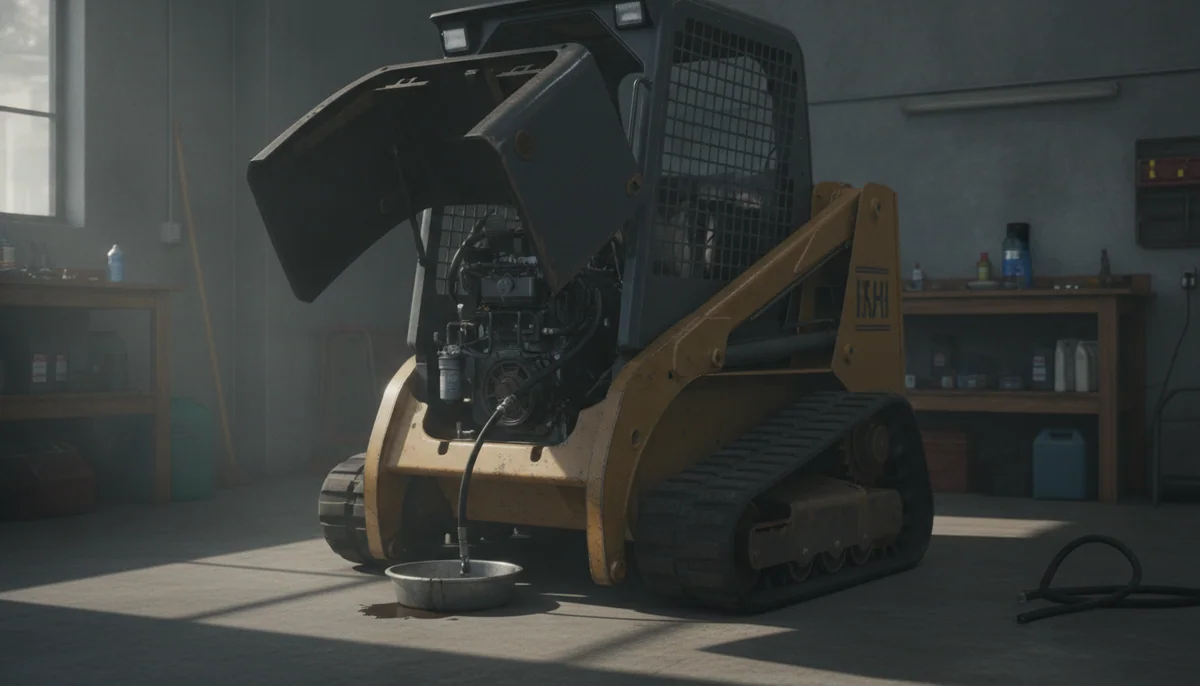
A new mini skid steer can start, travel and raise its bucket while still being the wrong configuration, badly adjusted or unsafe to work. Fresh paint does not establish the engine, pump count or load rating that was promised, and a quick demonstration does not prove that a fitting will stay dry, a track will remain seated or the cooler will control temperature once the oil is warm.
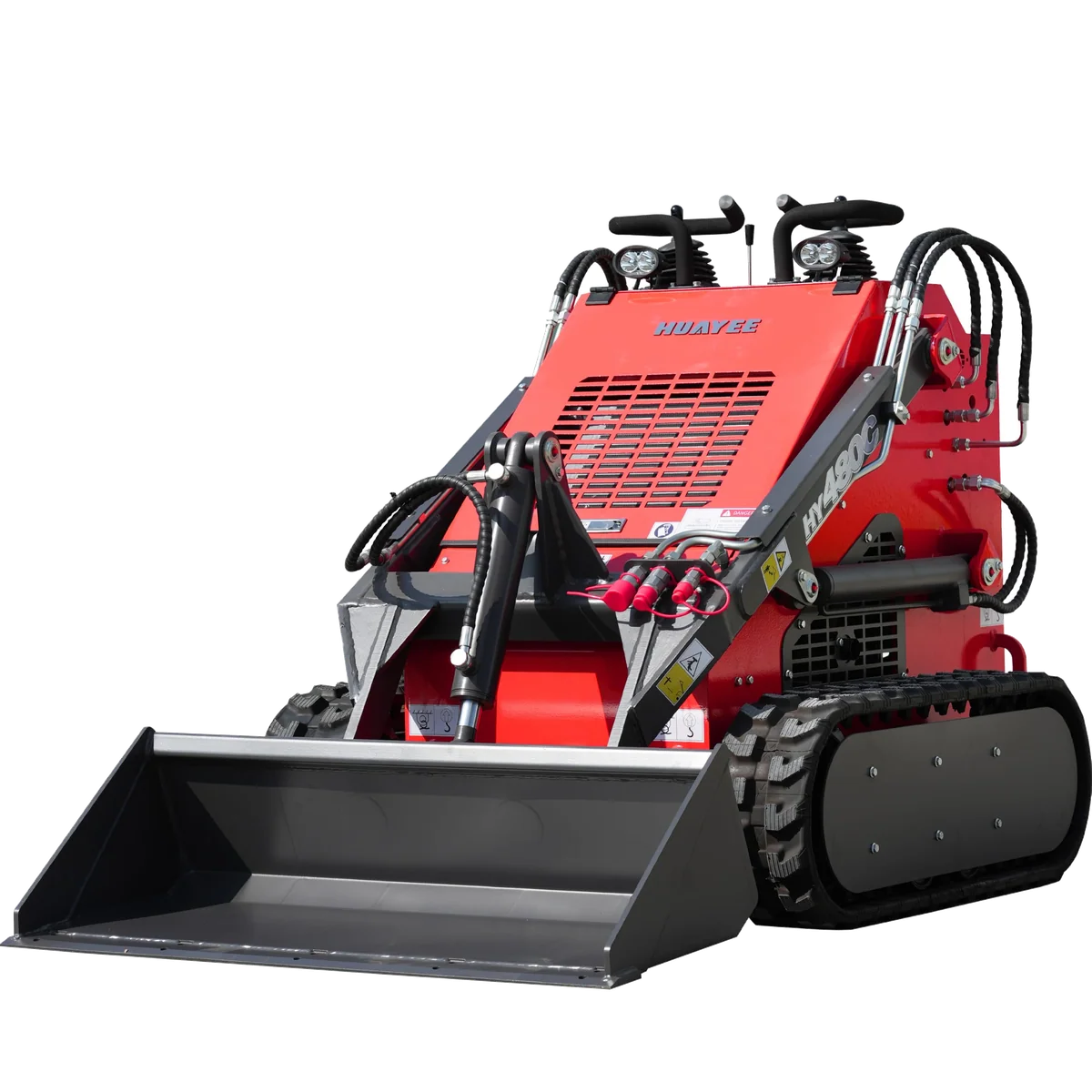
Commissioning is not an accusation that every imported loader is unfinished. It is the practical response to a record in which useful machines and preventable arrival problems coexist. The best-documented machine in this group, the HUAYEE HY480C, completed substantial early bucket and attachment work, yet exact owners also documented initially loose tracks, a full-tank fuel leak on an incline and hydraulic temperature that continued beyond 71 °C on one unit before an owner changed fluid.
Adjacent evidence shows why faults must be kept attached to the machine on which they occurred. A DigSwift DS-15 excavator owner, not an owner of either DigSwift loader covered here, reported missing hardware, maladjusted controls and numerous loose hose connections. A separate comparison of outwardly similar mini loaders found one generally prepared and another with loose drive-motor and engine-mount hardware. Those examples do not convict a new loader in its crate; they make inspection more responsible than assumption.
The verdict comes before the checklist
The inspection routine below applies to all seven machines, but their evidence does not support one shared buying verdict. This is where each model stands before any product exit appears.
| Machine | Verdict | Honest drawback that must be priced into the decision |
|---|---|---|
| HUAYEE HY480C | Conditional yesA credible owner-maintained property loader for a buyer who can inspect, service and troubleshoot it. | A full tank leaked around the low filler on an incline, one exact unit ran worryingly hot on its original hydraulic fluid and the longest retained exact-owner account reached only 36 hours. |
| Wolfequip T460S1 | No for most buyersA skilled private owner can reconsider it only after exact safety, hydraulic and parts documentation arrives. | The closest narrated Wolf machine was only about a week old, and its owner reported that the controls remained operable with nobody standing on the platform. |
| ATS Power T460 | Narrow conditional yesIt can suit intermittent loose-material work when downtime does not stop a business. | The listing conflicts on lift, leaves the hydraulic claim incomplete and is supported by only one retained Amazon review, whose concrete complaint was a missing owner’s manual. |
| DigSwift DS-S40 | No as documentedReconsider it only after the seller supplies a complete model-specific record in writing. | The listing mixes sibling model names, contains a meaningless bullet and omits the hydraulic, safety, support and delivery information needed to judge the claimed compact loader. |
| TYPHON STOMP TYPH-0501H | Conditional yesIts closest tracked evidence supports a serious property-owner candidate rather than a production machine. | The exact listing had no ratings, conflicts on machine weight, leaves lift undefined and is backed by only an 8 to 9-hour close tracked account rather than a durability record. |
| DigSwift DS-SS50 | No as documentedThe machine should remain parked on the shortlist until its identity, hydraulics, safety systems and support become inspectable. | Its two retained reviews are an unexplained one-star accusation and an equally unexplained five-star approval, while the listing leaves operating weight, pump architecture and freight obligations unresolved. |
| Wolfequip T460S1WH with forks | No for most buyersThe narrow exception is a self-servicing owner doing occasional light bucket and fork work on level private ground. | The exact listing had no ratings, the closest Wolf account raises the same operator-presence concern and the fork frame weighs a claimed 210 lb before its blades or cargo are counted against an undefined loader limit. |
The model-level evidence is developed in the full HY480C review, Wolfequip T460S1 review, ATS Power T460 review and TYPHON STOMP review; the DigSwift DS-S40 and DS-SS50 comparison keeps the two poorly documented DigSwift loaders from donating specifications to each other.
Commissioning begins before the freight truck
The most valuable inspection happens while the seller still needs to earn the order. Request the exact build specification, serial-specific manuals and delivery terms before payment rather than asking a driver to settle them beside a running truck. A product title is not a bill of materials, and a model family is not proof that the machine allocated to the order has the photographed engine, pump block, cooler, tracks or attachment plate.
The supplied listings make that distinction unavoidable. The ATS T460 page gives two different lift figures and mentions tire dimensions on a tracked machine. The TYPHON page gives two machine weights and calls its tracked loader four-wheel drive. The DS-S40 description mixes several sibling names, while the DS-SS50 copy discusses both tracks and tires without documenting a selector. The Wolfequip listings express fuel capacity as a weight and leave critical safety behavior unexplained.
Identity that follows the machine
- Obtain current photographs of the machine, model plate, serial format, engine plate, emissions label, pump stack, coupler panel and installed tracks.
- List the engine, cooling package, bucket and every attachment or separate crate on the written order.
- Require approval before the seller substitutes a different engine, pump version, undercarriage, bucket width or supposedly upgraded sibling model.
A defined operating envelope
- Request operating and shipping weight, widest machine and bucket dimensions, transport length, height, ground clearance and approved tie-down points.
- Separate rated operating capacity, tipping load, maximum hydraulic force, full-height capacity and dump clearance rather than accepting one unlabeled lift number.
- Ask for the load center, attachment, ballast condition, surface and test method behind every capacity claim.
Hydraulics and attachment facts
- Obtain pump count, circuit purpose, auxiliary flow at working pressure, relief pressure, reservoir and filter details, oil specification and permitted temperature range.
- Identify every coupler, the direction and duration of auxiliary flow, case-drain provision and whether both tracks can travel normally while a powered tool runs.
- Match the intended attachment’s plate, pins, mass, center of gravity, couplers, flow, pressure and return requirements to the loader in writing.
Safety, service and freight obligations
- Receive the machine manual, engine manual, control map, maintenance schedule, track-tension procedure, hydraulic schematic, wiring diagram and illustrated parts list.
- Document the operator-presence system, neutral-start logic, parking or hydraulic lock, emergency shutdown and approved procedure for supporting raised lift arms.
- Put unloading, damage reporting, diagnosis, labor, parts freight, return freight, warranty exclusions and model-specific parts lead times in writing.
Configuration changes are not hypothetical category trivia. The broader buying evidence includes machines delivered with features or hardware that differed from the version the buyer expected, which is why a newer year, a new paint color or an extra letter in the model name should never silently authorize substitution.
At delivery, preserve evidence before making noise
Arrange a firm, level and controlled receiving area using an unloading method rated for the confirmed packaged weight. Do not let an unexpected truck, a hurried carrier or a driver’s offer to demonstrate the controls turn an unfamiliar machine into an improvised ramp exercise. Follow the written freight-damage procedure because signing, notation and refusal rules depend on the carrier and transaction.
- Photograph the freight deck and packaging: capture crushed framing, punctures, wet areas, loose components and the machine’s position before anything is moved.
- Verify identity: compare the model, serial and engine plates with the written order before treating a different configuration as an upgrade.
- Record the baseline: photograph the hour meter, control panel, gauges, coupler panel, tracks, bucket, attachment plate and all four sides of the machine.
- Inventory every shipment: account for manuals, keys, bucket, forks, loose blades, pins, couplers, tools, filters and any separately shipped crate.
- Look beneath the machine: fresh fuel, engine oil or hydraulic oil under a machine that has not been started needs identification before operation.
- Keep the loader lowered: do not crawl beneath unsupported arms or place any part of the body in a pinch point to improve a photograph.
- Document exceptions: note damage or mismatch by the transaction’s written procedure and contact the seller while the condition is still visible.
- Stop when the plan changes: a wrong machine, active leak, damaged track, broken attachment lock or missing safe unloading method is not a reason to improvise.
A tidy exterior does not replace pre-delivery inspection. The DigSwift sibling account and the side-by-side mini-loader inspection both found consequential setup faults that were not established by the general appearance of the machine, while other examples arrived greased and orderly. The point is not that every fastener will be loose; it is that nobody should discover the answer with a raised load.
The cold inspection earns the right to start
Perform the first walk-around with the engine off, the key controlled, the attachment lowered, stored hydraulic pressure handled according to the manual and the machine cool enough to inspect. If the manual is absent or clearly belongs to another model, stop rather than filling the blanks from a similar-looking loader.
Fluids and fuel
- Confirm engine oil, hydraulic oil and fuel type against the serial-specific manuals before adding or replacing anything.
- Check levels by the stated procedure because dipstick position, boom position and temperature can change the reading.
- Inspect the tank, cap, filters, drains, hoses, cylinders and fittings for wetness, staining, odor or damaged sealing surfaces.
Hardware and hose routing
- Inspect engine mounts, pump and motor fasteners, loader pivots, cylinder pins, guards, platform hardware and battery restraint.
- Use specified torque values where the manual supplies them rather than tightening every visible fastener by feel.
- Trace hoses and wires past sharp edges, hinges, hot exhaust parts and moving lift components, then watch those clearances during the later function test.
Tracks and undercarriage
- Record the complete track marking, then inspect tread, lugs, inner guides, sprocket engagement, rollers, idlers, guards and visible grease points.
- Compare track tension with the exact manual rather than copying a finger gap, grease-gun count or sag measurement from another chassis.
- Remove shipping debris and identify any track that sits crooked, rides a flange or shows concentrated rubber dust before travel.
Attachment and operator station
- Confirm that both locking pins fully engage the attachment and that the plate does not hang on paint, welds, dirt or mismatched geometry.
- Identify pressure, return and any case-drain connection instead of inferring circuit purpose from the number of couplers.
- Locate neutral, throttle, choke, parking or hydraulic lock, emergency shutdown and operator-presence controls before the key turns.
Electrical and cooling systems
- Inspect battery terminals, the master disconnect, fuses, wiring protection, fan connectors, gauges and visible grounds.
- Confirm that the cooler is clear and that its fan can operate in every automatic or manual mode described by the machine documentation.
- Check exhaust routing and shielding so heat and gases are not directed at fuel, wiring, hoses or the operator station.
Labels and service access
- Make sure controls, warnings and service points agree with the manual rather than with a generic seller video.
- Open only the panels intended for routine inspection and verify that latches, hinges and supports hold them securely.
- Record filter, belt, battery, track and engine identifiers while they are legible instead of waiting for a failed part.
The first start is a safety-system test
The closest Wolf Equip owner account creates a clear acceptance question: do the drive, boom, curl and auxiliary controls become unavailable when the operator leaves the station in the manner the manufacturer specifies? The account suggests that the machine shown remained controllable from an empty platform, while the listings do not explain the intended interlock behavior. Do not reinterpret that uncertainty as convenient walk-behind operation.
Fuel and temperature deserve the same seriousness. An exact HY480C owner documented fuel escaping around a full tank’s cap when the loader pointed uphill. Another exact owner watched the hydraulic-temperature display continue beyond 71 °C and stopped the machine; after changing to a premium ISO 46 fluid, that owner reported 56 to 60 °C during later use that avoided continuous full throttle. One owner’s improvement is not a universal instruction to replace every factory fill, and no unsupplied temperature number should be treated as a limit for another model.
| Stage | Controlled action | What must be observed | Reason to stop |
|---|---|---|---|
| 0. Key off | Confirm the control map, neutral positions, shutdown method, parking or hydraulic lock and operator-presence behavior from the actual manual. | Every control and safety device can be identified without guessing. | The manual is missing, contradictory or describes another control arrangement. |
| 1. Idle start | Start on level ground with the attachment lowered, controls neutral and bystanders outside the work area. | The engine settles, gauges initialize and the machine remains still and dry. | Unexpected movement, persistent smoke, warning indication, abnormal noise, fuel odor or a fresh leak appears. |
| 2. Low no-load functions | At conservative engine speed, test shutdown, safety lockouts, boom, curl and auxiliary control one function at a time. | Each function responds in the indicated direction and returns to neutral without sticking or creep. | A lever binds, a function continues after release, a hose rubs or a fitting becomes wet. |
| 3. Unloaded travel | Travel a short straight route in both directions on firm, level ground, then make broad controlled turns. | Both tracks respond predictably without climbing, jerking, grinding or pulling severely under equal input. | A track rides out of position, sheds concentrated rubber, strikes a guard or produces abnormal bearing heat. |
| 4. Warm systems | Cycle ordinary loader functions without a working load long enough to observe fan operation, temperature trend, charging and warm control behavior. | Temperature stabilizes within the documented range and no warm leak, electrical deficit or control change appears. | Temperature keeps climbing, the fan fails, the battery warning appears or a control becomes stiff or erratic as oil warms. |
| 5. Light bucket work | Use the supplied bucket for a small, low and close load before trying forks or a powered attachment. | The attachment remains locked, the rear stays planted and the machine stops and steers predictably. | The rear rises, the attachment shifts, the load obscures safe travel or the machine cannot remain stable with the boom low. |
The common failures fall into six families
1. Leaks and wrong fluids
Separate seepage, a fresh drip and a pressurized leak rather than calling all three harmless sweating. Fuel, engine oil and hydraulic oil create different hazards, but each needs its source identified before work resumes. Clean only by a safe documented procedure, use cardboard or another approved method for suspected hydraulic leakage, and keep ignition sources away from any fuel escape.
Do not pour a familiar fluid into an unfamiliar reservoir because another mini loader uses it. The HY480C record contains owner use of AW 46 and ISO 46 hydraulic oils, but that evidence belongs to those configurations and does not define the DigSwift, Wolfequip, ATS or TYPHON fill. The engine plate and machine manual decide the grade, capacity, filter and change interval.
2. Rising hydraulic temperature and weak charging
A large cooler does not prove that the system will control heat under the planned duty cycle. Confirm that the fan starts as documented, air can cross the core, the oil level and specification are correct, and exhaust or engine heat is not being drawn through damaged or obstructed ducting. Record the displayed trend if the machine has an instrument; a number without sensor accuracy, ambient conditions and a manufacturer limit is not a diagnosis.
Cooling fans also add electrical load. A machine that starts with a charged battery can still reveal a weak connection, undersized charging margin or faulty fan control after warming. Stop if the temperature continues upward, the fan fails to behave as documented or charging deteriorates, then have the cause identified rather than masking the symptom with a larger battery or improvised wiring.
3. Track tension, alignment and derailment
Delivery tension is a condition to verify, not a factory blessing. One exact HY480C owner derailed a track twice while the initial setting was too loose, corrected the adjustment and reported no recurrence through 36 hours. In adjacent category evidence, a different owner experienced two complete derailments and one partial event within 40 hours, while another reached roughly 163 hours without throwing a track after preventive attention to the undercarriage. The range is exactly why no universal finger gap belongs here.
Inspect track markings, guide engagement, sprocket alignment, rollers, idlers, bearings, grease points, guards and accumulated debris. Recheck after the unloaded travel test and again after the first light work. Concentrated rubber dust, rhythmic climbing, a hot bearing, a crooked track or a new scraping sound earns a shutdown; lifting the loader on a convenient rock to reseat the track is not a commissioning procedure.
4. Controls that creep, bind or change when warm
A mini loader that will not start or move is not automatically suffering a major hydraulic failure. The branch could begin with a battery disconnect, neutral-start condition, safety lock, fuel or choke procedure, loose electrical connection, control linkage or documented interlock. Follow the model’s sequence instead of bypassing a safety device or turning a relief adjustment until something moves.
Uncommanded movement is different. Creep in neutral, a function that continues after the lever returns, a travel control that binds or active hydraulics when the documented operator-presence condition is absent should end the test. A simple mechanical layout may be repairable, but it is not acceptable merely because the owner can reach the valve block.
5. Hydraulic architecture mistaken for a malfunction
Pump count changes how powered attachments and travel share oil. A basic two-pump loader may feed the auxiliary circuit through a travel circuit, so engaging a continuous tool can leave one track without normal flow. A third section can separate attachment demand from travel, but it still does not establish usable flow at pressure, cooling, case drain or duty cycle.
| Machine or family | What the record establishes | What remains unsafe to assume |
|---|---|---|
| HUAYEE HY480C | Visible hardware supports a genuine three-section arrangement, and exact owners used several powered attachments. | The close pump calculation is not a flow-meter result at working pressure, and exact evidence is unfavorable for a direct-motor stump grinder and unsettled for sustained mulching. |
| ATS Power T460 | Direct standard-T460 evidence points toward the simpler two-pump layout, while the listing gives an incompletely defined 25 L/min figure. | The listed number does not prove usable auxiliary flow, simultaneous two-track travel or continuous attachment performance. |
| TYPHON STOMP | The closest tracked GX690 account visibly identified three pumps, and related TYPHON promotion describes three circuits. | The exact ASIN is not conclusively mapped to the promoted pump block, and the related flow figures cannot be added and called exact auxiliary output. |
| Wolfequip T460S1 family | The close machine showed three hydraulic connections at the front. | Three connections do not reveal pump count, auxiliary flow, pressure or whether the third line is a case drain. |
| DigSwift DS-S40 and DS-SS50 | The listings market quick attachment changes and name several hydraulic tools. | Neither supplied listing establishes pump count, auxiliary flow, working pressure, coupler specification, case drain or simultaneous travel behavior. |
If a powered tool makes one track stop, do not immediately increase pressure or condemn the drive motor. Disengage the attachment safely, confirm that ordinary travel returns and compare the behavior with the documented circuit design. A two-pump limitation is still a reason to reject the machine for mowing, trenching or sweeping, but it is a different problem from a failed track drive.
The site’s two-pump and three-pump guide explains the circuit trade, while the powered-attachment shortlist starts from machines whose hydraulic case is stronger than a coupler photograph.
6. An attachment that fits but is not compatible
A plate that hooks onto the carrier has passed only the first test. Both pins must lock through the intended structure, the attachment must sit at the correct angle, hoses must clear the lift path, couplers must match, and the carrier must supply the required flow, pressure and return arrangement without exceeding the tool’s permitted back pressure. Motorized tools may also require a dedicated low-pressure case drain.
Inspect the lock with the attachment lowered and use the manufacturer’s prescribed engagement test before lifting. Do not rely on paint marks, one pin or hydraulic rollback to hold a mismatched plate. Then count the attachment’s full weight and forward center of gravity before adding material.
The included Wolfequip fork frame illustrates the problem. Its own listing claims a 210 lb frame before blades, yet the loader’s 770 and 840 lb figures have no defined load center or rating method. Subtracting one seller number from another still would not create a safe pallet capacity, but the frame weight makes clear that the attachment consumes meaningful stability before cargo arrives.
Use the attachment compatibility guide before ordering a grapple, auger, trencher, cutter or grinder, especially when a listing uses universal
without a dimensioned plate and hydraulic specification.
The advertised lift is not the first test load
Commissioning should never begin by trying to prove the largest number in the title. The HY480C listing labels 1,234 lb as rated operating capacity and separately claims 1,765 lb maximum lifting force, while exact owners reported useful 600 and 640 lb fork loads kept close. Those owner results are better practical evidence than an unsupported boast, but they do not validate the larger rating or transfer to another unit.
The remaining machines offer even less definition. ATS and Wolfequip pages use 770 and 840 lb figures without a disclosed test method. DigSwift calls 661 lb a rated capacity on the DS-S40 and 727.5 lb a maximum unloading capacity on the DS-SS50 without supplying the conditions needed to compare them. TYPHON claims more than 830 lb while leaving load center, height and rating basis unstated.
Begin with an empty attachment, then a modest low and close load within a written manufacturer limit. Watch rear contact, track compression, steering response, stopping distance, visibility and attachment engagement. Rear lift is not an improvised scale; it is the machine telling the operator that hydraulic force has overtaken the available stability.
Our lift-capacity guide separates hydraulic force, tipping load and rated operating capacity. The slope-safety guide covers the geometry that changes again when the boom rises, while the gate-width guide prevents a narrow chassis claim from becoming an expensive argument with a wider bucket.
A symptom is a branch point, not permission to guess
| Symptom | Immediate response | Branch to investigate | Release condition |
|---|---|---|---|
| Engine will not start | Return controls to the documented neutral condition, lower the attachment and stop repeated cranking. | Key and master switch, battery connections, neutral-start logic, fuel and choke procedure, visible wiring and the engine manual. | The cause is identified, the safety circuit remains intact and the engine starts by the prescribed procedure. |
| Engine runs but the loader will not move | Do not bypass an interlock or adjust hydraulic pressure. | Parking or hydraulic lock, operator-presence state, control linkage, documented warm-up procedure and whether the problem affects both tracks. | Normal travel returns through the documented control sequence or a qualified repair resolves the fault. |
| Machine creeps in neutral | Shut down without placing anyone in the travel path. | Control centering, linkage, valve or drive adjustment and the manufacturer’s neutral-setting procedure. | The loader remains stationary in neutral during cold and warm tests. |
| Fuel or hydraulic fluid appears | Stop the engine, control ignition sources and relieve hydraulic pressure only as documented. | Cap and vent, hose, fitting, seal, cylinder, filter, drain, tank or damage sustained in freight. | The source is repaired, the area remains dry through a controlled warm cycle and any contaminated surfaces are safely cleaned. |
| Temperature keeps rising | End the test before load or attachment demand increases. | Fluid identity and level, cooler airflow, fan command, sensor behavior, relief operation, restriction and actual attachment duty. | The cause is resolved and temperature stabilizes within the written range for the exact machine. |
| Track climbs, clicks or sheds rubber | Stop turning and park on firm level ground. | Tension, alignment, debris, damaged guides, sprocket match, idler or roller condition and bearing lubrication. | The track is correctly seated and adjusted by the model procedure, then survives a short unloaded straight test without recurring signs. |
| One track stops with a powered tool | Disengage auxiliary flow and verify ordinary travel before changing any setting. | Two-pump flow sharing, control priority, detent behavior or a genuine drive fault that persists after the attachment stops. | The observed behavior matches the documented architecture and the complete attachment job remains acceptable, or the machine is rejected for that use. |
| Attachment will not lock or hoses pull tight | Lower the tool and disconnect by the documented pressure-relief procedure. | Plate geometry, latch pins, weld or paint interference, couplers, hose length, routing and attachment angle. | Both locks visibly engage and every hose remains clear through the full approved motion range. |
The first working hours are a record, not a victory lap
Early owner reports show how misleading a single uneventful start can be. One adjacent mini-loader owner was pleased with the work completed by 40 hours but had already dealt with derailments, an added cooler and a rain-affected ignition switch. Another owner reported a much cleaner record around 163 hours while also describing preventive bearing grease and added heat protection. Neither history predicts these seven machines; together they show why maintenance and intervention must be documented rather than edited out of an enthusiastic verdict.
| Checkpoint | Record | Why it matters later |
|---|---|---|
| Delivery baseline | Serial and engine plates, hour meter, fluid condition, visible damage, track markings, attachments and every supplied document. | It preserves what arrived before work, adjustment or repair changed the evidence. |
| Cold function test | Start behavior, shutdown and interlock results, neutral condition, control direction, leaks, noises and initial gauge readings. | It separates arrival condition from faults that appear only after warming or load. |
| Warm no-load test | Temperature trend, cooler-fan behavior, charging indication, control feel, new wetness and hose movement. | It catches heat-dependent problems before a working attachment adds demand. |
| First light bucket work | Material, approximate load basis, surface, boom position, steering response, attachment locks, track behavior and rear contact. | It gives later changes a real operating baseline without pretending to be a capacity test. |
| Post-work inspection | Fresh leaks, fastener movement, track seating, debris, rubbing, bearing heat, coupler security and fluid levels by the manual procedure. | It reveals what only motion, pressure and heat disturbed. |
| Manufacturer service interval | Fluid and filter work, grease, tension, torque checks, parts used, photographs and the person who performed the service. | It supports troubleshooting, warranty discussions and a future buyer’s confidence. |
The machine’s manual, not an arbitrary hour count from another model, governs break-in service and inspection intervals. Shorten the first jobs so the loader can be rechecked without abandoning a large excavation, then add attachment demand, travel distance and load only after the previous stage remains dry, cool and predictable.
Know when to stop, hold or release the machine
Stop and escalate
- The machine, engine, pump version or attachment package does not match the written order.
- Fuel escapes, hydraulic oil sprays or any leak reaches the exhaust, brakes, controls or operator area.
- The loader creeps, a function sticks or control behavior defeats the documented operator-presence condition.
- An attachment cannot engage both locks, a track will not remain seated or temperature continues to climb.
Hold before working
- The manual, fluid specification, track setting, control map or initial service schedule is missing.
- Lift, width, weight or hydraulic claims remain too vague for the planned job or transport setup.
- The seller cannot identify replacement tracks, filters, pumps, motors or the warranty claim route.
- A cooler fan, gauge, light, battery or noncritical fitting needs diagnosis before the machine is placed under load.
Release to light work
- The delivered identity and equipment match the written order and serial-specific documents.
- Fluids, tracks, hardware, hoses, attachment locks and safety controls pass cold and warm checks.
- The machine remains dry, stationary in neutral and thermally stable within its documented range.
- A post-test inspection finds no movement, rubbing, debris concentration or new leak.
Releasing a loader to light work is not a long-term reliability verdict. It means the machine has cleared the risks that can be inspected before meaningful use. A seller-authorized repair may be sensible for a properly identified machine with a small correctable fault, while wrong identity, unsafe controls or an undefined support path can justify ending the transaction according to its written terms.
Skid Steer Mulch did not own, operate, weigh, lift-test, flow-test or commission these seven loaders. This guide combines the exact listings and retained exact-product reviews with clearly labeled close-model and category evidence, and it does not transfer another machine’s failure, fluid, track setting, capacity or warranty to the loader in front of the buyer.
The final call is deliberately unglamorous: make the first job a short bucket test on level ground, not a maximum pallet, steep bank or new hydraulic attachment, and walk away when the seller cannot define the machine well enough for a competent inspection.
Buyers still deciding whether this ownership bargain suits them should read where inexpensive Chinese mini skid steers save money and transfer work. If inspection, repair and uncertain downtime already sound like the wrong trade, compare renting with owning or restart with the site’s best-documented mini skid steer choices.
Frequently Asked Questions
Questions that matter before the first job
Should I replace every factory fluid before starting a new mini skid steer?
No, first verify the exact fluid specification, level, condition and initial-service schedule because one owner’s successful fluid change does not define another machine’s requirements.
How tight should new mini skid steer tracks be?
Use the serial-specific tension procedure and measurement because track shape, pitch, idlers, rollers and grease tensioners differ enough to make a universal finger gap unsafe.
Why does a mini skid steer start but refuse to move?
Check the documented parking or hydraulic lock, operator-presence state, neutral-start system, control linkage and warm-up procedure before treating the symptom as a failed drive motor or bypassing a safety device.
Can I use the advertised lift number as the machine’s first test load?
No, a first-use proof load is unsafe when the claim lacks a defined load center, attachment, height, tipping load and approved test method.
Does every powered mini skid steer attachment need a case drain?
No, but a motorized attachment may require one, so the attachment maker’s return-pressure and drainage requirements must be matched to the loader’s identified ports before connection.
Is it safe to operate a loader that has no operator-presence interlock?
Do not assume off-platform hydraulic control is safe because the manufacturer must document the intended safety system and the machine should remain parked when actual behavior does not match it.
Will a mini skid steer fit a gate that matches its listed width?
No safe promise follows from equal numbers because the bucket, hoses, couplers, hinges, uneven posts, approach angle and working clearance can all require a wider opening.
What should I do if the machine arrives without its manual?
Keep it out of service until the seller supplies the correct model-specific operating and maintenance information needed to identify controls, fluids, track tension, safety devices and service intervals.
Sources (2)
- Amazon listings and customer reviews
- Owner and reviewer video, 12 channels