The MMS MS380L beats the Wolfequip T460S1, but only for modest bucket work
Buy the MMS MS380L for occasional bucket and grading work on firm ground if you can maintain it yourself; leave the Wolfequip T460S1 unbought until its seller documents the current machine’s safety interlocks, hydraulics and parts, and choose neither when tracks or continuously powered attachments are essential.
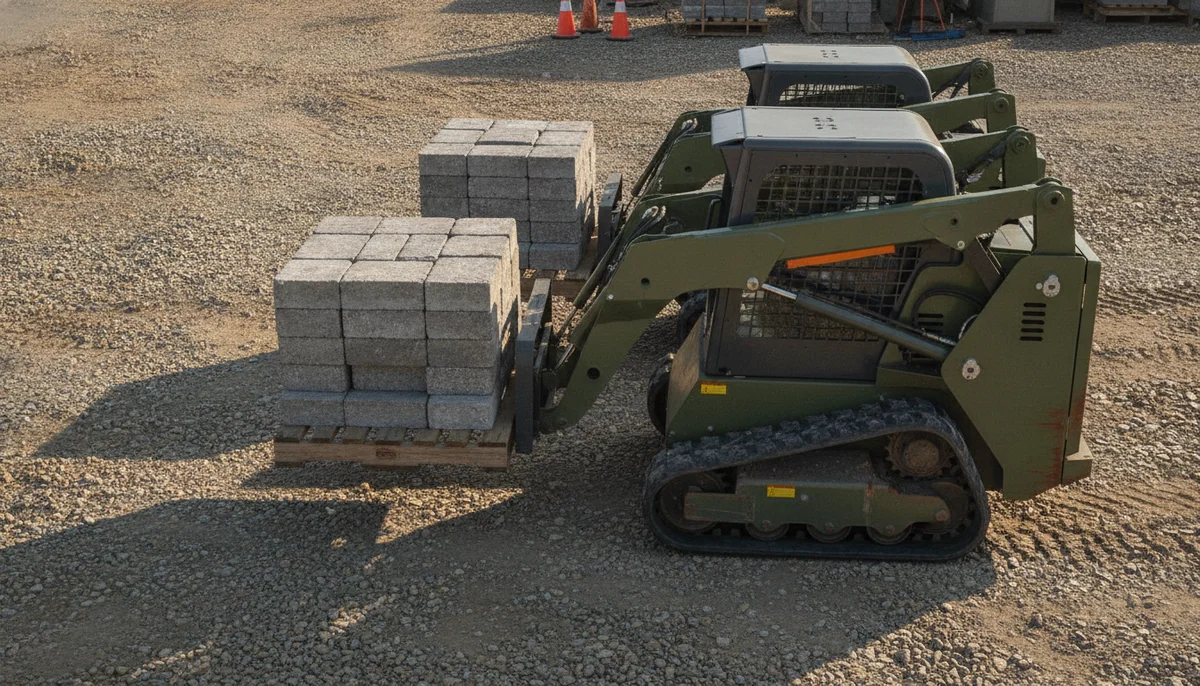
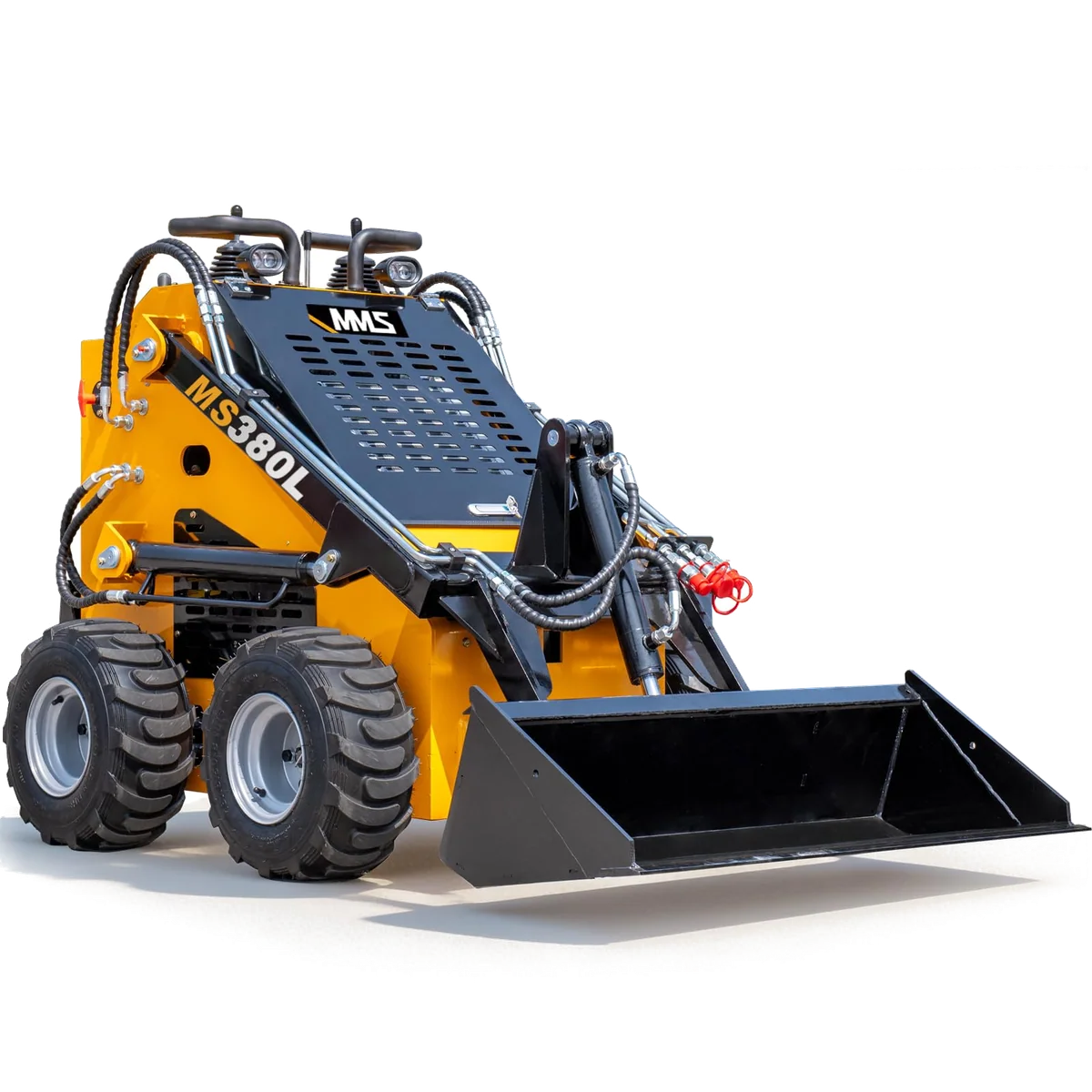
MMS MS380L
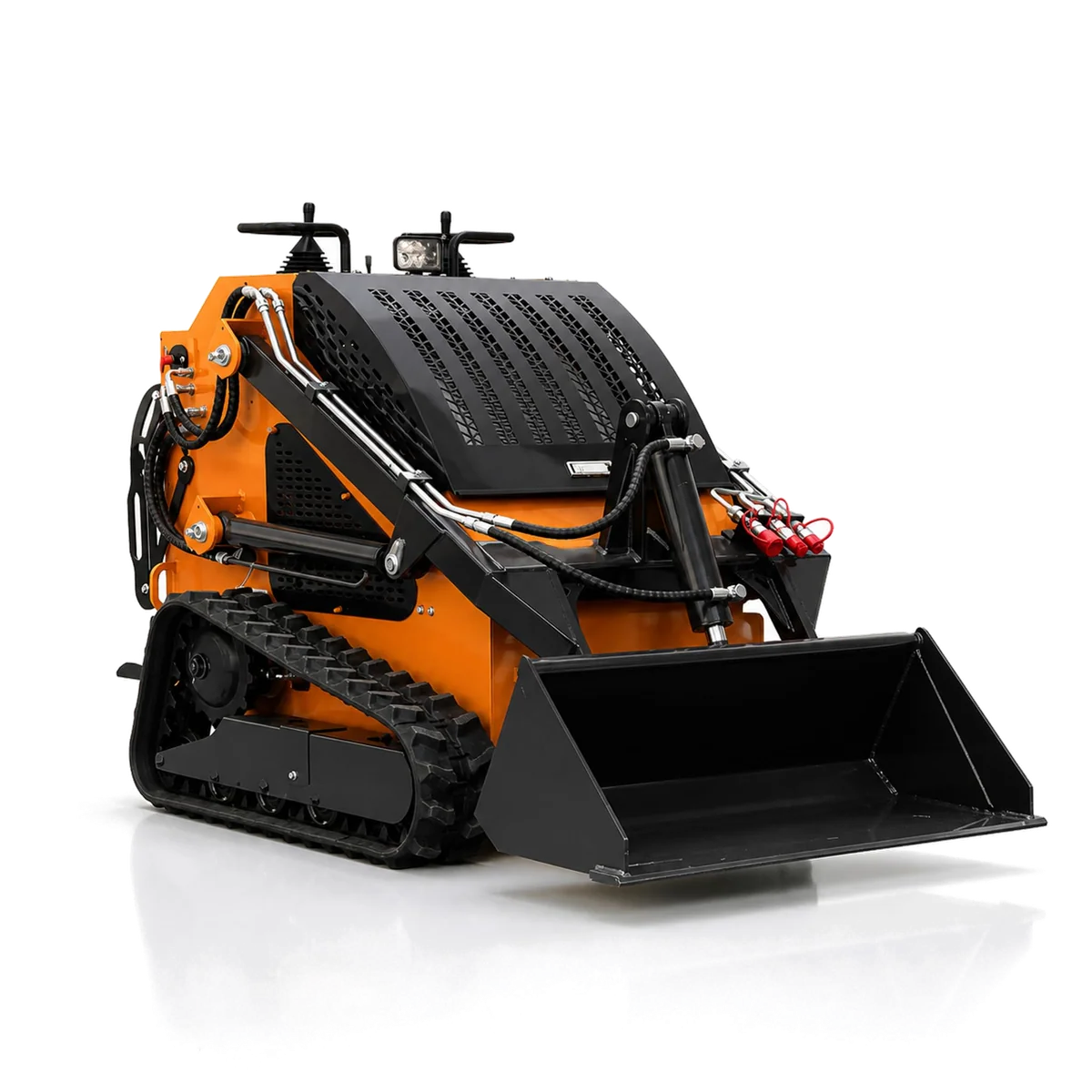
Wolfequip mini skid steer
At thumbnail size, this looks like a simple tracks-versus-wheels choice. Both are gasoline stand-on mini loaders advertised around 23 HP, each with a bucket and a compact-property pitch. The Wolfequip promises tracks and a 46-inch bucket; the MMS uses four wheels and a detachable bucket. Once the sales copy is stripped away, evidence quality decides it.
The strongest exact-product MMS account covers 10 hours of moderate-to-heavy home use moving road rock and dirt for patio and landscaping projects. Other retained page-level reports describe greenhouse grading, garden work and residential landscaping. The same pool contains dead batteries, broken hand levers, a bad delivery pallet and minor freight damage, but it also shows MMS responding to several of those smaller problems.
The T460S1 has no comparable operating record. Its captured Amazon page carried one rating, offered an undefined 840-pound lift figure and contradicted its tracked-machine identity with a bullet about 7-by-28-inch tires. A close Wolf Equip walkthrough supplies useful detail about the folding platform and accessible mechanical layout, but it stops after roughly a week and was not plate-matched to this exact catalog listing.
More seriously, the close Wolf owner reported that the controls remained usable with nobody on the platform, which suggests that machine lacked an operator-presence interlock. That does not prove every current T460S1 is configured the same way, but it is enough to make written confirmation and a current-batch demonstration prerequisites rather than after-purchase questions.
The MS380L therefore wins by clearing a modest bar, not by becoming a proven commercial machine. Its wheels, low-clearance complaint, two-pump hydraulics and 10-hour evidence ceiling remain real limitations. If soft ground makes tracks nonnegotiable, the answer is not to excuse the Wolfequip’s unresolved safety and specification gaps; the answer is that this comparison has no suitable winner.
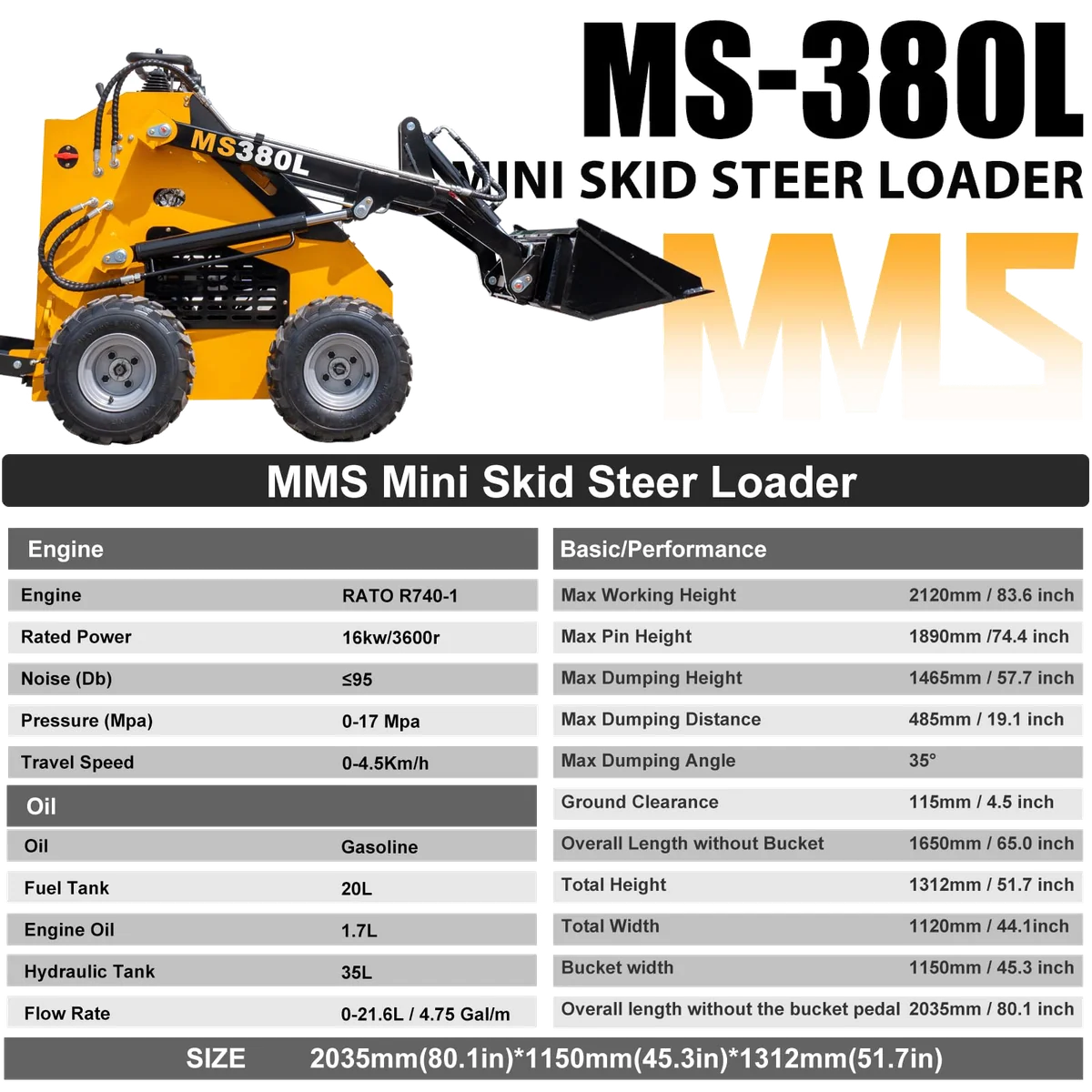
MMS MS380L
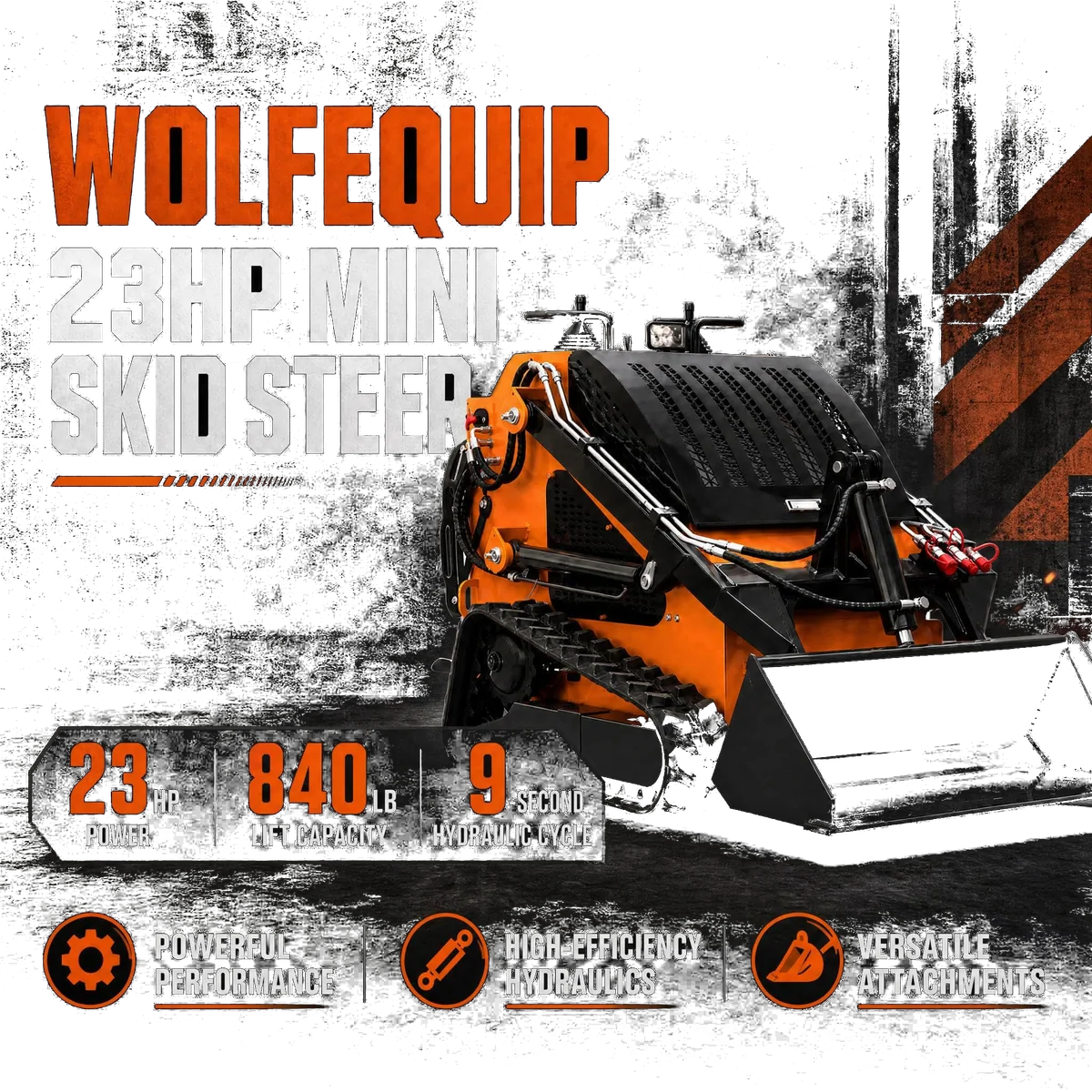
Wolfequip mini skid steer
At a Glance
| Feature | MMS MS380L | Wolfequip mini skid steer |
|---|---|---|
| Price Range | — | — |
| Finish | Yellow | — |
| Screen size | — | 46" |
| Weight | — | 840 lb |
| Check Price on Amazon | Check Price on Amazon |
The MMS wins by having less left to prove
A comparison of budget mini skid steers can become a contest between claims that were never measured the same way. Horsepower, lift figures and attachment photographs are easy to place side by side, but they do not establish safe capacity, usable hydraulic power or the likelihood of finding a machine-specific part. The useful comparison begins with what an owner has actually done, what the seller has resolved and which unanswered question could stop the work.
| Decision point | MMS MS380L | Wolfequip T460S1 | Comparative call |
|---|---|---|---|
| Recommendation | A narrow yes for occasional property work on firm ground when the owner can inspect and maintain the machine. | A hold until the current safety system, hydraulic architecture, dimensions, parts and warranty are documented. | MMS wins. |
| Undercarriage | Four wheels, deliberately chosen by one owner, with another exact-page report noting slightly low ground clearance. | Tracks are advertised, but machine weight, ground pressure, track specification and comparable dimensions are absent. | Job dependent. |
| Useful-work evidence | Owners describe moving road rock and dirt, grading a greenhouse area and handling residential landscaping. | The close Wolf source shows commissioning details after about a week, not a documented work cycle or durability interval. | MMS has the stronger record. |
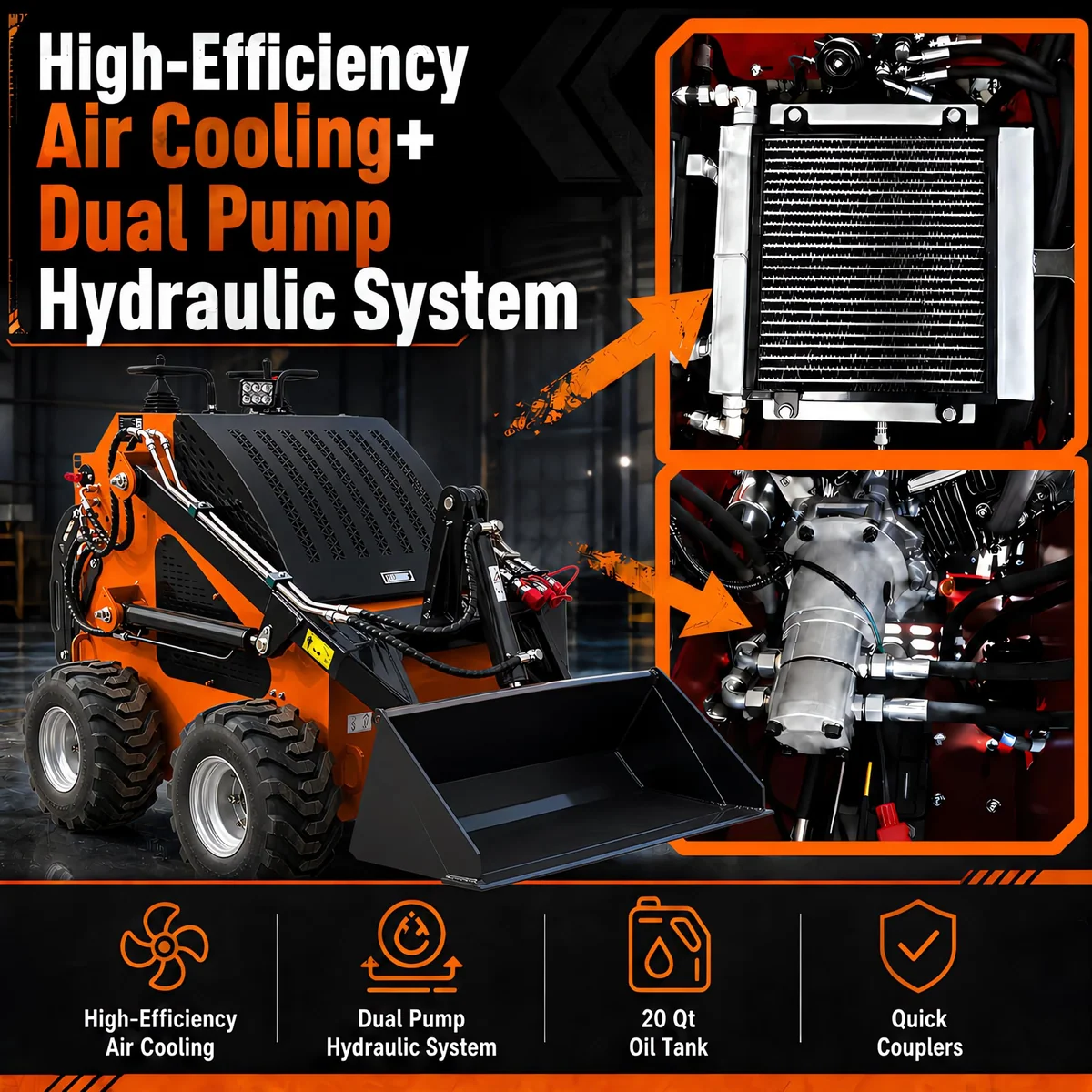
| Hydraulics | An exact-page owner identifies a two-pump machine, while the listing claims separate travel and boom control but gives no auxiliary flow or pressure. | The listing names a hydraulic tank and a nine-second cycle but omits pump count, auxiliary flow, pressure, case drain and continuous-duty behavior. | Neither earns a continuous-flow tool. |
| Capacity and access | Operating weight, rated capacity, tipping load, overall width and load chart are missing. | The 840-pound claim has no rating method, while chassis width, operating weight, tipping load and true dump clearance remain missing. | Neither supplies enough data. |
| Safety evidence | No exact operator-presence evidence was retained, so the record does not support an affirmative interlock claim. | A close Wolf owner said the controls remained active with the platform empty, although exact T460S1 batch identity was not confirmed. | Wolfequip carries the direct warning. |
| Support | MMS owners describe responses to batteries, a bad pallet and minor shipping damage, while the listing states a limited one-year replacement-parts policy. | The retained material does not establish a comparable written parts path, labor policy or major repair outcome. | MMS has the useful edge. |
| Durability ceiling | The longest stated exact-product interval is 10 hours. | The closest narrated Wolf evidence stops at roughly one week. | Neither is commercially proven. |
What each machine actually earns
First place here is a constrained recommendation, not an invitation to ignore the missing numbers. The MS380L has enough owner evidence to support a specific homeowner job. The T460S1 has enough unresolved evidence to stop a purchase, even though its tracked format would otherwise be attractive.
The MMS MS380L is the first-place choice for occasional bucket work on firm ground.
It earns first place because owners describe real material-moving and grading work and MMS has resolved several small delivery problems.
Its wheeled undercarriage, two-pump hydraulics, missing load data and durability record that ends at 10 hours make it a poor fit for mud, daily production or continuously powered tools.
The Wolfequip T460S1 is a hold, not a tracked shortcut to a better machine.
Its tracks, folding platform, accessible mechanical layout and included 46-inch bucket keep it relevant only for a skilled owner who can wait for documentary answers.
The apparent interlock gap joins unknown pump architecture, undefined lift methodology, missing dimensions and an unproved parts path.
Tracks solve a ground problem, not an evidence problem
The MS380L’s four wheels suit the narrow job established by its owners: moving loose material and grading around a home, garden or greenhouse. One buyer specifically wanted the wheeled version, while another exact-page report called the ground clearance a little low. That combination points toward pavement, established drives, warehouse floors and reasonably firm yards rather than mud, deep ruts or terrain where flotation is the first requirement.
The Wolfequip’s tracks should spread contact over more ground than four small tires, but the listing supplies no operating weight, contact area, ground-pressure figure or track specification. It also promises stability on rough or soft ground without publishing a slope limit or a verified loaded test. Tracks can improve traction and flotation; they cannot turn an undocumented machine into a safe slope machine or guarantee that skid steering will spare finished turf.
If the property is firm and the work is occasional, the MMS’s evidence advantage matters more than the Wolfequip’s undercarriage. If the property is regularly soft, this comparison should send the buyer back to a properly documented tracked candidate rather than toward the T460S1 by default. Our guide to choosing wheels or tracks for a mini skid steer explains the ground-condition trade before brand questions enter it.
Neither machine earns a brush cutter
The MS380L at least tells us where the constraint begins. Its listing claims an independent dual hydraulic circuit that permits bucket lift or curl while traveling, and the most detailed exact-page owner calls it a two-pump machine. That supports ordinary loader movements. It does not establish a dedicated attachment circuit that can power a cutter while preserving normal control of both drive sides.
The T460S1 listing is vaguer. A 20-quart hydraulic tank and a nine-second “full cycle” say nothing about auxiliary gallons per minute at working pressure, pump displacement, the effect of attachment demand on track drive, cooler capacity or the presence of a case drain. Photographs of augers, forks and other tools do not answer any of those questions.
The result is not that both machines can run the same attachments because they share a horsepower headline. The result is that the MMS has a known limitation and the Wolfequip has an unknown system. Neither is a responsible purchase when brush cutting, trenching, tilling, power raking, sweeping, stump grinding or mulching is the reason for buying the loader.
| Attachment or job | MMS MS380L | Wolfequip T460S1 | Practical decision |
|---|---|---|---|
| Standard bucket and rough grading | Exact-page owners report moving rock and dirt and grading residential areas. | A 46-inch bucket is listed, but retained work evidence does not establish comparable performance. | Choose the MMS. |
| Pallet forks, land leveler or trailer hitch | The low hydraulic demand fits the machine’s likely role, but safe loads require real capacity and attachment-weight data. | The tools avoid continuous auxiliary demand, but the undefined 840-pound claim cannot set a safe fork load. | Conditional on fit and load documentation. |
| Grapple or four-in-one bucket | Intermittent opening and closing is plausible after plate, coupler, pressure, hose-routing and weight checks. | The listing does not establish the exact mount, couplers, pressure, flow or remaining capacity with the attachment installed. | MMS is the less uncertain option. |
| Stationary auger | Stopping to drill may suit a two-pump machine, but bit size, flow, pressure, mount and attachment mass remain unresolved. | Drilling appears in the marketing, but no hydraulic specification or exact attachment match supports it. | Buy neither around this job. |
| Brush cutter, trencher, tiller, sweeper or power rake | The two-pump evidence does not support sustained auxiliary power with normal travel. | The circuit architecture and continuous-duty hydraulic output are unknown. | Reject both until independently documented. |
| Mulcher or stump grinder | Flow, pressure, cooling, attachment mass, case drain and stability evidence are inadequate. | The same critical figures are absent, alongside the unresolved safety configuration. | Neither machine belongs on the shortlist. |
A buyer still sorting the plumbing should read our guide to two-pump and three-pump hydraulic layouts before accepting “attachment ready” as an answer. Even adequate flow does not prove that an implement fits, so verify the plate, latch pins, couplers, hoses, weight and case-drain requirements with the steps in our attachment compatibility guide. When continuous hydraulic work dominates the job, start with the site’s shortlist for powered attachments instead.
The safety gap is enough to stop the Wolfequip sale
The close Wolf machine’s accessible layout is genuinely appealing. Its battery disconnect, visible gauges, swing-away cooler and exposed service points could make ordinary checks easier for a mechanically capable owner. Those conveniences become secondary when the same walkthrough says the controls remain active without an operator standing on the platform.
That account is not a serial-number match for every T460S1 now represented by the listing, so the careful conclusion is not that every unit lacks an interlock. The conclusion is that the buyer must see the current machine’s behavior proved. Ask for written confirmation of the operator-presence system, neutral-start logic, parking or hydraulic lock and emergency stop, then ask for one uncut seller demonstration showing what happens when the operator leaves the platform.
Do not perform that investigation by standing beside live controls on an unfamiliar machine. The seller should demonstrate the safety logic before payment, and the delivered machine should be checked against the current manual in a clear area. If the answer is that an interlock is optional, deleted or unavailable, the decision stays no.
The MMS record does not establish its own operator-presence configuration, so its first-place finish is not a safety certification. A current-batch demonstration belongs in both purchases. Wolfequip loses this comparison because it carries a direct adverse signal in addition to missing documentation, while the MMS record contains no equivalent warning.
Support tips the comparison without proving durability
MMS has passed several small support tests. Owners report replacement or reimbursement discussions for dead batteries, a remedy for a bad pallet, responses to minor freight damage and regular delivery communication. Other machines arrived ready to start, so the retained texts support a delivery inspection rather than a claim that every unit arrives defective.
Those texts also appear to mix MMS variants, and the retained review count does not align neatly with the captured rating summary. They cannot be converted into a defect rate or treated as nine confirmed MS380L owners. They can show the kinds of early problems a buyer should inspect and the fact that MMS has resolved modest issues for some customers.
The MMS listing states that replacement parts are provided within one year for qualifying failures attributed to non-human causes. It does not clearly establish labor, diagnostics, travel, return freight, fluid replacement or local-shop reimbursement. A seller who can solve a battery or pallet problem has not yet proved that a wheel motor, pump or valve body will be diagnosed and delivered quickly.
Wolfequip begins further back. One captured rating and roughly one week with a close Wolf machine do not reveal a wear-part supply chain, a major warranty outcome or a usable repair-document set. Until the seller supplies track, sprocket, roller, filter, pump and engine identifiers for the unit that will ship, “simple to repair” remains an incomplete promise because the missing part can still be machine specific.
This is why the MMS can make sense for private work yet remain a poor commercial bet. A property owner may be able to move the job by a week, source a battery or tighten a fitting. A crew billing by the hour needs a longer operating record, known parts lead times and clear labor support because one idle machine can consume the apparent saving without breaking anything dramatic.
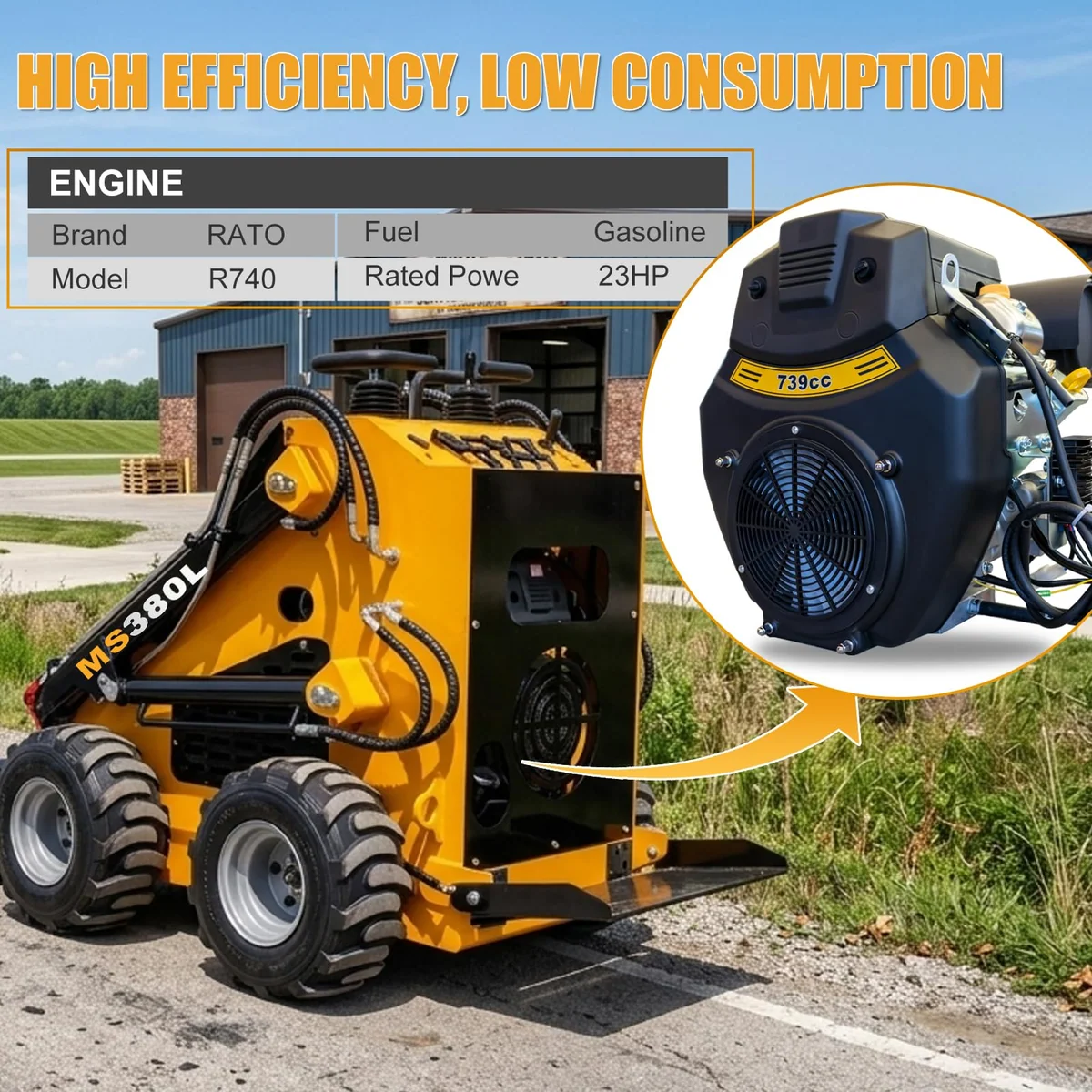
MMS MS380L
Wolfequip mini skid steer
Choose by the cost of being wrong
Ground conditions matter, but the owner’s tolerance for inspection, maintenance and delay matters first. The correct buyer here is not merely someone who wants a small loader. It is someone whose work remains useful even when the machine’s capability is deliberately kept inside a narrow, evidence-backed lane.
The MMS buyer trades dealer convenience for a manageable workload.
Choose the MS380L when the property is mainly firm, the work consists of loose-material handling and rough grading, and the machine can rest without stopping income. The owner should be comfortable checking fluids, filters, fasteners, battery condition and visible hydraulic fittings, while treating every new attachment as a separate compatibility decision.
The Wolfequip buyer should still be gathering documents, not scheduling work.
A skilled private owner who genuinely needs tracks can keep the T460S1 on a research list only if the seller identifies the current safety interlocks, pump layout, flow, pressure, dimensions, capacity method, track parts and warranty terms. Until those answers arrive and match the unit being shipped, the tracked chassis is an attraction rather than a recommendation.
Some jobs make both machines the wrong answer.
Choose neither for daily commercial production, continuously powered attachments, a slope-heavy property, a novice operator without close instruction, an exact lifting requirement or work where downtime has immediate financial consequences. Buyers who cannot absorb repair uncertainty should compare that risk with placing maintenance elsewhere through the site’s rent-versus-buy decision guide.
Access also needs a real measurement. Neither record supplies enough comparable chassis dimensions to promise passage through a particular opening, and bucket width does not establish machine width or platform-folded length. Measure the narrowest gate, turns and overhead obstacles first, then use our narrow-access mini skid steer shortlist rather than treating “compact” as a dimension.
If the MS380L clears those questions and the job remains mostly bucket work on firm ground, its narrow recommendation survives. If the Wolfequip seller clears them all, the T460S1 may deserve a new assessment, but the evidence available to this comparison does not justify buying it now. When either seller answers with a generic brochure, a photograph of another model or the word “universal,” walk away.
Frequently Asked Questions
Which machine is the better buy?
The MMS MS380L is the better buy for a self-maintaining property owner doing occasional bucket and grading work on firm ground, while neither machine wins for track-dependent or continuous-flow work.
Is the MMS MS380L a tracked loader?
No, the L model in this comparison has four wheels, and information about the MS380T’s tracks should not be applied to it.
Can either loader run a brush cutter or mulcher while traveling normally?
No responsible promise is possible because the MMS is supported as a two-pump machine and the Wolfequip omits the flow, pressure and circuit data needed to establish normal travel under continuous auxiliary demand.
Will a Wolverine attachment automatically fit the Wolfequip?
No, a similar name does not establish a shared attachment plate, latch pins, couplers, hydraulic requirements or safe attachment-weight limit.
Which loader is small enough for the narrowest gate?
The available records do not give comparable chassis width, folded-platform length or turning-envelope measurements, so neither machine can be ranked for a particular gate.
Does the Wolfequip’s 840-pound claim establish a safe carried load?
No, because the seller does not define the rating method, load center, lift height, tipping load, attachment weight or counterweight condition behind that figure.
Can either seller’s parts support be treated as proven?
MMS has resolved several small delivery issues and states a limited replacement-parts policy, but neither product record proves a major repair outcome, post-warranty lead time or complete machine-specific parts channel.
Ready to Choose?
Sources (2)
- Amazon listings and customer reviews — Mms Ms380l and Wolfequip Mini Skid Steer
- Owner and reviewer video, 1 channel