The ATS Power T460 Beats the T460A, but Neither Has Earned Broad Trust
The standard T460 wins for intermittent bucket, grapple and fork work, but most buyers should still walk away because neither machine has proved a dependable parts path and the T460A’s undocumented third pump does not justify choosing it on promise alone.
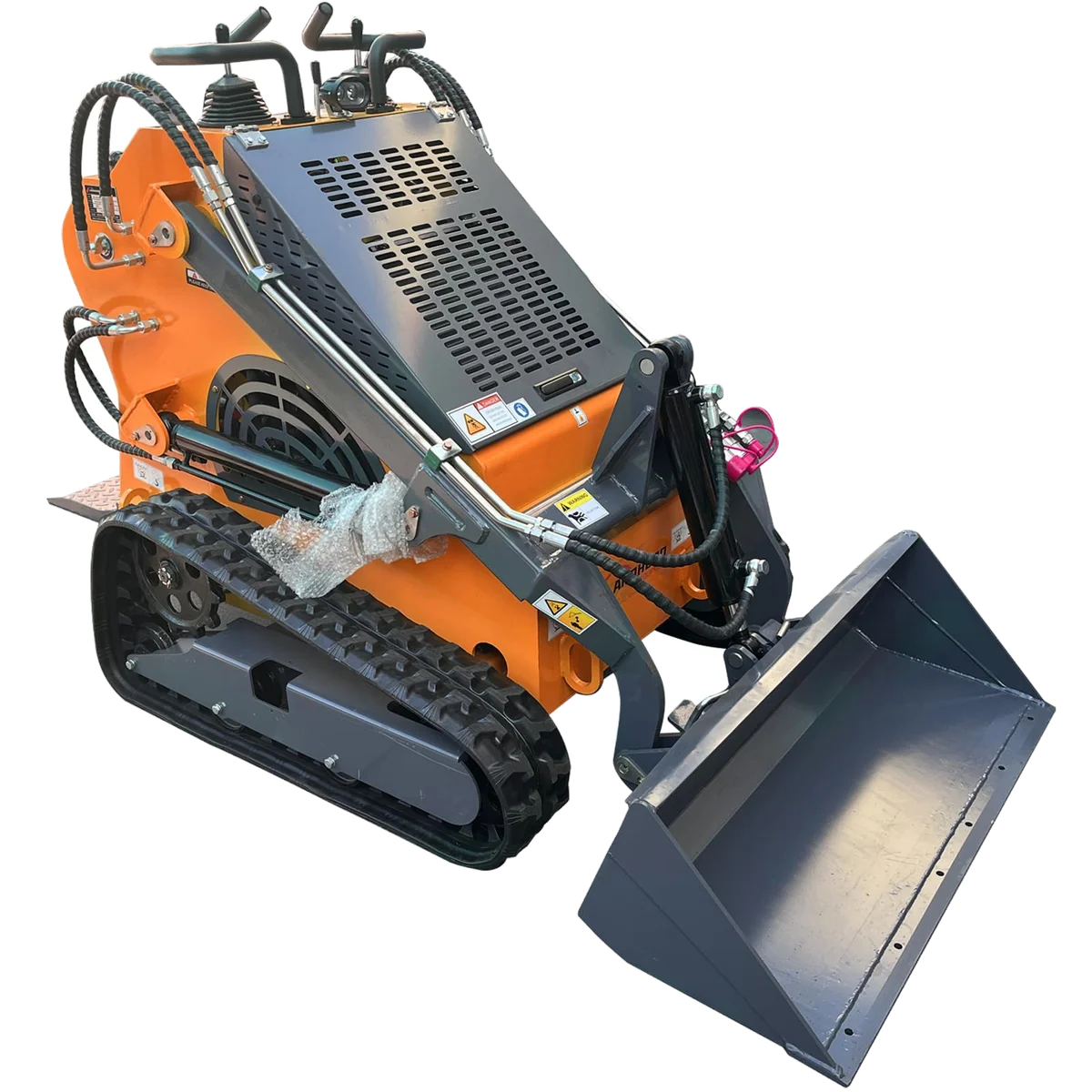
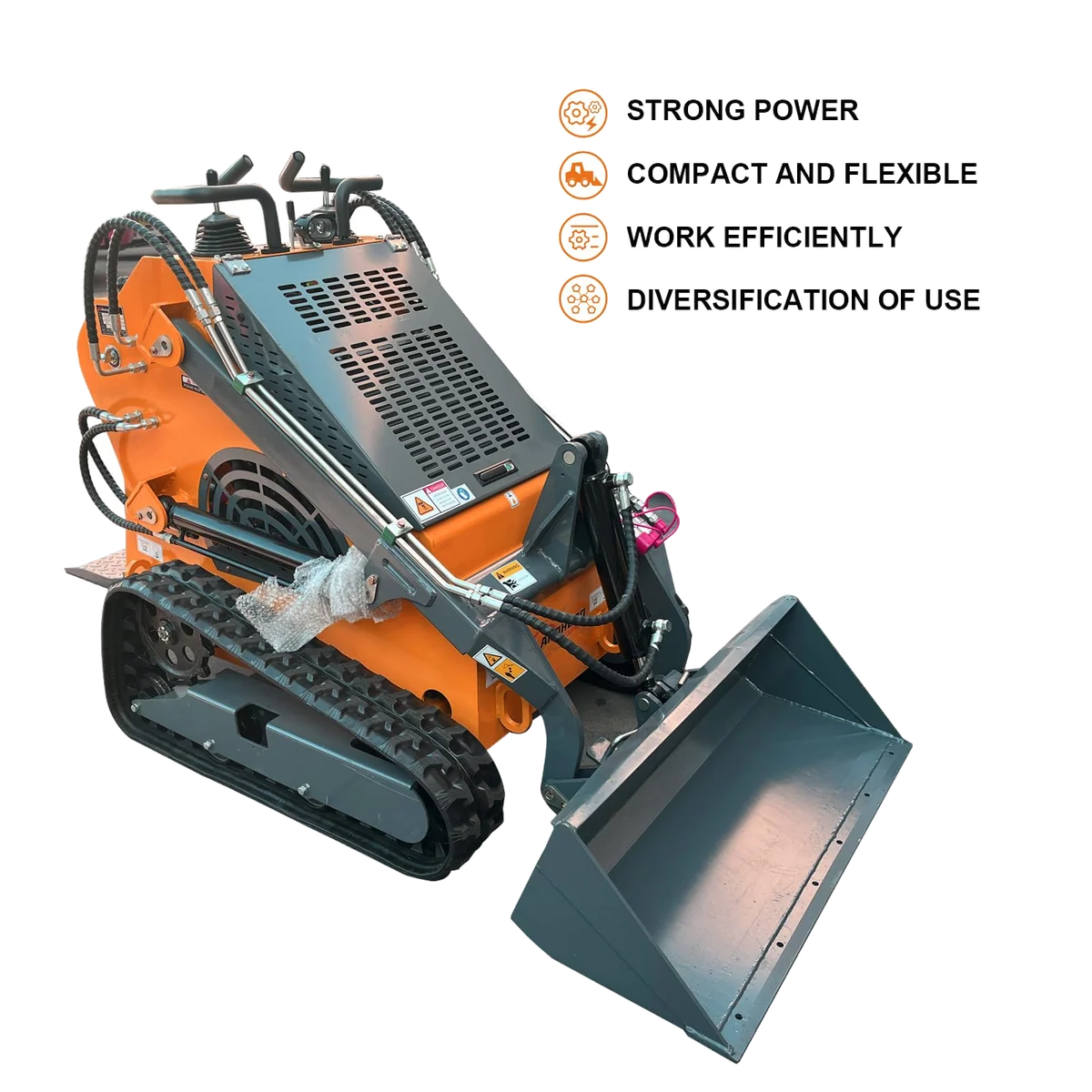
ATS Power T460 mini skid steer
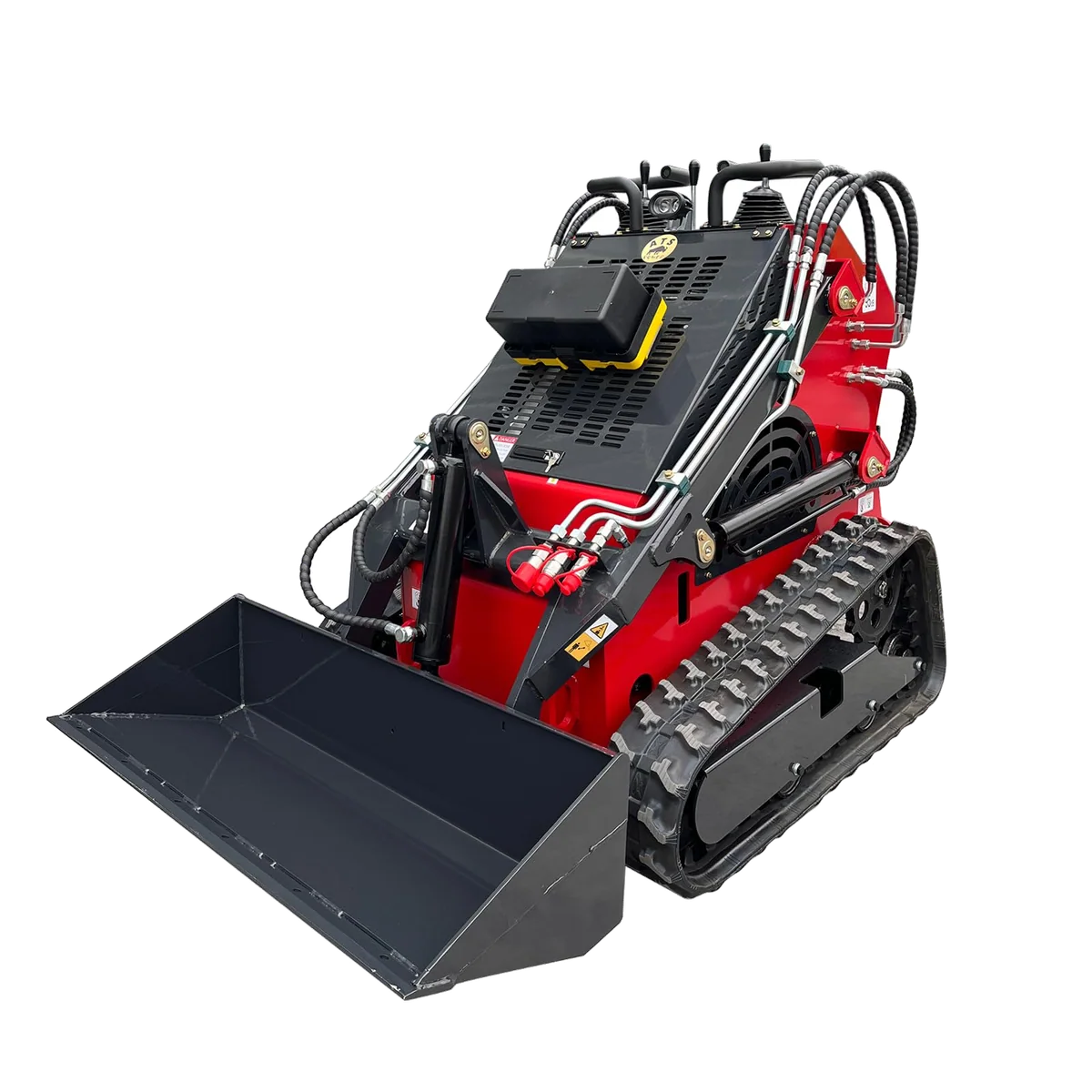
Mini Skid Steer T460A 23HP
A single letter is doing too much work here. The standard T460 is documented as a two-pump loader; the T460A listing and one exact-owner report identify the newer version as a three-pump loader. Nothing supplied maps those three circuits, states usable auxiliary output for the T460A or shows that exact machine driving a motorized attachment while both tracks travel. Its strongest exact-owner update ends at roughly eight hours of household work, which is a promising start and an unusably short reliability record.
The sales copy then makes the two models look suspiciously alike. Both advertise an 840-pound lifting capacity before calling 770 pounds the standard capacity, with no definition for either figure. Both claim a 60-inch dump height, a nine-second lift-dump-return cycle and a travel speed of 6 kilometers per hour. The T460 listing names a RATO 740 engine and 25 liters per minute of hydraulic flow without stating whether that is total or usable auxiliary flow; the T460A names a Zongshen GB680 engine but supplies no hydraulic output at all.
The older T460 earns its narrow advantage through mundane work that can actually be seen. Direct footage shows it filling the supplied bucket with loose dirt, with reduced throttle calming travel and more throttle used for the scoop. That supports basic loading on a private property. It does not establish the advertised capacity, polished controls or long-term durability, but modest observed work deserves more weight than an upgrade whose practical effect remains implied.
Evidence boundary: Skid Steer Mulch did not operate, own or measure either loader. This ranking weighs the captured listings, direct T460 footage, short exact-owner reports and relevant T460-family fault reports, while giving no credit for performance inferred from pump count alone.
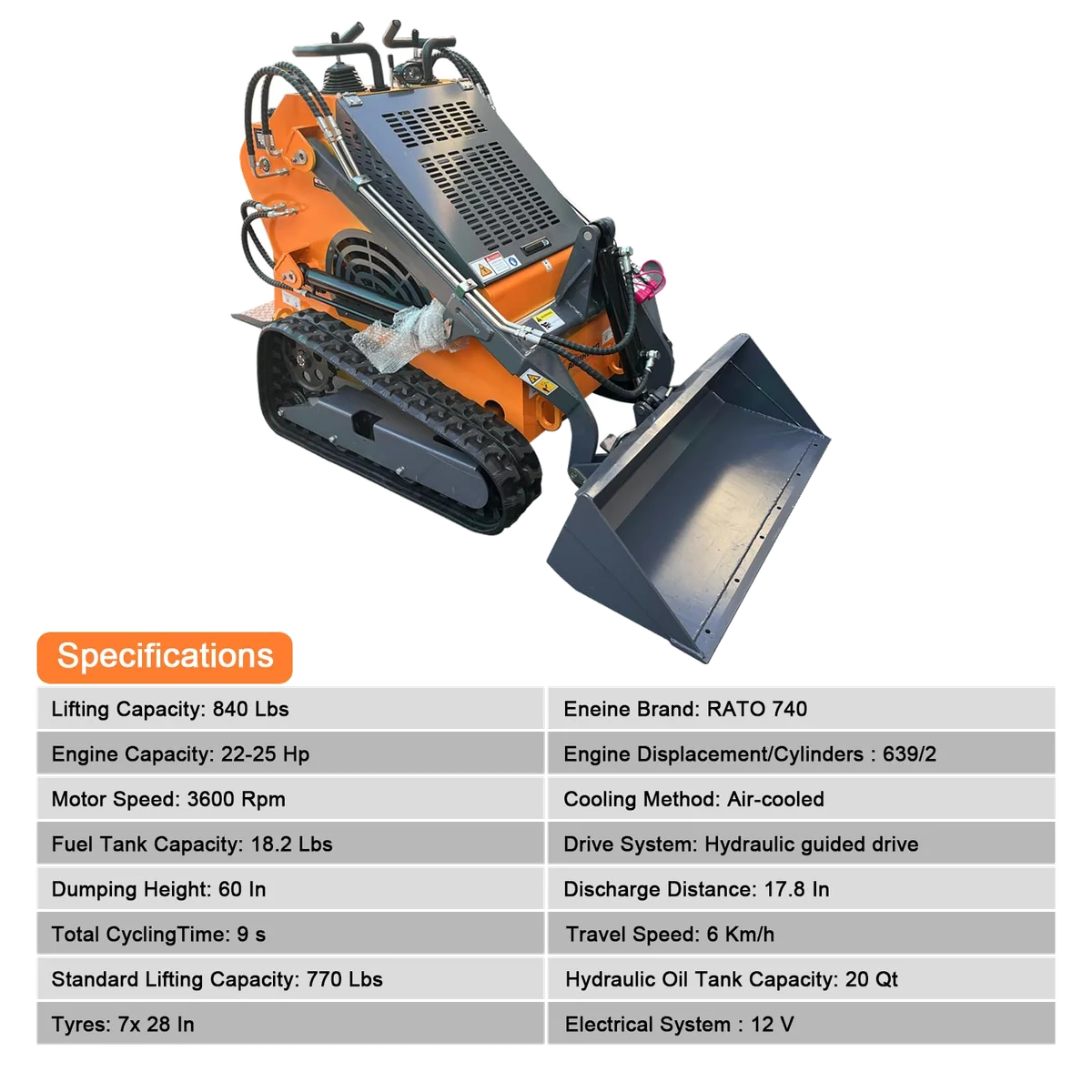
ATS Power T460 mini skid steer
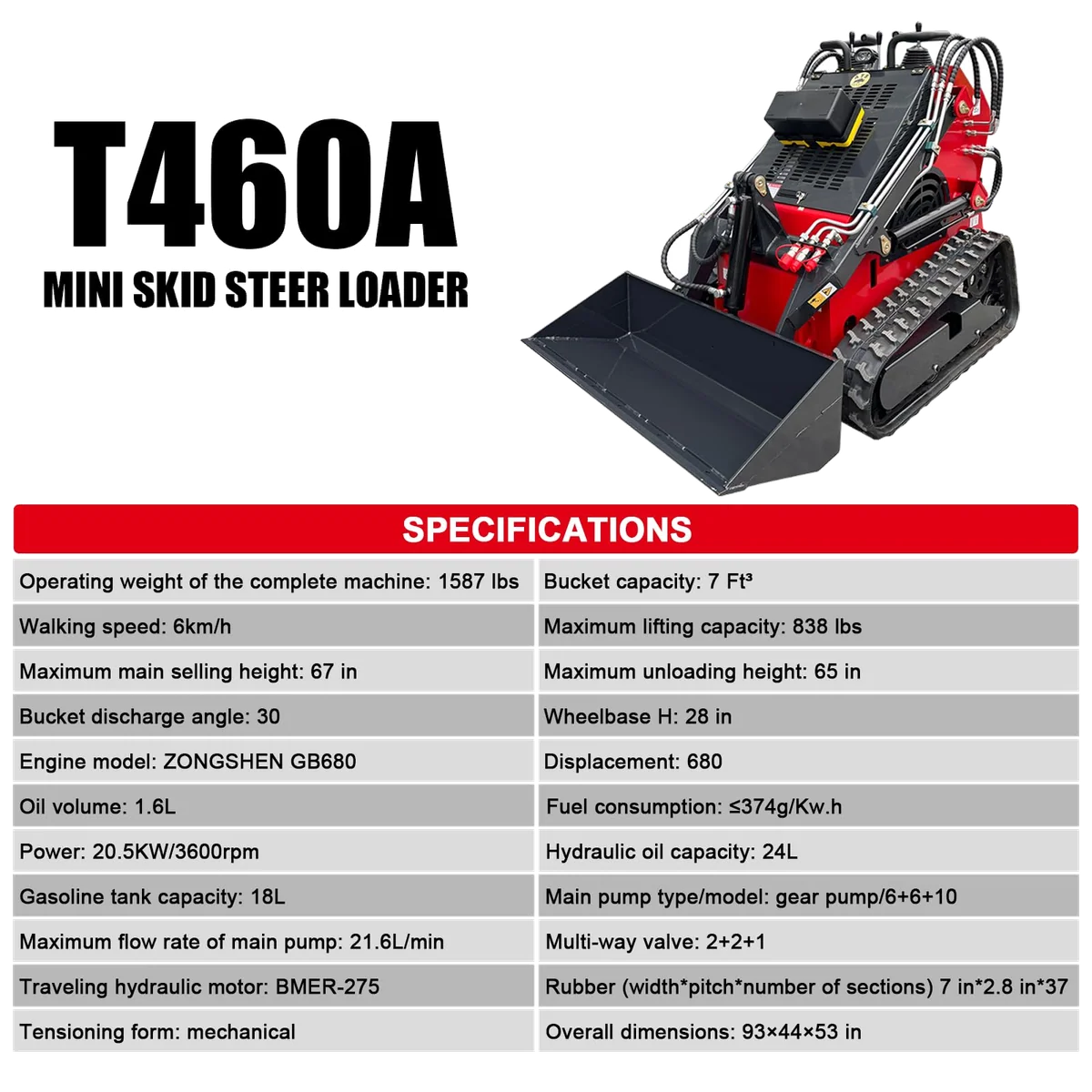
Mini Skid Steer T460A 23HP
At a Glance
| Feature | ATS Power T460 mini skid steer | Mini Skid Steer T460A 23HP |
|---|---|---|
| Price Range | — | $3,000+ |
| Finish | Orange Red | — |
| Screen size | 43.8" | 60" |
| Weight | 840 lbs | 840 lbs |
| Check Price on Amazon | Check Price on Amazon |
No score for a capability that has not been defined
The T460A may be the better machine in hardware terms, but the supplied record does not prove it. A useful comparison has to separate what is advertised, what has been observed and what remains a seller’s homework assignment.
| Decision point | Standard T460 | T460A | Evidence-led call |
|---|---|---|---|
| Identity | Older tracked platform presented here with a RATO 740 engine and two hydraulic pumps. | Newer red variant presented with a Zongshen GB680 engine and three hydraulic pumps. | Verify the model, engine and pump layout on the machine tied to the order. |
| Hydraulic information | The listing claims 25 liters per minute but omits pressure and does not define whether the figure is total or auxiliary flow. | The listing identifies three pumps but gives no flow, pressure, circuit map or measured simultaneous-operation result. | The T460A has a theoretical advantage, not a demonstrated hydraulic win. |
| Lift claim | Both 840 pounds and 770 pounds appear without test standard, load center or capacity definition. | The same 840-pound and 770-pound claims appear with the same missing definitions. | Draw, because neither number is a safe working limit. |
| Access evidence | The supplied bucket is listed at 43.8 inches wide, while chassis and track width are not stated. | Overall width is advertised as 42.2 inches, but the delivered attachment and configuration remain unclear. | Neither earns a gate-width promise without order-specific measurements. |
| Work evidence | Direct footage supports ordinary loose-dirt loading, and several exact-model reports cover short periods of use. | The strongest exact report covers roughly eight hours of light household work, with no exact powered-attachment demonstration. | The T460 wins on evidence depth, although that depth is still shallow. |
| Best defensible role | Low-hour loading, light grading, forks and hydraulic tools that can be actuated while stopped. | A job-specific experiment for a mechanically independent owner who first proves the three-pump behavior. | The T460 is the less speculative purchase for basic property work. |
The T460A owns the better hardware hypothesis; the T460 owns the more useful evidence, and observed limitations beat implied capability when either machine can become immobile over one unavailable part.
The standard T460’s hydraulic limitation is at least legible. Direct model guidance describes a grapple as practical because the operator can stop, actuate it and move again; the auger is slow, the trencher is workable and a mulcher exceeds the machine’s practical weight and flow. When a continuously powered tool takes auxiliary flow while the loader advances, one track may lose drive flow. That makes the standard model a bucket, fork and intermittent-cylinder machine first.
The third pump may let the T460A separate more of those functions, but “may” is carrying the entire case. Before choosing it for a brush cutter, tiller, sweeper, trencher or snowblower, require an exact-machine demonstration with the attachment under load, both tracks traveling, lift and curl responding, and hydraulic temperature remaining within a written limit. Our guide to two-pump and three-pump mini loaders explains why circuit layout matters more than the number of pump housings, while buyers centered on continuous hydraulic tools should start with the machines selected for powered attachments rather than promoting the T460A by inference.
Capacity cannot break the tie either. Rated operating capacity, tipping load, maximum hydraulic lift and safe fork load are not synonyms, and attachment weight plus load center can consume a surprising share of whatever capacity is real. The 770-pound and 840-pound figures need separate definitions, a named test configuration and a load chart before either enters a work plan; the distinctions are covered in our mini skid steer lift-capacity guide.
“Mini” is equally useless as an access measurement. The T460’s 43.8-inch bucket will not pass through a 42-inch opening while attached, and the T460A’s claimed 42.2-inch overall width already leaves no clearance for that opening. Removing an attachment might change the answer, but only a measurement of the delivered chassis can prove it, so map the entire route with the gate-width planning method before treating either model as a tight-access solution.
The buying order, if you refuse to walk away
The standard T460 is the less speculative loader for patient owners.
Its observed loose-dirt work, broader exact-model record and sufficient hydraulics for intermittent grapple or fork chores earn it first place in this narrow comparison.
Its two-pump system constrains continuously powered attachments, while conflicting capacity claims and weak model-specific parts support make downtime an owner’s problem.
The T460A is a hydraulic promise that still needs proof.
Its three-pump architecture is the only credible reason to keep it on a job-specific shortlist for combined travel and attachment use.
The record never maps the circuits or measures usable output, and its strongest exact-owner report covers only about eight hours.
Support risk erases the neat model hierarchy
The captured Amazon evidence makes the T460 look only slightly less unknown. Its five-star average came from one retained review whose owner found it easy to use but received no owner’s manual and supplied no hour count, workload or follow-up. The T460A’s captured listing had no customer ratings. That is one thin record against an empty one, not a reliability contest anyone should feel good about winning.
The exact-model reports also refuse to form a reassuring pattern. A standard T460 completed about seven straight hours of dirt work without reported trouble, while a different machine developed a suspected fuel-delivery or carburetor problem at only 0.9 hour. Neither report establishes what usually happens after fifty or five hundred hours.
Elsewhere in the family, buyers reported broken joystick brackets at delivery and a left drive motor said to have been assembled incorrectly, followed by more than a month without locating a replacement. Those reports do not establish a failure rate or prove the T460A shares every component. They establish the consequence of buying an unfamiliar direct-sale loader without configuration-specific part numbers, stock locations and written lead times.
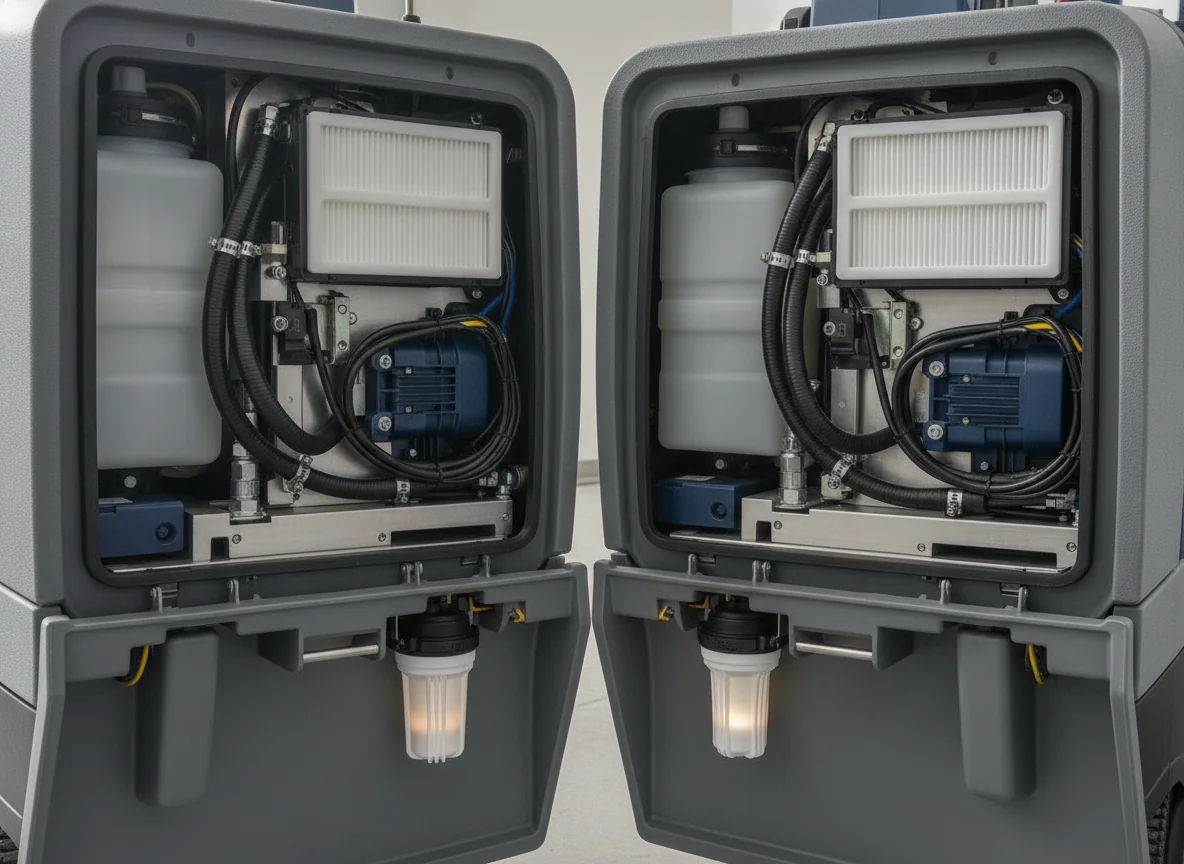
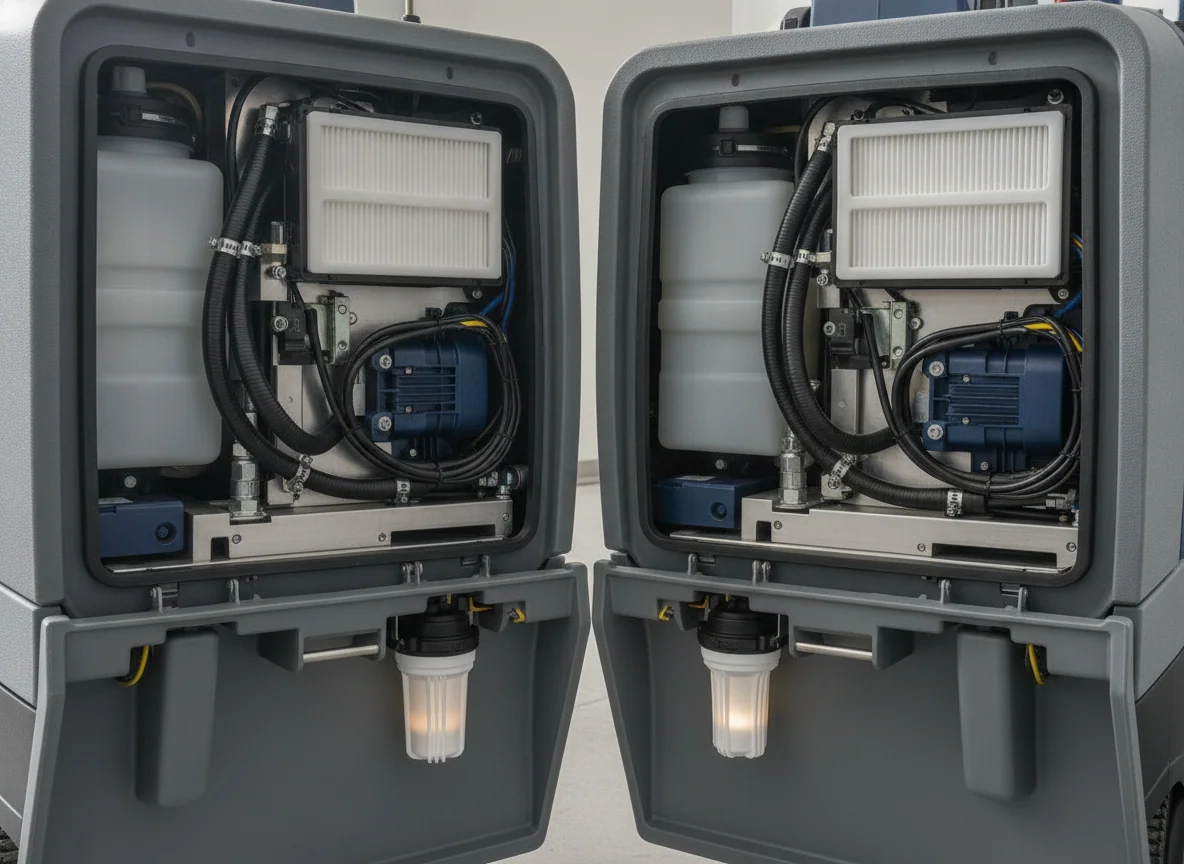
An accessible engine bay helps only with faults that can be diagnosed and repaired using obtainable parts. Before the first working day, the battery restraint, fluid levels, brackets, fasteners, hose routing, track tension, cooler fan and separate travel functions all deserve inspection cold and at operating temperature. Our guide to common mini skid steer problems and first-use checks provides the broader commissioning context, but it cannot replace the correct manual for the delivered machine.
ATS Power T460 mini skid steer
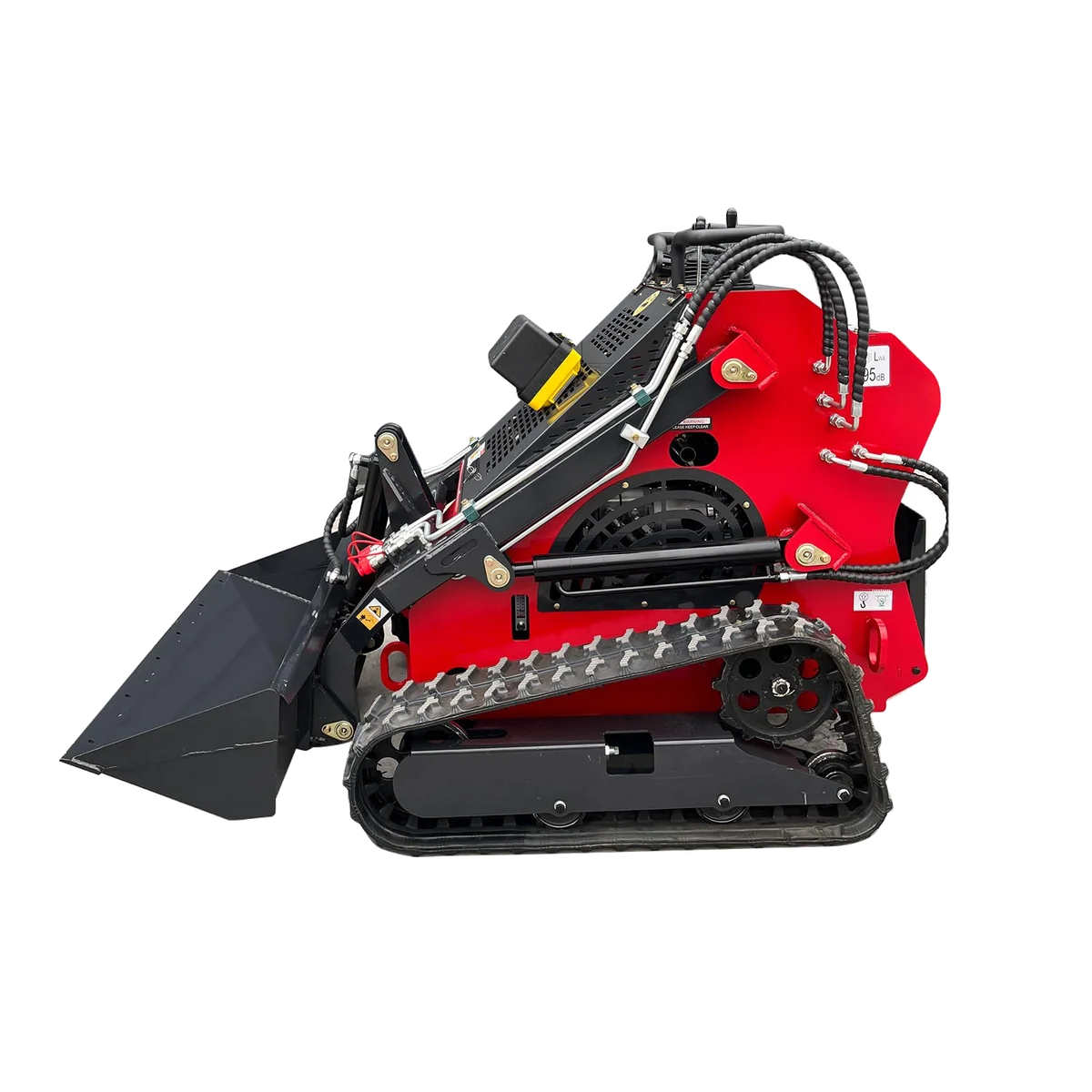
Mini Skid Steer T460A 23HP
Match the machine to the cost of a bad day
Choose the T460 only when delay is tolerable
Its best owner has recurring loose-soil, mulch, gravel, manure, light-grading, grapple or fork chores on fairly level property. That owner can inspect hardware, cross-reference routine service items, work with a local hydraulic shop and switch plans when the loader is sidelined. If a lost week is an inconvenience rather than lost revenue, the standard T460’s simpler, better-documented limits can be an acceptable bargain.
Keep the T460A conditional on a real demonstration
A mechanically independent homeowner who specifically needs better simultaneous hydraulic behavior can keep the T460A under consideration, but only after the seller demonstrates the exact serialized configuration doing the intended work. The demonstration must answer which pump feeds each circuit, whether both tracks retain drive under auxiliary load and how the cooling system is managed. Without that proof, the extra pump is a component count rather than a capability.
Walk away when uptime is what you sell
Contractors, rental operators and buyers without mechanical support should choose neither model from this evidence. Paid work needs defined capacity, predictable attachment behavior and replacement parts that can be ordered before a failure occurs. If the work list is short, compare the economics in our rent-versus-buy guide; if daily production is the goal, move to the broader mini skid steer roundup instead of asking a thin record to carry a business case.
Buyers who remain interested in the standard platform can test whether another badge produces a more convincing support case in our comparison of the ATS Power and Wolfequip T460 variants.
Make either seller clear six gates before payment
- Exact identity: Obtain order-linked photographs of the machine plate, engine plate, undercarriage, couplers and pump arrangement rather than accepting a family-name stock image.
- Defined capacity: Require separate written figures for rated operating capacity, tipping load, hydraulic lift force and fork capacity at a stated load center.
- Hydraulic behavior: Get auxiliary flow and pressure at the couplers, each pump’s function, the case-drain specification, the continuous-duty temperature range and the cooling-fan procedure.
- Attachment fit: Confirm plate dimensions, pin or latch geometry, coupler sizes, attachment weight, required flow, required pressure and hose clearance through full lift and curl travel.
- Documents and parts: Receive the correct operator manual, engine manual, hydraulic schematic, wiring diagram and illustrated parts list, followed by identifiers and written lead times for tracks, rollers, drive motors, pumps, valves and filters.
- Delivery and remedy: Put operating weight, shipping weight, included attachment, unloading method, warranty coverage, labor responsibility, parts freight, return freight and crating requirements in the order documents.
A seller who cannot answer those questions before payment is already demonstrating what technical support will feel like after a breakdown.
Frequently Asked Questions
Can the T460A run a brush cutter better than the T460?
Possibly, but the supplied evidence contains no exact-model flow, pressure, case-drain or simultaneous-travel test, so the third pump alone cannot clear a brush cutter purchase.
Do the T460 and T460A use the same manual and replacement parts?
The record does not establish interchangeability, so obtain configuration-linked manuals and part numbers rather than ordering by the T460 family name.
Will either loader fit through a 42-inch gate?
Neither should be promised through it, because the T460’s listed bucket is 43.8 inches wide and the T460A’s claimed overall width is 42.2 inches before any clearance margin.
Does a 2025 or 2026 label identify a verified model revision?
No supplied evidence ties those calendar labels to a defined engineering revision, so verify the serial plate, engine and pump layout instead.
Is the T460A worth paying more for?
Not on the supplied record, because any premium buys only an unmeasured hydraulic possibility unless the seller documents and demonstrates the exact three-pump circuit.
Ready to Choose?
Sources (3)
- Amazon listings and customer reviews — Ats Power T460 Mini and Mini Steer T460a 23hp
- Owner and reviewer video, 3 channels
- Facebook — Article — www.facebook.com