The HUAYEE HY360C beats the HY480D for most property owners.
Choose the HY360C for light bucket work on firm, mostly level property; skip the HY480D unless its extra seated capacity is indispensable and the seller accepts the engine, labor and freight risk in writing.
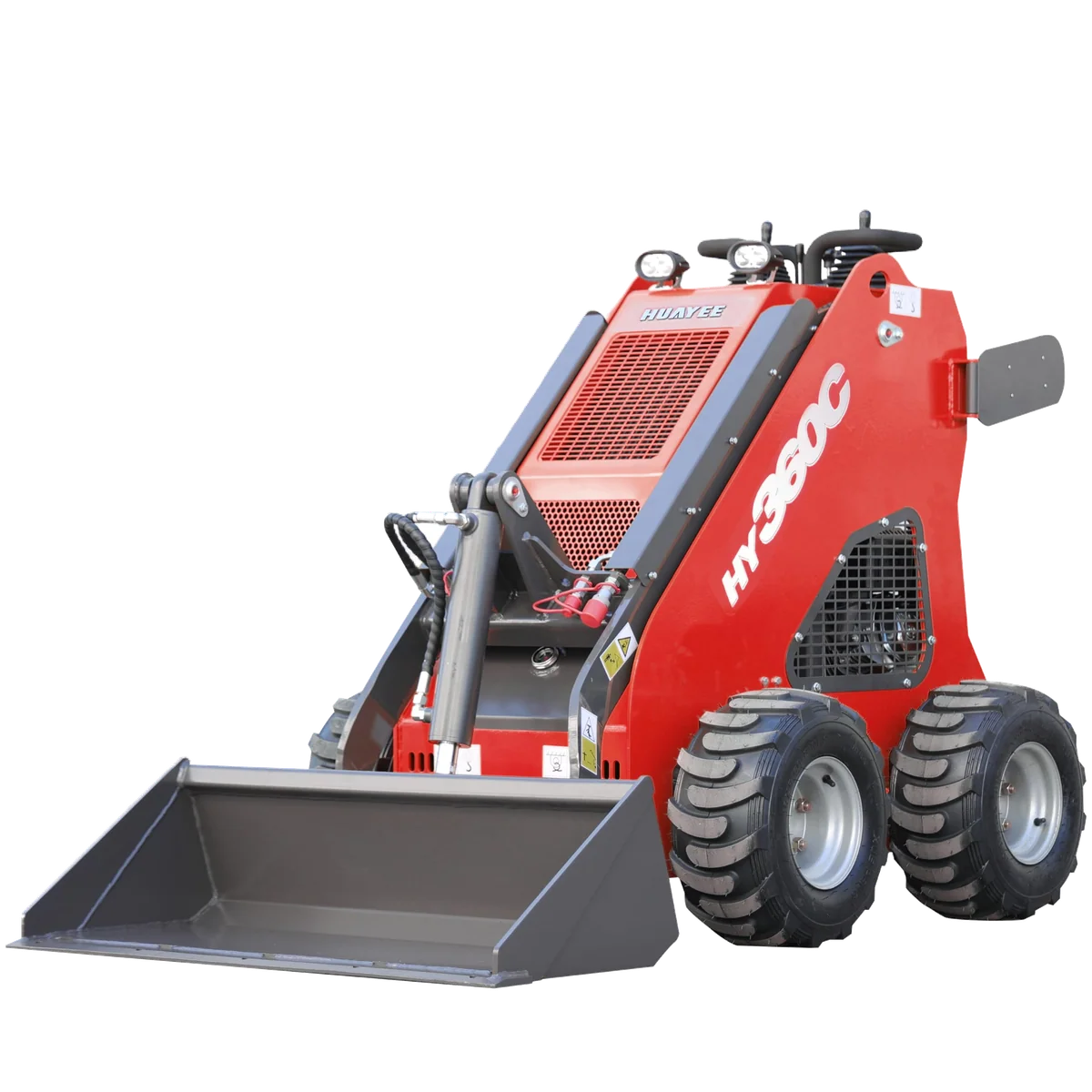
HUAYEE HY360C
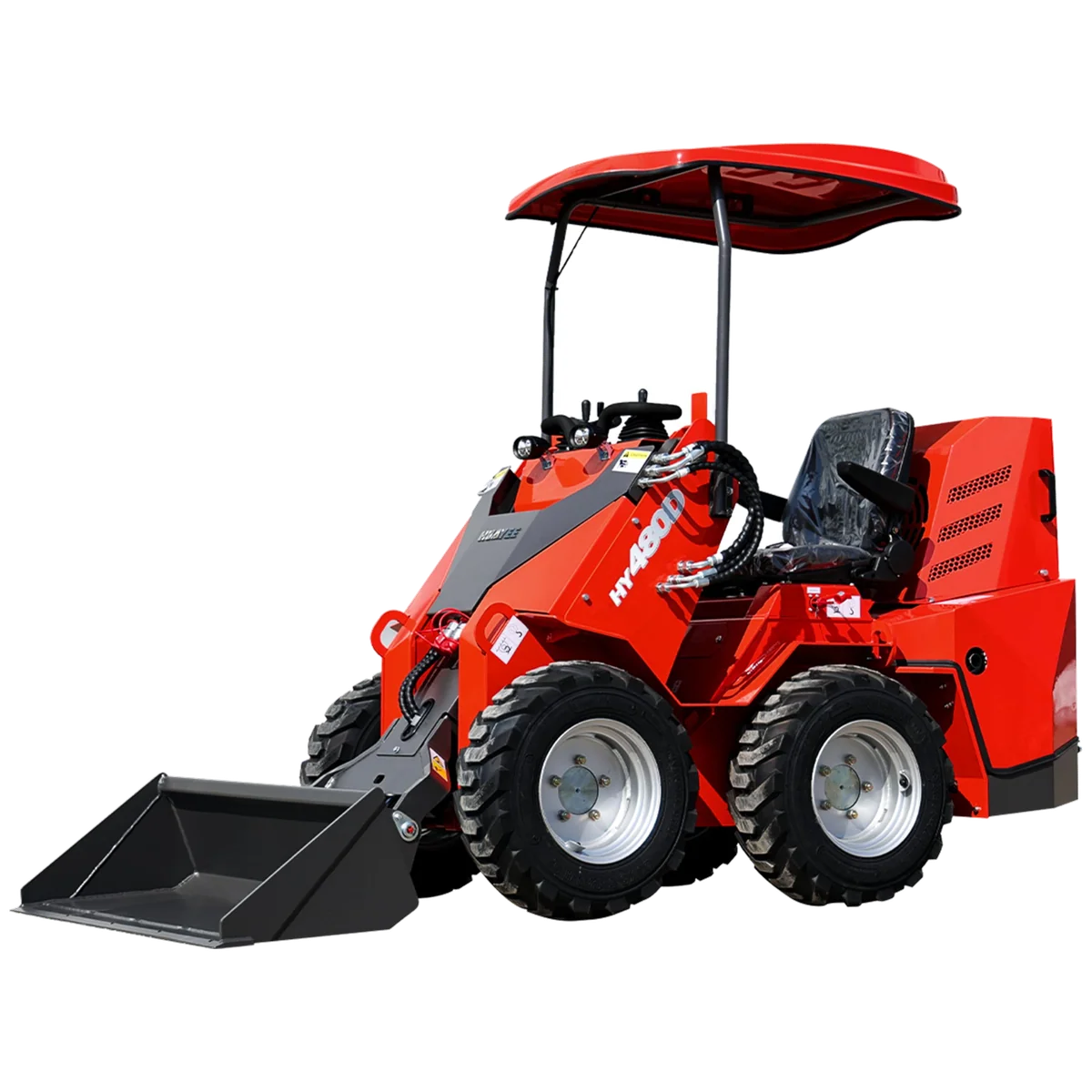
HUAYEE HY480D
The HY480D is the obvious upgrade if the listings are all you read. It claims a 23 HP Briggs & Stratton V-twin, three-pump hydraulics, a 772-pound rated operating capacity and a seated station beneath a canopy. The HY360C counters with a 13.5 HP Briggs & Stratton single, dual pumps, a 525-pound rating and a smaller stand-on chassis.
The larger specification sheet loses the comparison on ownership risk. One HY480D buyer reported that the original engine began losing power and burning oil after roughly 11 hours, was smoking heavily by about 20 hours, and was replaced only after a month of complaints. That buyer then reported that the replacement engine lasted no more than 12 hours.
This is one purchase, not a defect rate, and the cause was never established. It still matters because the retained HY480D record contains only three written reviews: two favorable accounts of power, build quality and support, plus the account involving two extremely early engines. A machine with a tiny evidence base does not get to average away the only timed durability story it has.
The HY360C is not proven for the long haul either. Its five retained reviews are all favorable, but the longest disclosed use is just 16 hours. Those reports support easy starting, smooth early control and useful bucket work around livestock stalls; they also include a battery that did not hold charge well, a wish for a counterweight option and one machine that arrived flooded after its fuel was left on during freight.
That leaves an intentionally narrow winner. The HY360C has the more coherent case for replacing a wheelbarrow and shovel around a barn, yard or small property, while the HY480D asks the buyer to accept more weight, more width and a much harder engine story in exchange for its additional capacity and seat.
HUAYEE HY360C
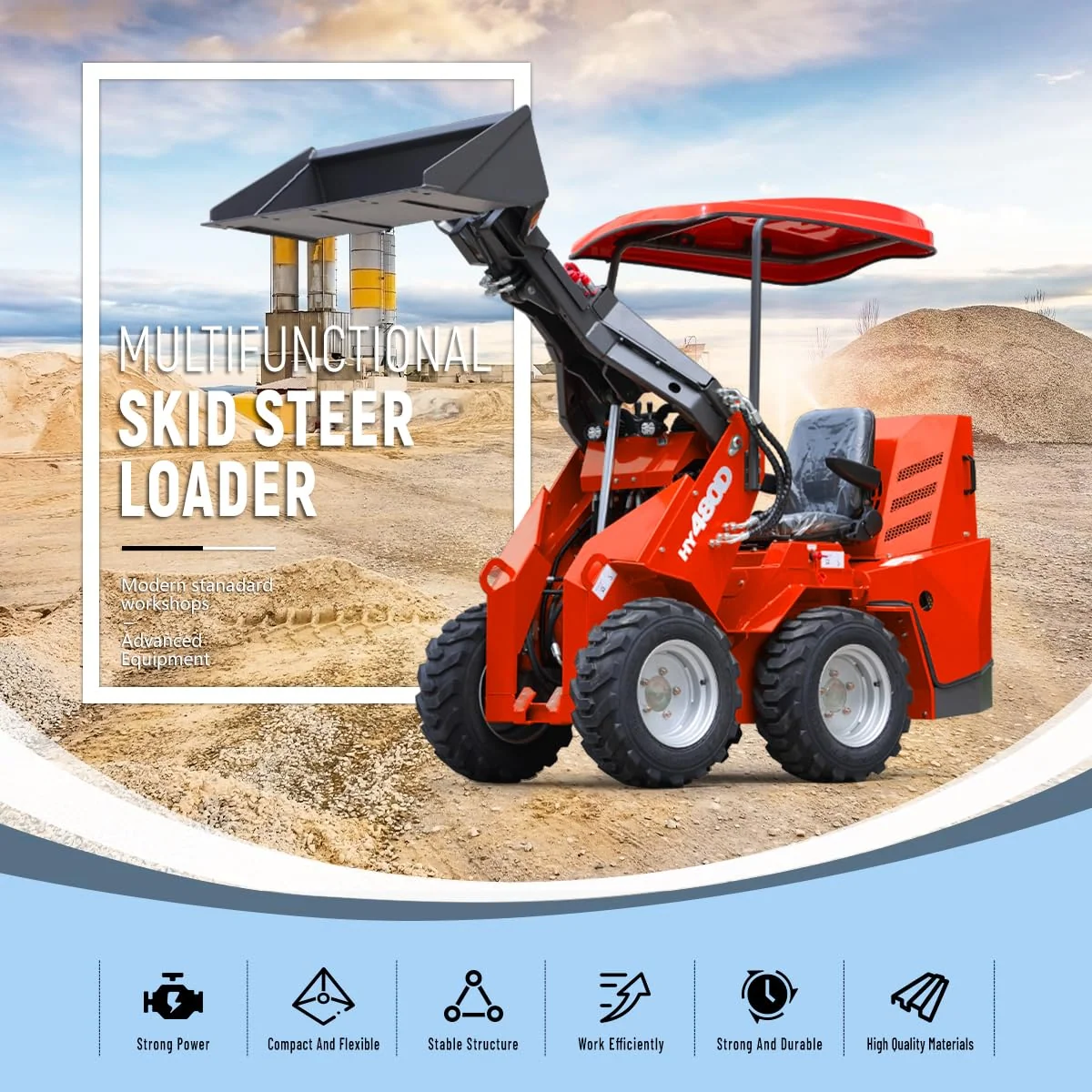
HUAYEE HY480D
At a Glance
| Feature | Editor's Pick HUAYEE HY360C | HUAYEE HY480D |
|---|---|---|
| Price Range | — | — |
| Finish | Red | Yellow |
| Screen size | 63" | 60" |
| Weight | 525 lbs | 772 lbs |
| Check Price on Amazon | Check Price on Amazon |
The upgrade gets larger everywhere except confidence
These machines share a brand, gasoline power, four wheels and an included utility bucket, but they are not two trims of the same loader. The HY360C is the compact stand-on option; the HY480D is a substantially heavier sit-down machine whose extra capacity changes access, transport, stability and repair exposure.
| Decision point | HY360C | HY480D | What matters |
|---|---|---|---|
| Operator format | Wheeled and stand-on | Wheeled and seated beneath a canopy | The smaller platform favors access, while the seat favors buyers who cannot or do not want to stand through a job. |
| Listed engine | 13.5 HP Briggs & Stratton single-cylinder gasoline engine | 23 HP Briggs & Stratton V-twin gasoline engine | The larger engine supports the HY480D’s broader capability claim, but horsepower does not establish durability. |
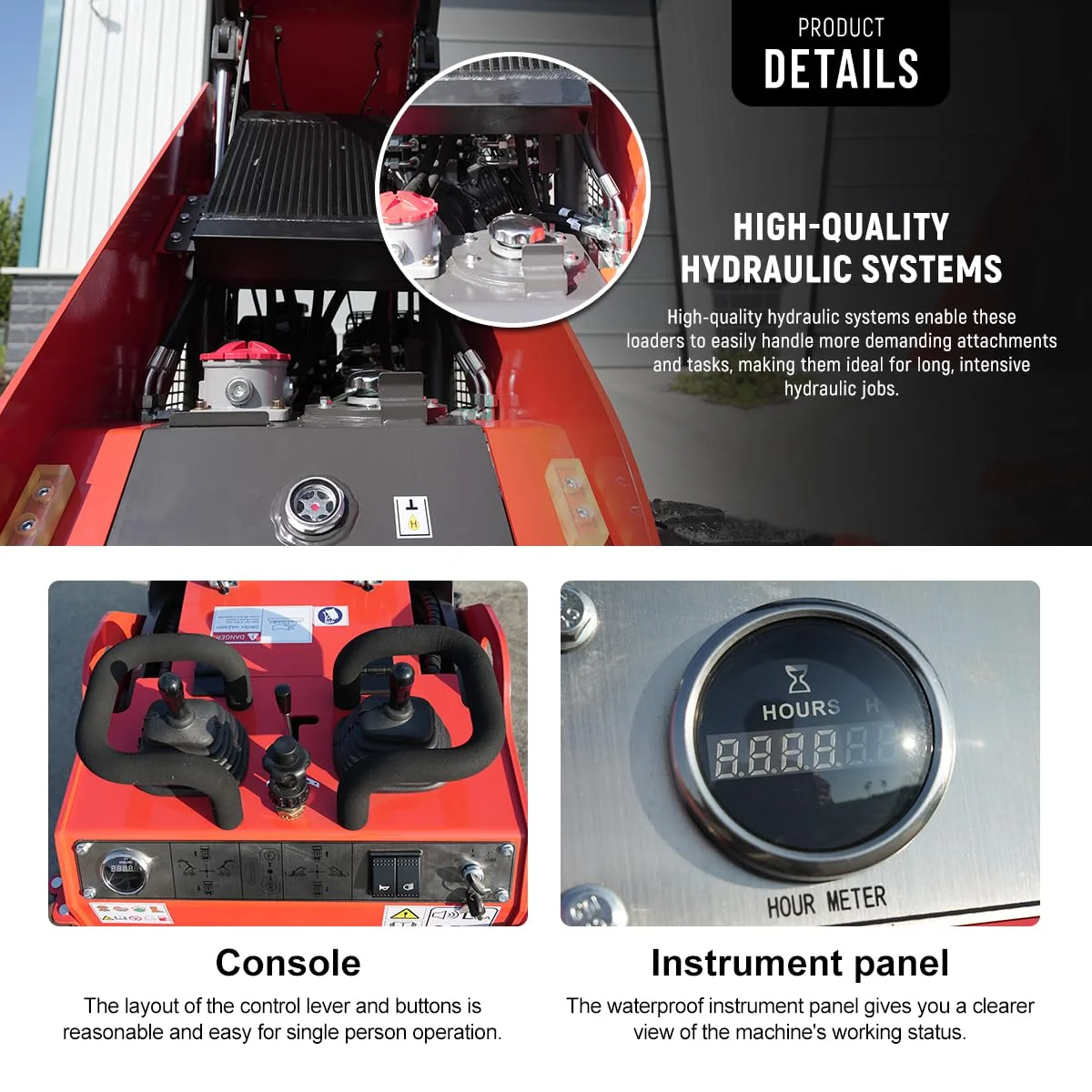
| Listed hydraulics | Dual pump, dual valve and 17 MPa | Three pump, three valve and 17 MPa | Neither exact listing supplies auxiliary flow, case-drain details or a continuous-duty limit. |
| Rated operating capacity | 525 lb | 772 lb | The HY480D adds 247 lb of seller-rated capacity, subject to the attachment, load center, height and stability conditions the listings do not define. |
| Separate maximum claim | 1,323 lb maximum lifting capacity | 1,764 lb maximum lifting force | Neither figure is safe payload |
| Listed operating weight | 1,510 lb | 2,050 lb | The HY480D adds 540 lb before trailer, attachment, fuel, chains or other transport equipment enter the calculation. |
| Listed dimensions | 83 × 41 × 52 in | 102 × 45 × 74 in | The HY480D is 19 in longer, 4 in wider and 22 in taller on the seller figures. |
| Bucket and dump height | 0.13 m³ bucket and 63 in maximum dump height | 0.15 m³ bucket and 60 in dump height | The larger model gets more listed bucket volume but not the higher listed dump figure. |
| Best-supported work | Light bucket chores on firm ground | Low-urgency bucket and grading work | Neither record supports attachment-led commercial production. |
The capacity gap is real, but the big numbers are not interchangeable
The HY480D’s 772-pound seller rating is higher than the HY360C’s 525-pound rating, yet those figures still need a load center, lift height, attachment allowance and tipping condition before they become a safe work plan. The separate 1,323-pound and 1,764-pound claims are even less useful because the listings do not provide comparable test definitions or load charts. Hydraulic willingness to raise a load is not proof that the chassis can carry it without lifting the rear, overloading an axle or becoming unstable at height.
Skid Steer Mulch would plan both machines around the lower rated operating figures until the seller supplies model-specific documentation. The site’s guide to mini skid steer lift capacity explains why rated capacity, tipping load, breakout force and maximum hydraulic force cannot substitute for one another.
Four inches decide more than the brochure admits
A nominal 42-inch opening leaves only one inch of total clearance around a machine listed at 41 inches wide, so even the HY360C is not a responsible fit assumption without measuring the delivered loader, bucket, posts, hinges and approach. The 45-inch HY480D cannot enter that opening at all. At a nominal 48-inch gate, the catalogue arithmetic leaves seven inches for the HY360C and only three for the HY480D before real-world obstructions consume any of it.
That makes the HY360C the only credible narrow-access candidate in this pair, not a guaranteed narrow-gate machine. Measure the tightest fixed point, the turn on each side and the actual attachment width using the process in the mini skid steer gate-width guide.
The platform choice is genuine, not cosmetic
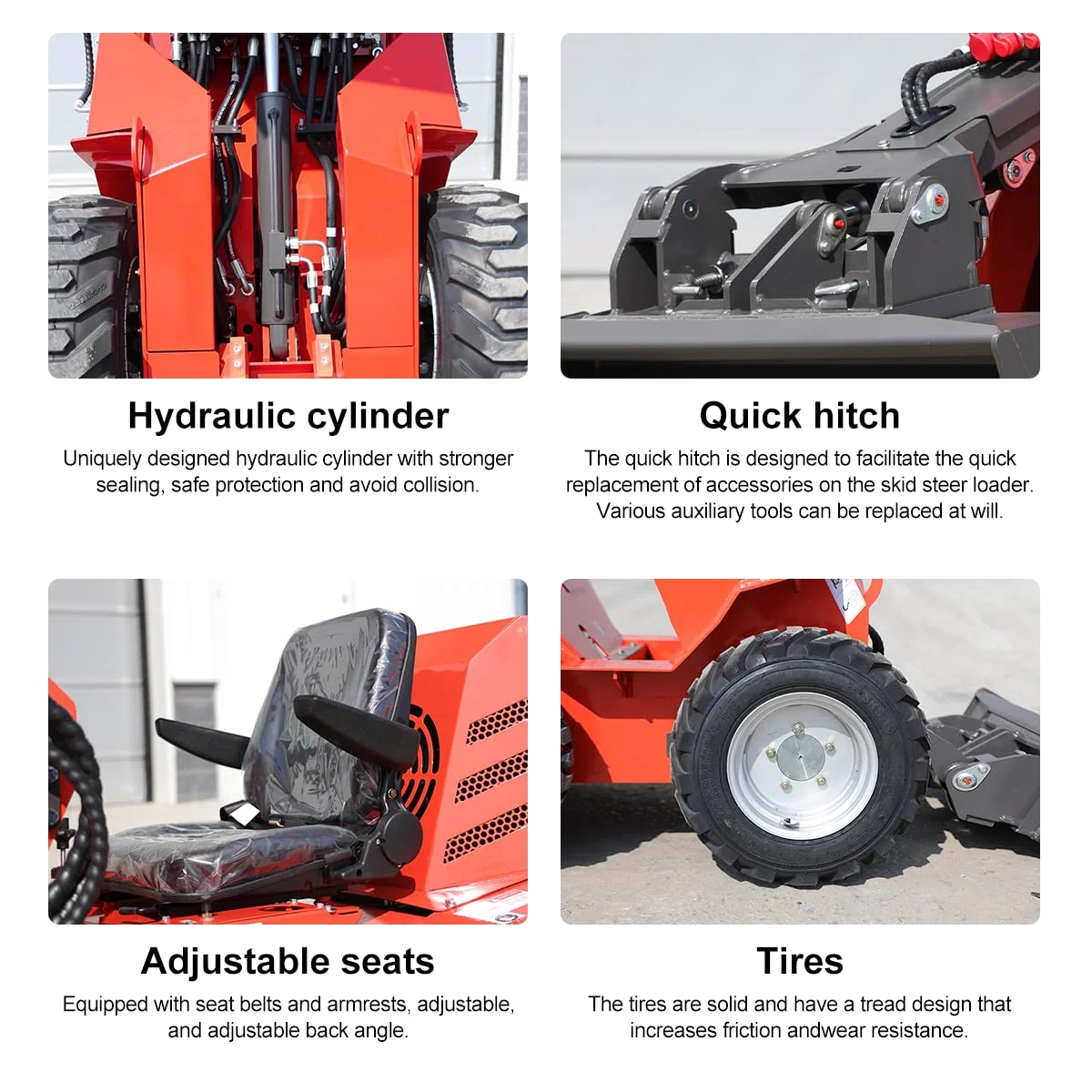
The HY360C keeps the operator standing behind a shorter, lower machine. That format can make frequent mounting, visibility near the attachment and tight storage easier, but it also asks the operator to remain on a compact platform while the chassis pitches. The HY480D supplies a seat, belt, hand controls and overhead canopy, although the material available here does not certify that canopy as a rollover or falling-object protective structure.
A seat can be a legitimate requirement rather than a luxury. It is also the HY480D’s strongest exception case: a buyer who cannot comfortably use a stand-on platform may reasonably prefer its operating position, provided that preference is worth accepting the larger machine and unresolved engine risk. The broader ergonomic trade-off is covered in the guide to stand-on and sit-down mini skid steers.
Both machines remain wheeled loaders. Wheels avoid track tension, rollers and derailment, but neither exact record establishes dependable performance in mud, on cross-slopes or while turning with a raised load. Buyers whose property is routinely soft or uneven should settle the chassis question with the wheeled-versus-tracked guide before choosing between these two models.
Neither hydraulic label is an attachment prescription
Three pumps make the HY480D more interesting on paper than the HY360C’s dual-pump system, but pump count does not reveal gallons per minute at the couplers, priority under simultaneous travel, heat during continuous use or whether a case drain is available. Both listings publish 17 MPa pressure without the flow data needed to match a mower, trencher, grinder, tiller, power rake or mulching head.
The included buckets are therefore the honest common ground. Passive tools may also be possible after the mount, attachment mass, hose clearance and changed load center are checked. Do not buy either loader around a powered implement until the machine and attachment agree on every item in the attachment compatibility guide; buyers whose main job needs continuous hydraulic power should instead begin with the site’s powered-attachment mini skid steer guide.
The owner records are thin, but they are not equally risky
The positive HY480D reports describe real capability: moving concrete blocks and large stones, pulling a stump, pushing the raised front of a small car, grading and preparing a container site. One buyer also praised responsive phone support. Those accounts show that the machine can perform useful work; they do not erase the second buyer’s report of two short-lived engines or establish how either engine was damaged.
The failed-engine account also turns warranty wording into a practical question. The buyer says a month of complaints preceded the replacement and that another repair or engine would then be at personal expense. The exact HY480D listing promises one year of coverage for manufacturing defects, with repairs or parts provided and freight returns considered case by case, but it does not allocate diagnosis, shop labor, engine installation, fluid costs or the downtime between complaint and remedy.
The HY360C has smaller warning signs rather than an equivalent failure story. A battery-charge complaint, missing counterweight option and fuel-related freight problem can all annoy an owner, while the short observation periods leave chains, seals, pumps, motors and high-hour engine behavior untested. Its exact listing uses substantially similar one-year coverage language, so the smaller machine still suits a mechanically capable buyer better than someone expecting a nearby dealer to own every repair.
Neither machine has the evidence for paid work that must start every morning. A low purchase commitment cannot compensate a crew for waiting on remote diagnosis or freighted parts, and the rent-versus-buy guide is the better calculation when downtime has an hourly cost.
Here is the purchase order the evidence supports.
The HY360C is the better fit for light recurring property chores.
Its 41-inch listed width, 1,510-pound machine weight, Briggs engine and favorable early bucket-work reports form the more coherent case for barns and firm yards.
The five retained reviews reach only 16 disclosed hours, while auxiliary flow, a usable load chart and local repair obligations remain undocumented.
The HY480D is a larger machine that most buyers should leave alone.
It places second because its seller-listed 772-pound rating, seated station and three-pump architecture broaden the work envelope without making that promise safe to buy.
One owner reported power loss and oil burning in the original engine after roughly 11 to 20 hours, followed by a replacement engine that lasted no more than 12 hours.
HUAYEE HY360C
HUAYEE HY480D
Choose the job before you choose the chassis
The HY360C wins this comparison inside a defined boundary, not across every mini-loader job. It makes sense when the included bucket solves the actual problem, the route is firm and measured, the owner can perform routine service, and a delayed part will inconvenience a project rather than stop a business.
Choose the HY360C
The smaller loader fits a hands-on property owner.
- The recurring work is moving bedding, manure, mulch, soil or other controlled loads with the included bucket.
- The surface is firm and mostly level, with enough room to keep loads low while travelling.
- The measured access route genuinely clears the delivered machine rather than merely matching its listed width.
- The owner can inspect fluids, fasteners, hoses, pins, battery condition and freight damage before first use.
- The seller documents the load rating, manuals, parts route and warranty remedy before payment.
The narrow HY480D exception
The larger loader only fits a buyer who needs the seat and can absorb downtime.
- A seated operating position is important enough to rule out the stand-on HY360C.
- The 45-inch width, 2,050-pound listed machine weight and taller canopy clear every gate, trailer and storage constraint.
- The work genuinely benefits from the higher seller-rated capacity but does not depend on the undefined 1,764-pound force claim.
- A long engine or parts delay would postpone private work rather than cancel paid jobs.
- The seller accepts engine diagnosis, labor, installation, parts freight and return responsibility in writing.
Choose neither
Both machines are wrong when uncertainty is the expensive part.
- The purchase depends on a brush cutter, mulcher, trencher, grinder or other continuous-flow attachment.
- The route includes routine mud, significant side slopes or a doorway that leaves no working clearance.
- The planned load approaches a maximum claim that has no model-specific load chart.
- The machine must support a crew, livestock schedule, tenant obligation or other job that cannot wait for remote support.
- No mechanically capable owner or local shop is prepared to inspect and maintain an unfamiliar imported loader.
If the HY360C’s narrow use case is too small and the HY480D’s risk is too large, restart around the job rather than forcing a choice between these two. The site’s guide to the best mini skid steers for farms, barns and small properties is the more useful next step for bucket-led property work.
Frequently Asked Questions
Which HUAYEE wheeled loader should most property owners choose?
Most should choose the HY360C for light bucket work because its smaller chassis and less alarming early owner record create the more defensible purchase case.
Does 772 pounds describe the HY480D’s total weight?
No, the seller lists 772 pounds as rated operating capacity and separately lists the HY480D itself at 2,050 pounds.
Is the HY480D’s 1,764-pound figure a safe payload?
No, the listing calls it maximum lifting force rather than rated operating capacity, and it supplies no load chart that would make it a safe travel or full-height payload.
Will either machine clear a 42-inch gate?
The 45-inch HY480D will not, while the 41-inch HY360C leaves too little nominal clearance to trust without measuring the delivered machine, gate hardware and approach.
Why does the HY480D’s three-pump system not make it the automatic winner?
Pump count does not establish auxiliary flow, simultaneous-function performance, cooling capacity, case-drain provision or engine durability.
Can either loader be chosen around a brush cutter or mulcher?
No exact listing supplies the flow and continuous-duty data needed for that purchase, so neither machine should be bought around a powered cutter or mulching head.
Does the HY360C have a proven long-term reliability record?
No, its five retained reviews are encouraging but reach only 16 disclosed operating hours at most.
Is the seated D model the same machine as the tracked C model?
No, the D model covered here is wheeled and seated, while the separate HY480C review covers a tracked stand-on loader whose specifications must remain separate.