The MMS MS380L beats the MS360L, but 23 HP does not buy a third pump
Buy the MS380L for repeated bucket and grading work on firm ground if MMS documents the current machine’s load and hydraulic specifications; choose the MS360L only for lighter homeowner chores, and skip both for powered cutting or revenue-critical uptime.
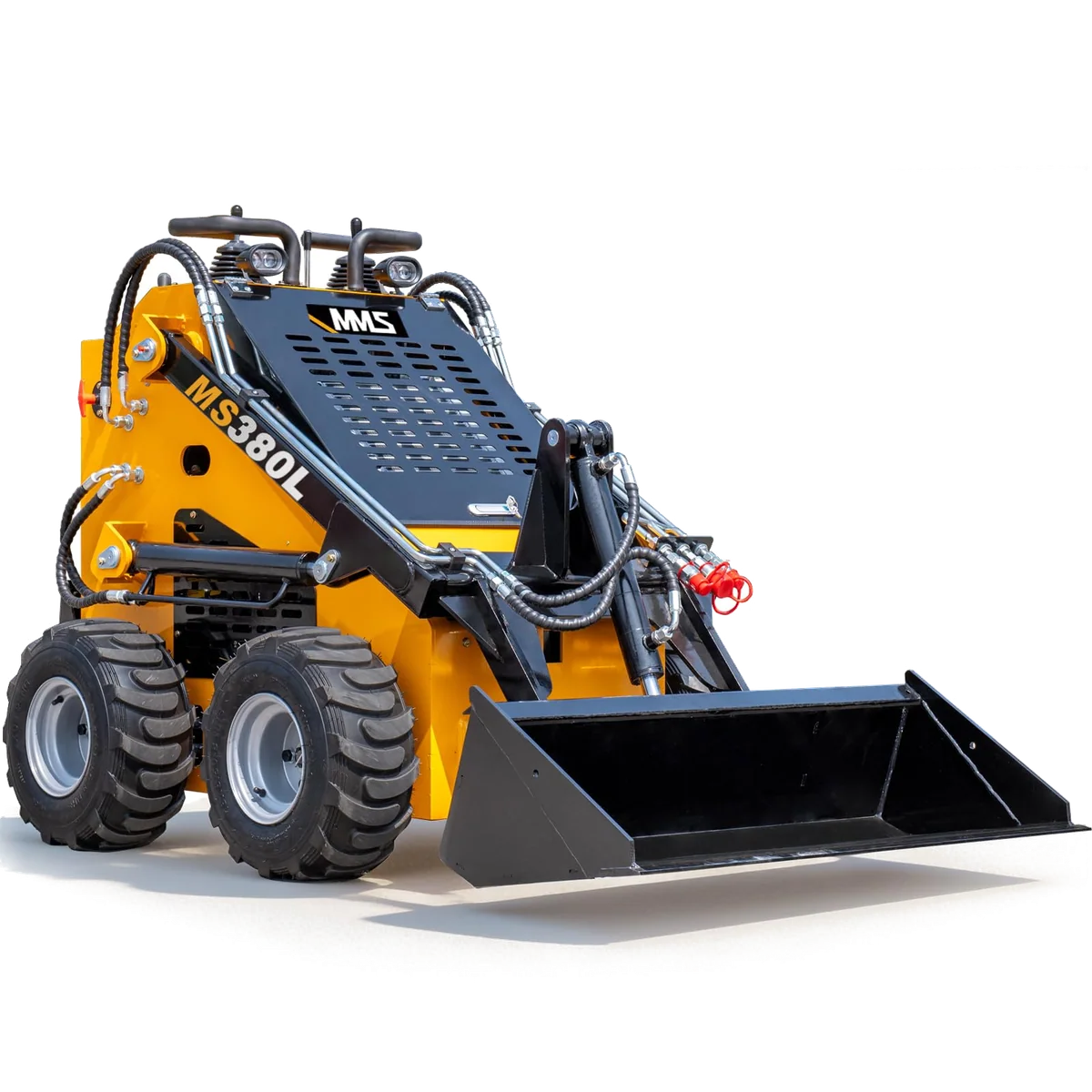
MMS MS380L
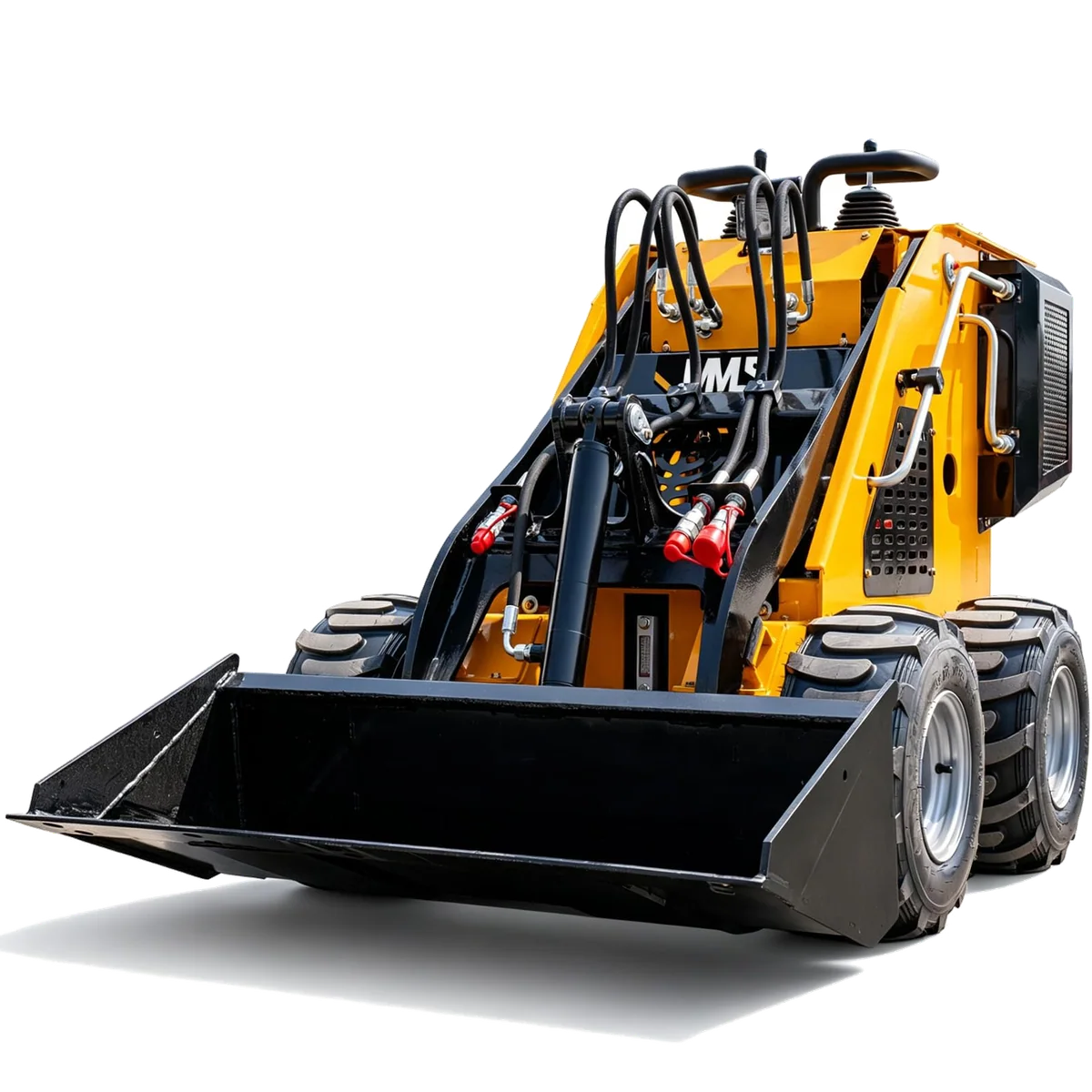
MMS MS360L
The model numbers promise a tidy upgrade: the MS360L listing advertises a 13.5 HP, 420 cc Rato gasoline engine, while the MS380L advertises 23 HP from a RATO gasoline engine. Both are wheeled compact loaders sold with buckets. The higher engine rating is a real catalogue distinction, but neither exact listing supplies the comparable lift, breakout or hydraulic figures needed to turn that distinction into a claim that the MS380L carries more, cycles faster or powers a demanding attachment better.
The owner evidence has an unusual wrinkle. The two exact Amazon review records retain the same nine texts in a different order, including the same 10-hour home-use report, battery complaints, damaged hand levers, bad pallet and minor freight damage. Counting those records as 18 independent owners would be fiction. They show a useful family-level pattern of early bucket work and uneven arrival preparation, but they cannot tell us that one of these two models is more reliable than the other.
Skid Steer Mulch did not operate, weigh or load-test either machine. This is therefore not a fictional performance contest; it is a test of whether the only documented performance step, engine rating, can overcome the pair’s shared unknowns. A larger suffix does not answer that on its own.
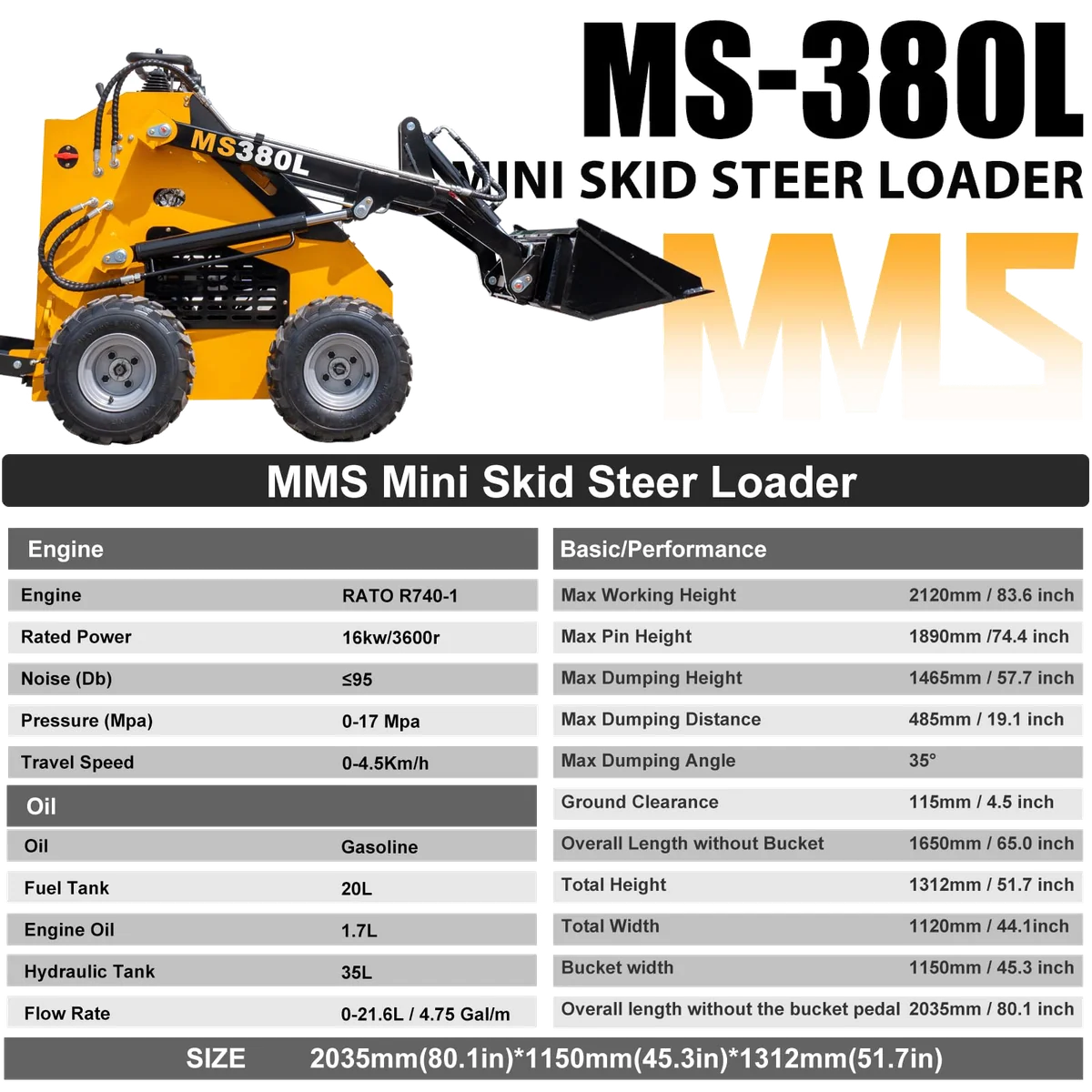
MMS MS380L
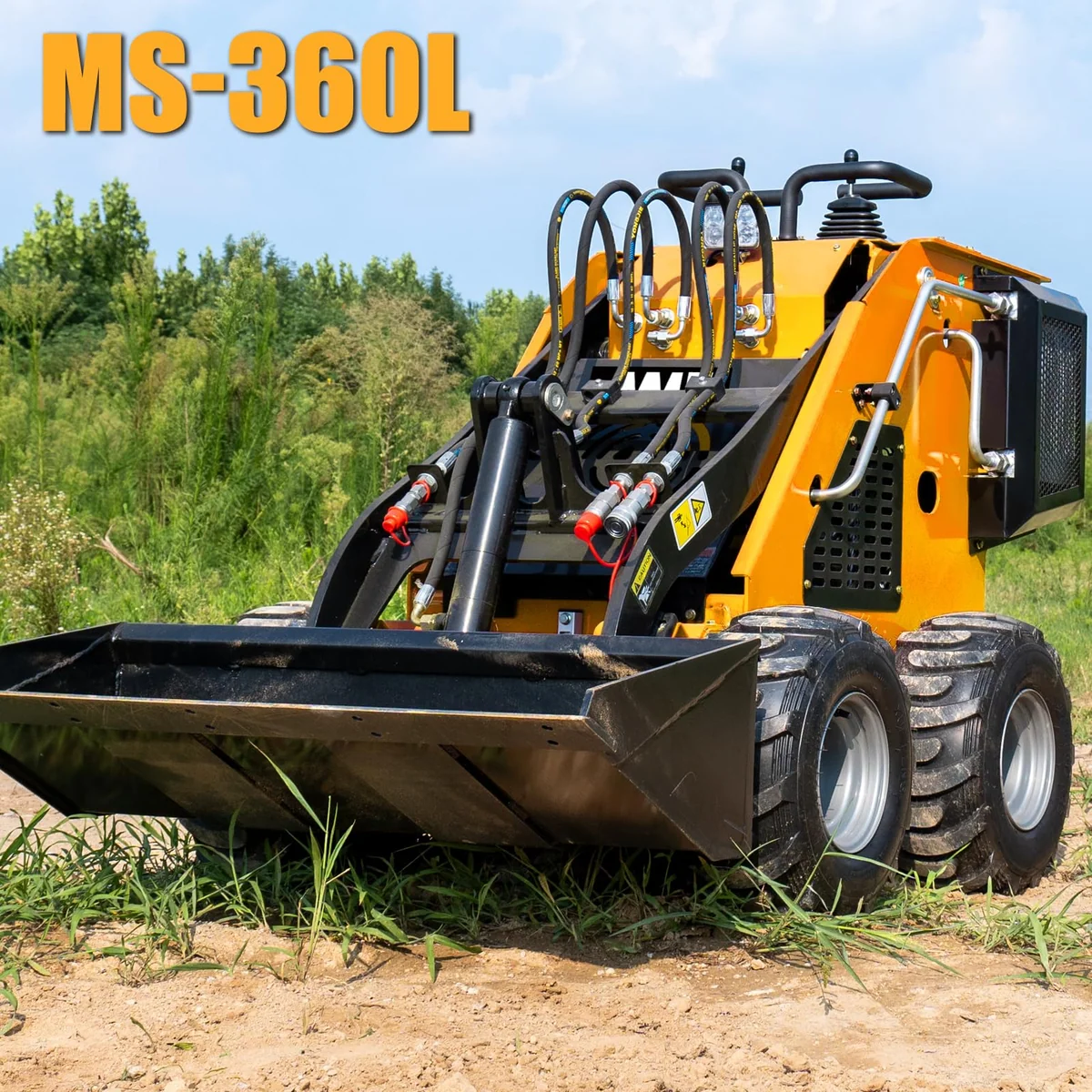
MMS MS360L
At a Glance
| Feature | MMS MS380L | MMS MS360L |
|---|---|---|
| Price Range | — | — |
| Finish | Yellow | Yellow |
| Check Price on Amazon | Check Price on Amazon |
The engine grows; the evidence does not
A comparison this close is decided by what the listings leave blank. Neither page publishes operating weight, rated operating capacity, tipping load, lift height, dump reach, breakout force, auxiliary flow, relief pressure, case-drain provision, exact mounting-plate geometry or overall width. The MS380L page adds a dual-circuit claim, but that describes composite travel and boom control rather than proving an independent attachment circuit.
| Decision point | MS360L record | MS380L record | Buying consequence |
|---|---|---|---|
| Advertised engine | 13.5 HP, 420 cc Rato gasoline engine with an EPA claim | 23 HP RATO gasoline engine with no exact engine model or displacement supplied | The MS380L leads on nameplate output, not proven loader productivity. |
| Hydraulic architecture | The retained owner record calls it a two-pump machine; flow, pressure and case drain are unpublished. | The retained owner record calls it a two-pump machine; the listing’s dual-circuit language does not establish a third pump. | No powered-attachment advantage is proven for either model. |
| Bucket evidence | The overlapping owner texts report moving rock and dirt, grading a greenhouse area and landscaping around homes. | The same retained texts appear on this exact page, so they support the job class but not a head-to-head win. | Buckets and light grading are the best-supported work for both. |
| Undercarriage | Wheels, with the listing emphasizing travel on flat surfaces | Wheels, with the listing emphasizing tire grip and maneuverability | Both suit firm ground better than a purchase built around mud, snow or soft slopes. |
| Load and dimensions | No comparable safe-load chart, machine weight or overall width is supplied. | No comparable safe-load chart, machine weight or overall width is supplied. | Horsepower cannot be converted into a pallet load, gate fit or stability promise. |
| Ownership horizon | The longest timed text reaches 10 hours, and arrival complaints appear in the retained pool. | The same 10-hour text and substantially the same arrival complaints appear here. | There is no evidence-based reliability winner. |
Two pumps are the line neither engine crosses
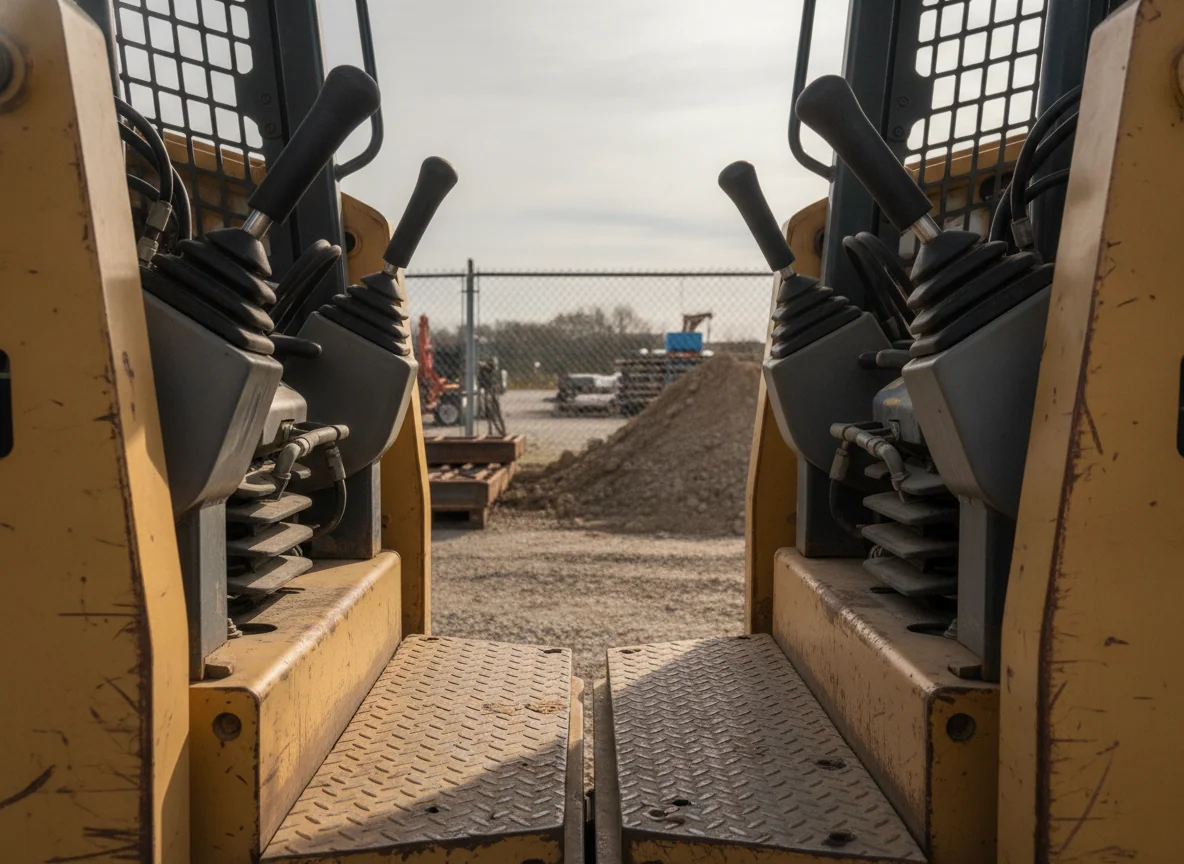
The most decision-worthy owner note attached to both exact ASINs is a regret: the machine is described as a two-pump unit, and the owner would choose three pumps for greater flexibility with equipment. A separate attachment trial on a different 14 HP two-pump Chinese mini skid steer makes the concern concrete without becoming a test of either MMS model. Its cutter could spin or the loader could travel normally, but not both through a useful straight pass, while trenching became a stop, reposition and restart routine that built troubling heat.
More engine power may provide reserve under load, but it cannot prove a missing oil path. Start either machine with the included bucket. Passive tools such as a land leveler, trailer mover or forks avoid continuous auxiliary demand, although their weight and the machine’s unpublished safe capacity still matter. A grapple, four-in-one bucket or stationary auger is conditional on fit, flow and deliberate operation. A brush cutter, mulcher, sweeper, tiller, power rake, stump grinder or production trencher should not drive this purchase unless MMS confirms in writing that the exact machine can power the tool while both drive sides operate normally.
The site’s guide to two-pump and three-pump hydraulics explains the circuit problem, while the powered-attachment shortlist is the honest exit when cutting, sweeping or tilling is the main job.
An attachment mount gets a vote too
Both listings advertise replaceable tools and tell uncertain buyers to contact MMS, yet neither publishes plate dimensions, latch-pin geometry, coupler size or hose-clearance requirements. A purchased MS380T owner returned a full-size skid-steer adapter because the sibling machine used a smaller mini interface, then found a connector-size mismatch between that machine and the intended implement. That tracked sibling does not reveal either L model’s exact fittings; it proves only that a familiar-looking plate and the word universal are not a fitment specification.
Before ordering an implement, match plate width and height, upper-lip depth, latch-pin spacing, couplers, hose routing, attachment weight, required flow, working pressure and any case drain on both sides of the connection. A tool that latches can still be too heavy, too thirsty or plumbed incorrectly, which is why the attachment-compatibility checklist belongs ahead of the accessory cart.
The MS380L wins a narrow race
With the shared limitations exposed, the MS380L earns first place for the owner with enough repeated bucket work to make its higher advertised engine output relevant. The MS360L earns second because it offers no documented hydraulic escape and less nameplate power, not because the overlapping reviews prove that it works less reliably. Neither rank survives a seller who cannot answer basic questions about the actual production revision.
The MS380L is the stronger bucket-first choice, not a back door into serious powered attachments.
Its advertised 23 HP engine gives it the clearest on-paper advantage in this pair for a self-maintaining owner doing repeated material work on firm ground.
The supplied record still identifies a two-pump machine, omits the ratings that would prove more lift or hydraulic output, and reaches only 10 hours of timed owner use.
The MS360L is the simpler match for lighter yard work when the MS380L’s unproved step-up is unnecessary.
Its advertised 13.5 HP engine and wide bucket fit the exact owner evidence for loose-material moving, light grading and small-property chores.
It shares the two-pump attachment ceiling, sparse specifications, low-clearance concern and uneven arrival record without the MS380L’s higher advertised horsepower.
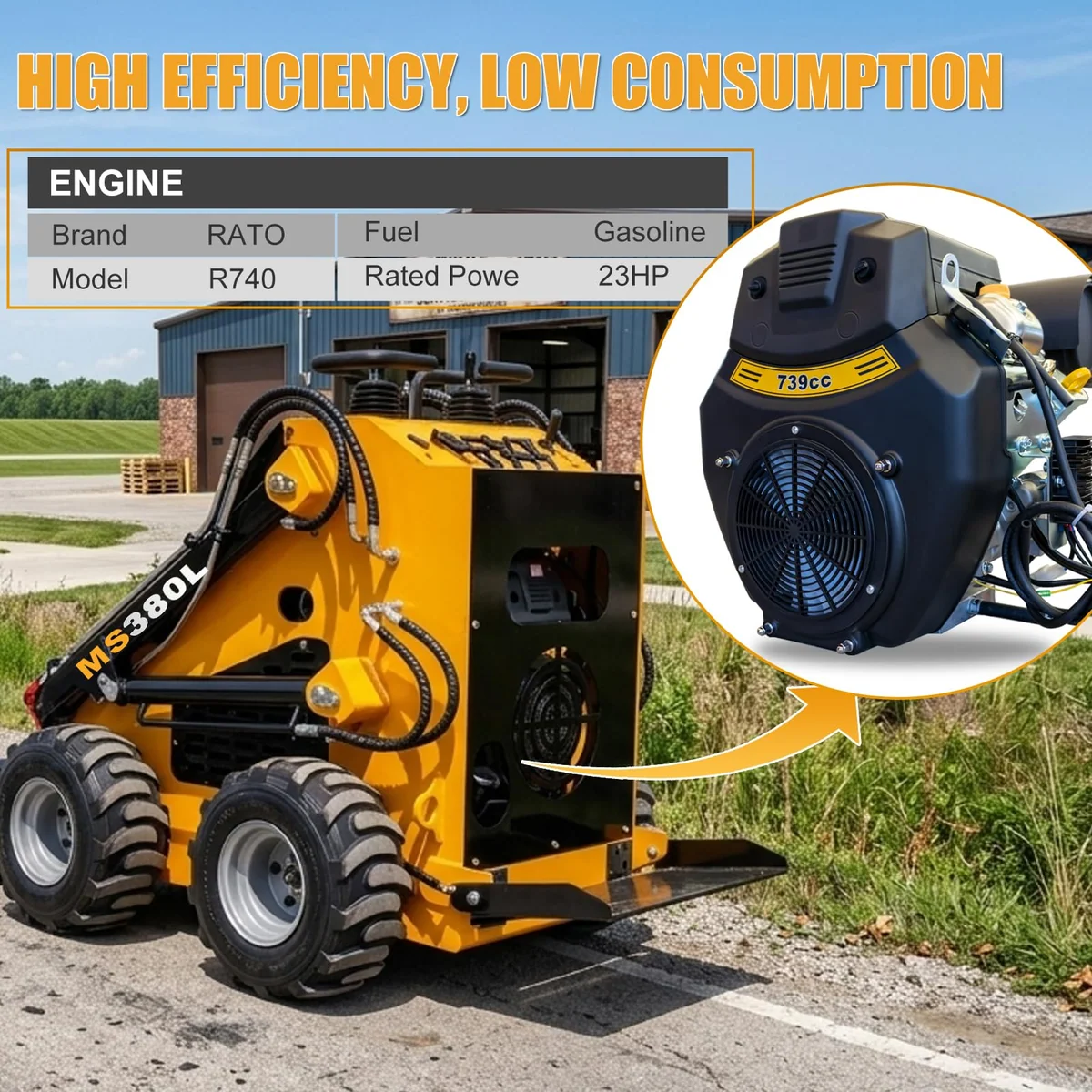
MMS MS380L
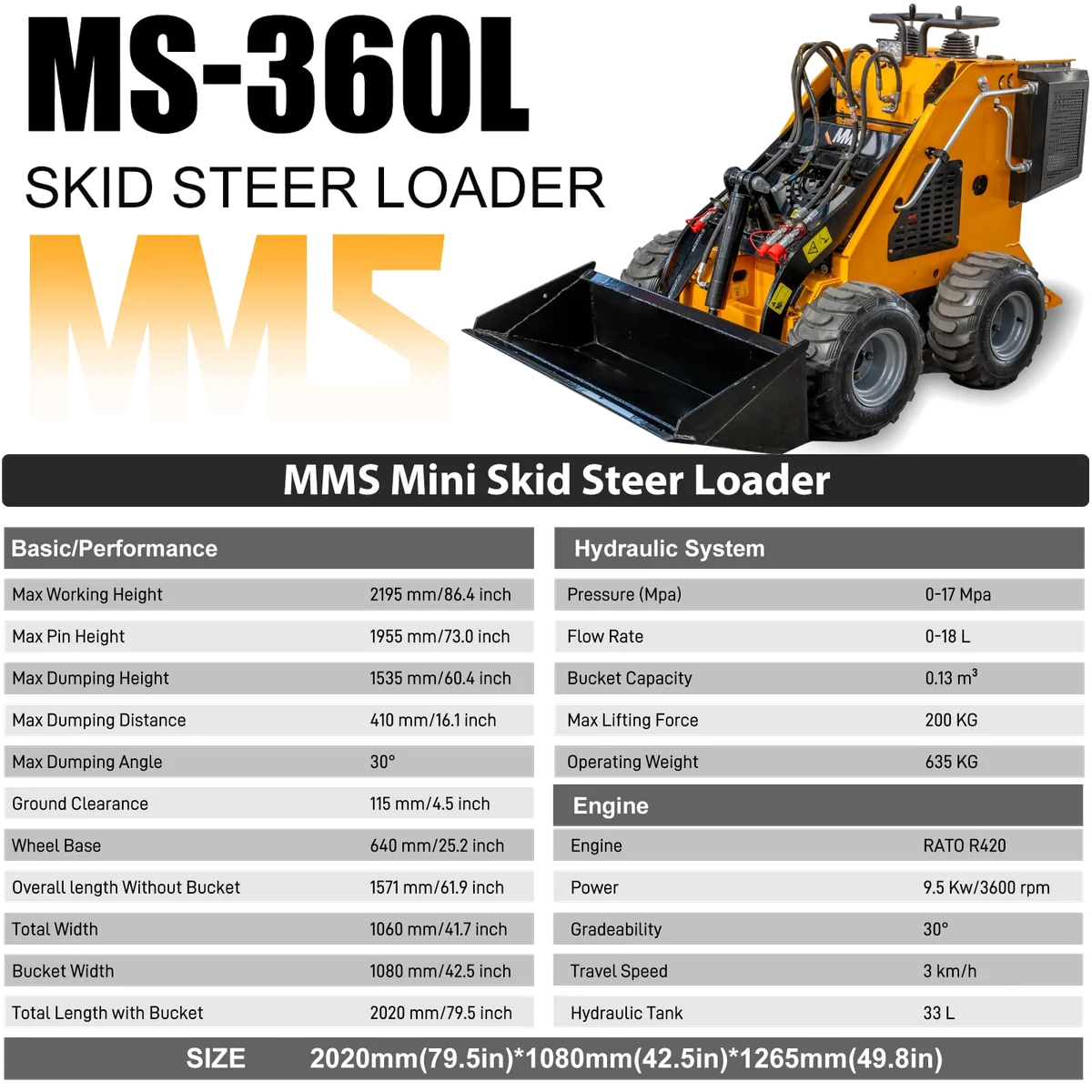
MMS MS360L
Choose by workload, then by tolerance for downtime
Pick the MS380L
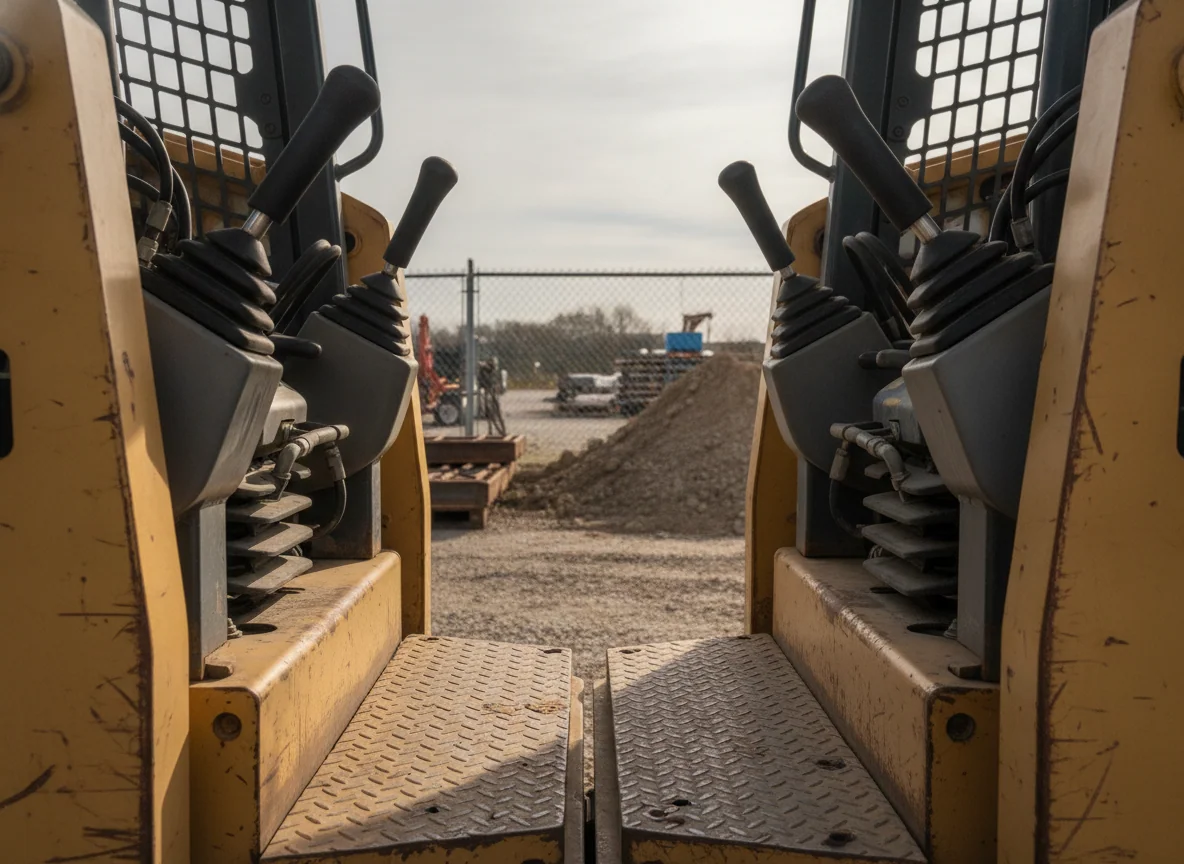
Repeated material work has to be the center of the plan
It suits a mechanically capable property owner moving soil, gravel, mulch or road material often enough to value the higher advertised engine rating. The ground should be firm, the bucket should do most of the work, and a delayed part should be an inconvenience rather than lost payroll. MMS still needs to supply a current load chart and hydraulic sheet before the larger engine becomes a defensible upgrade rather than a more impressive label.
Pick the MS360L
The chores are modest and the included bucket is enough
It makes more sense when the work resembles the retained owner reports: household landscaping, loose-material moves and light grading on firm, fairly level ground. Choose it only if its current documented capacity covers the intended loads and no continuously driven tool sits at the top of the wish list. Its smaller engine narrows the ambition, not the need for inspection and self-service.
Pick neither
The machine has to earn revenue or carry a hungry hydraulic tool
Daily commercial scheduling, dealer-dependent maintenance, routine mud, consequential slope work and continuous mowing or mulching all expose gaps that neither record closes. A tracked machine may suit soft ground better, and the full trade is set out in the wheels-versus-tracks guide. For one concentrated project, the rent-or-buy framework may keep service and downtime on somebody else’s side of the ledger.
Get seven answers before the freight truck is booked
The missing data do not call for optimism or panic; they call for a written pre-purchase record tied to the serial range that will actually arrive. A useful reply contains numbers, drawings and policy terms rather than another list of compatible jobs.
- Identity: confirm the exact ASIN, model suffix, production revision, engine model and serial-number format.
- Size and load: request width across the tires and bucket, height, platform-open length, ground clearance, operating weight, rated operating capacity, tipping load, maximum attachment weight, lift height, dump reach and breakout force.
- Hydraulics: request the physical pump count, auxiliary flow at rated speed, relief pressure, continuous-duty limit, circuit diagram and case-drain provision.
- Fit: request a dimensioned drawing of the mounting plate, latch pins and couplers, then have MMS approve the exact attachment model in writing.
- Service: obtain the operator, maintenance and parts manuals plus filter, belt, battery, wheel-motor, pump and valve-body part numbers.
- Coverage: clarify who pays for diagnosis, labor, fluids and freight, what wear items are excluded and how long major components normally take to ship.
- Delivery: confirm crate dimensions and weight, the truck’s unloading method, placement limits, inspection rights and the procedure for recording damage before signing.
The final call is deliberately narrow. Take the MS380L when bucket-led property work, firm ground, self-maintenance and written specifications all line up. Take the MS360L when the same kind of work is lighter and its documented limits are enough. If MMS cannot supply those limits, or if the attachment must spin while the loader travels, neither machine has earned the order.
Ready to Choose?
Sources (2)
- Amazon listings and customer reviews — Mms Ms380l and Mms Ms360l
- Owner and reviewer video, 2 channels