DigSwift DS-S40 or DS-SS50: Neither Is Ready to Buy
Do not buy either DigSwift as currently documented; only a mechanically capable property owner who gets every critical specification and support term in writing should keep one under consideration.
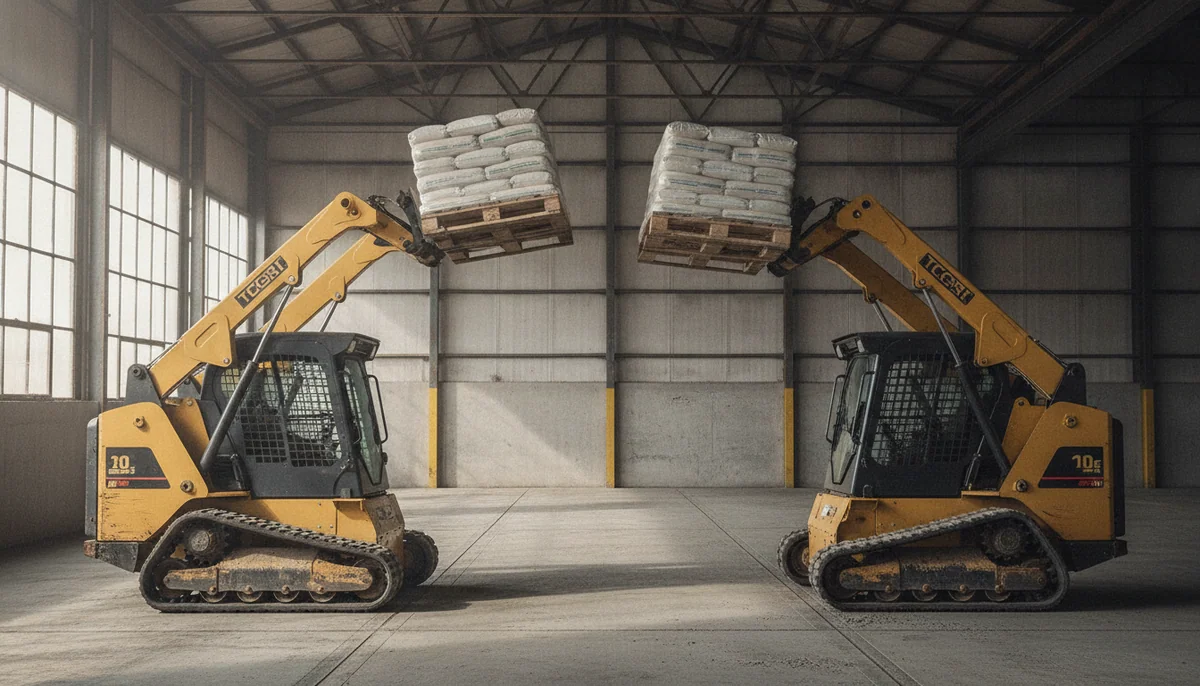
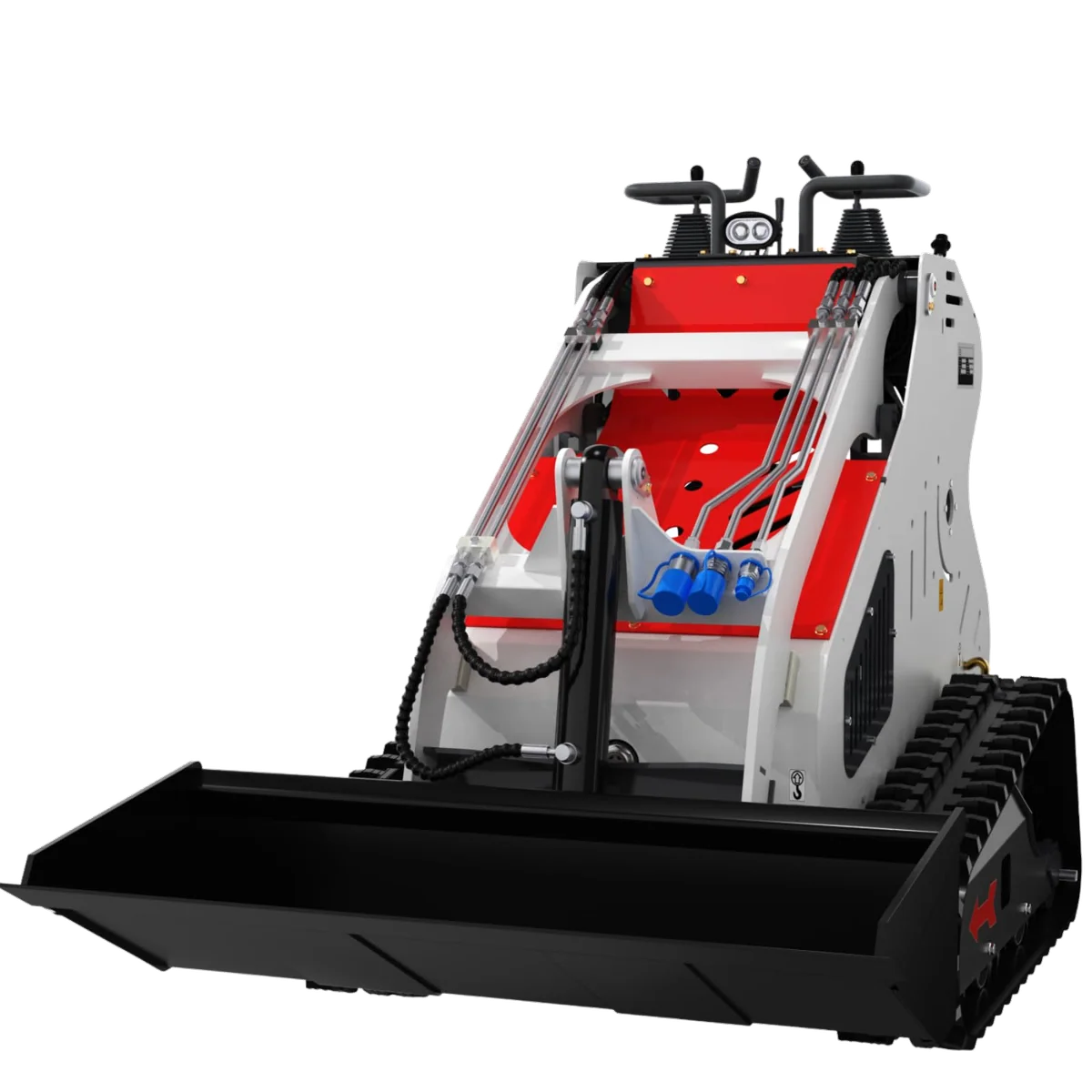
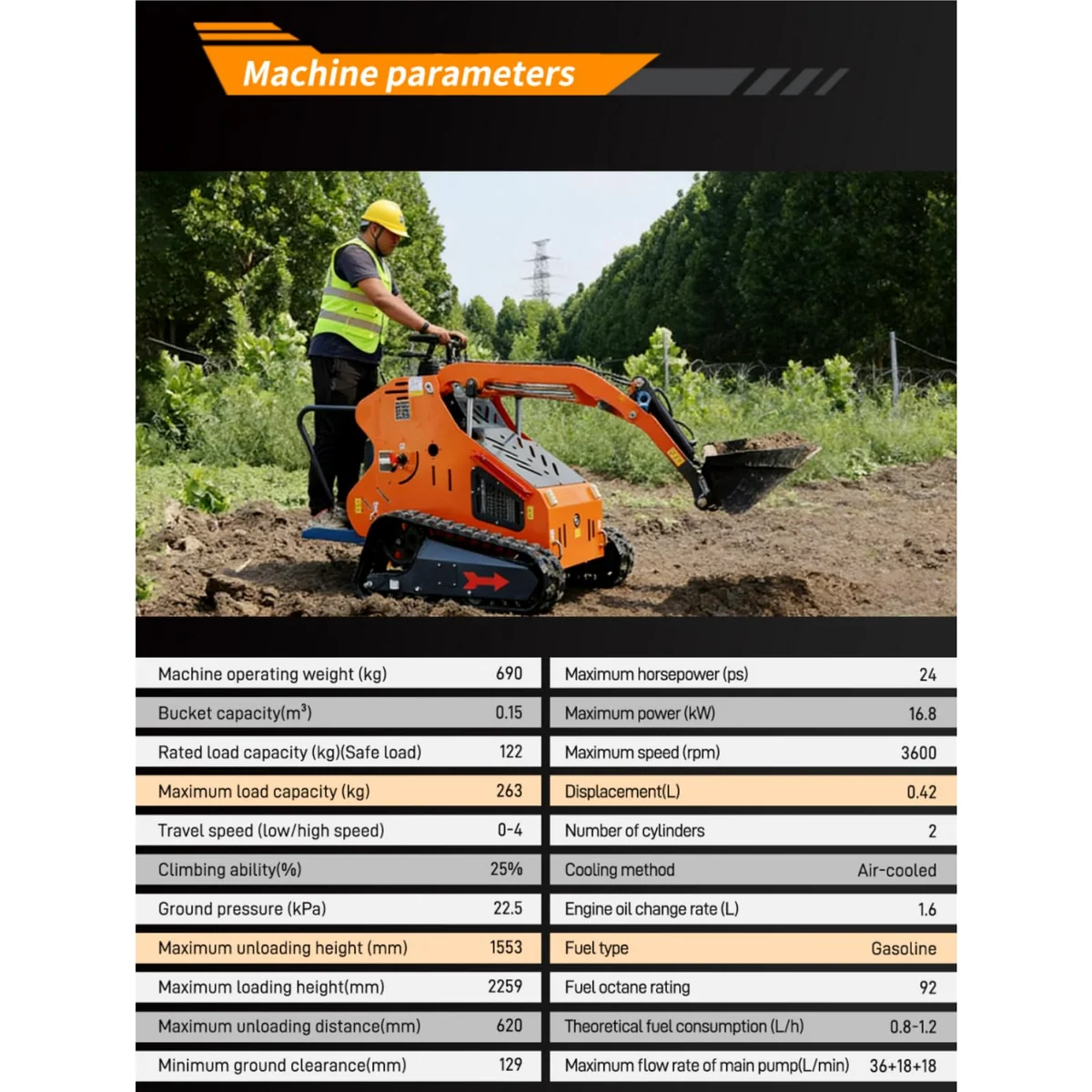
Digswift DS-S40 Mini Skid Steer
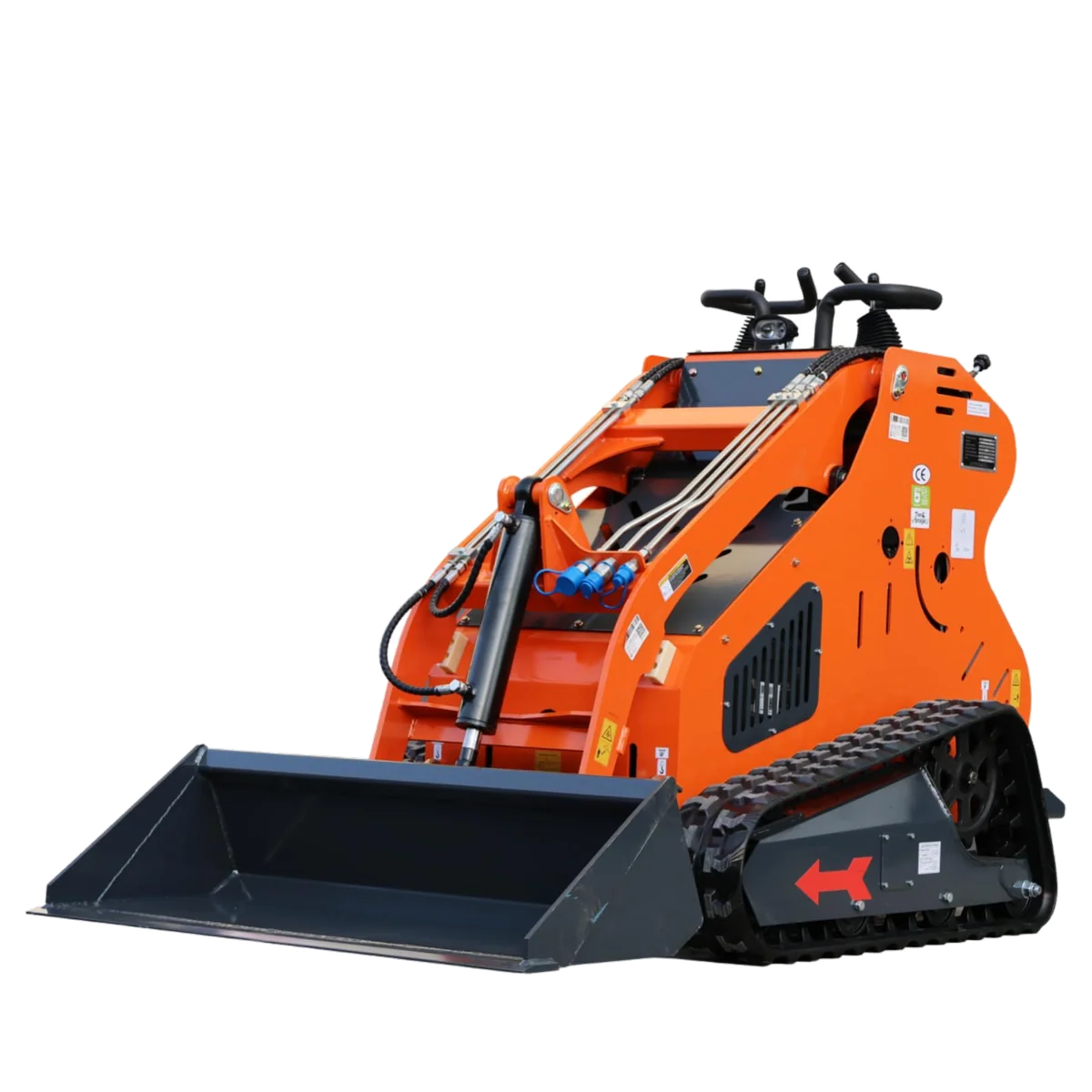
DS-SS50, 23 HP Compact Double
The 23 hp DS-SS50 wins exactly one clean contest: its seller claims more engine power than the 13.5 hp DS-S40. Nearly every more useful comparison breaks down. The S40 calls 661 lb a Rated Operating Capacity and 826 lb a maximum lifting force, while the SS50 calls 727.5 lb a maximum lift unload capacity; without definitions, test standards, load centers or load charts, those numbers do not rank usable payload.
Skid Steer Mulch did not operate, weigh or load-test either machine. This comparison judges the exact product record and relevant category evidence, not experience that did not happen. Both loaders could be useful shovel replacements, but a plausible machine is not automatically a defensible freight purchase.
The short route
- Basic bucket chores
- The S40 is the smaller-engine candidate, but it remains conditional until the seller defines its load rating, widest working dimension and support path.
- Powered attachments
- Treat both as a no because neither exact listing gives auxiliary flow, pressure, pump count, couplers, case-drain provision or simultaneous travel behavior.
- Revenue-producing work
- Choose neither because a machine that earns money needs parts, labor, warranty and delivery obligations that exist before the freight truck arrives.
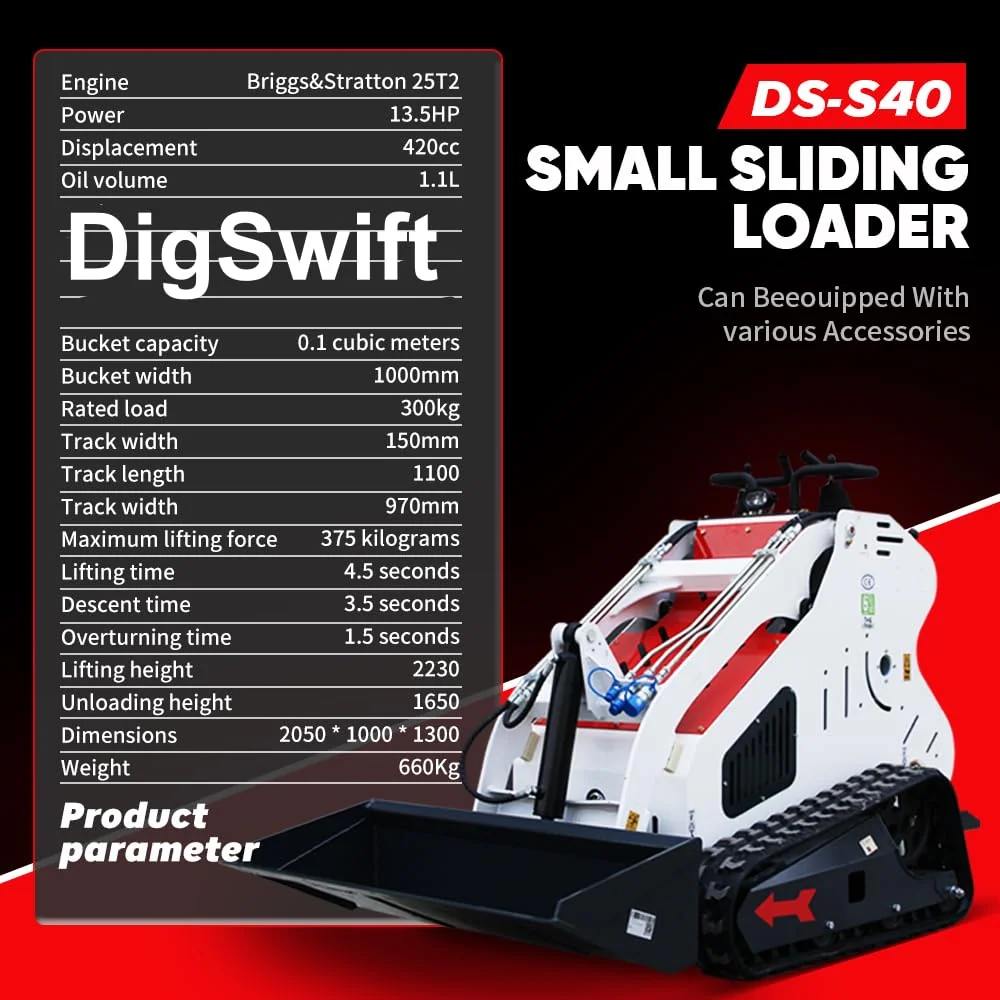
Digswift DS-S40 Mini Skid Steer
DS-SS50, 23 HP Compact Double
At a Glance
| Feature | Editor's Pick Digswift DS-S40 Mini Skid Steer | DS-SS50, 23 HP Compact Double |
|---|---|---|
| Price Range | — | — |
| Finish | Ds-s40 | Ds-ss50 |
| Screen size | 39.4" | 51.2" |
| Weight | 661 lbs | 727.5 lbs |
| Check Price on Amazon | Check Price on Amazon |
The brochure comparison ends where ownership begins
Taken literally, the listings provide enough information to compare claims, not enough to compare working machines. The important distinction is between a number printed on the page and a capability defined well enough to plan a job.
| Decision point | DS-S40 | DS-SS50 | Buyer’s conclusion |
|---|---|---|---|
| Engine claim | 13.5 hp Briggs & Stratton, with no exact engine model given. | 23 hp RATO at 3,600 rpm, with no engine model or rating basis given. | The SS50 has the larger seller-stated number, but horsepower does not establish hydraulic output. |
| Lift language | 661 lb Rated Operating Capacity, 826 lb maximum lifting force and 87.8 in lift height, all without test definitions. | 727.5 lb maximum lift unload capacity, 64.96 in unloading height and 87.8 in working height, all without load geometry. | No direct lift winner can be named from these unlike terms. |
| Attachment interface | A universal quick attach is claimed without a plate drawing or hydraulic specifications. | Pin-hole spacing of 364 mm and a 635 × 375 mm connecting plate are stated without a named standard or hydraulic specifications. | The SS50 gives more mounting information, but neither proves that a powered attachment will work. |
| Cooling | No hydraulic cooling arrangement is identified. | Double cooling is claimed without identifying the two systems or their controls. | Neither listing establishes a sustained hydraulic duty cycle. |
| Exact-product record | Two ratings average five stars, while the retained comment supplies no hours, completed task or fault history. | Two ratings average three stars, with one review saying only SCAMand the other saying only Just want I wanted. | Neither record can support conclusions about reliability, stability or seller service. |
The owner-record row uses only the retained exact-product Amazon comments, not reviews of lookalike machines.
The load numbers are not interchangeable
Rated Operating Capacity, maximum lifting force and maximum lift unload capacity are not synonyms. A rated capacity becomes useful only when the rating method, machine configuration and load position are known; the other two phrases have no supplied test definition at all. The S40’s 826 lb figure must not be treated as an allowable bucket or fork payload, and the decimal in the SS50’s 727.5 lb claim adds precision without adding proof.
Attachment weight further reduces what remains for material, while forks move the load ahead of the mounting plate and change the stability problem. Boom height, forward reach, terrain and operator position also matter. If a pallet, log, stone or bulk bag is driving the purchase, stop at this point and work through the site’s mini skid steer lift-capacity guide before asking for a configuration-specific chart.
A mount that latches can still be a bad match
Attachment compatibility has three gates. The plate must physically couple and lock, the hoses and couplers must connect safely, and the hydraulic system must supply the required flow and pressure while the carrier behaves normally. Neither DigSwift listing clears all three.
A category buying guide documents why pump count matters on compact imported loaders. In some two-pump arrangements, continuous auxiliary flow takes a circuit otherwise used for travel, so normal creeping can be compromised while the tool runs. That warning does not identify either DigSwift’s architecture, but it shows why 23 hp cannot substitute for pump count, auxiliary flow, pressure and a demonstration with the intended attachment.
The site’s attachment compatibility guide separates plate fit from hydraulic suitability in more detail. If trenching, sweeping, grinding or mowing is the reason for buying, put both DigSwifts on hold and compare the documentation standard in our powered-attachment shortlist.
The DS-S40 is the quieter gamble
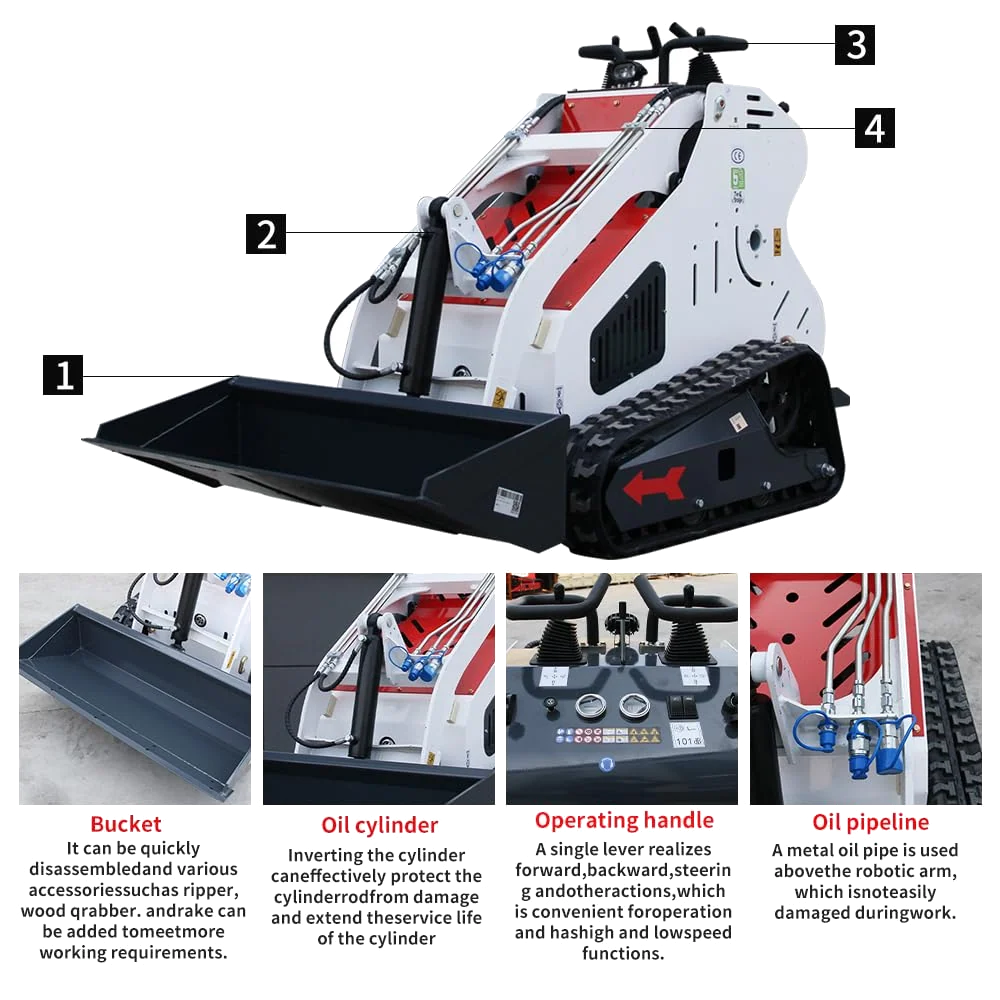
The named Briggs & Stratton engine is the S40’s clearest positive. A recognizable maker may simplify identification after the seller provides the exact engine model, but the listing currently omits that model, displacement, starting arrangement, service-part numbers and engine-warranty route. It also gives no pump count, auxiliary flow, system pressure, reservoir capacity, filter specification or hydraulic cooling arrangement.
The product copy then weakens its own case. One marketing bullet is simply 111
, and the description piles several sibling model names beneath the S40. Sloppy catalogue work does not prove sloppy manufacturing, but it does mean a buyer cannot safely assume that every photograph, attachment or specification belongs to the exact machine being ordered. Current production photographs, the model plate, the included attachment and a no-substitution agreement should arrive before the order does.
The DS-S40 is the first machine to investigate for basic bucket chores, but it is not ready to buy.
Its best case is intermittent mulch, soil and light grading work for an owner who values the claimed 39.4-inch chassis and can commission the machine personally.
The listing leaves hydraulic output, load geometry, widest delivered dimension, safety equipment, included attachments, preparation and after-sale support unresolved.
The DS-SS50 adds horsepower and ambiguity together
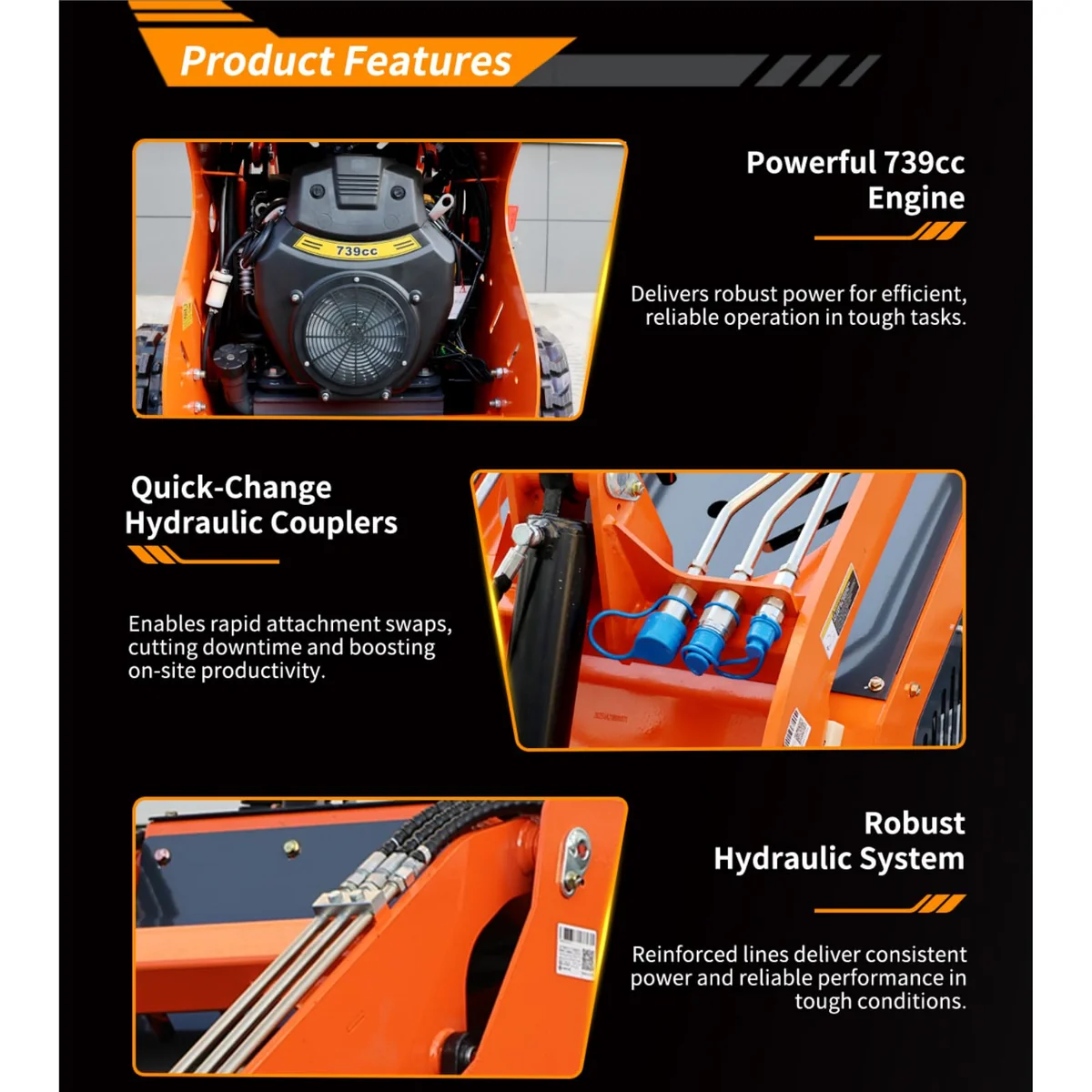
The SS50’s 23 hp claim could matter if the hydraulic architecture puts that power to work. Instead, the listing promises double cooling without saying what is cooled, whether hydraulic oil has a dedicated cooler, how fan control works or how temperature is monitored. Its attachment-plate dimensions are useful for checking steel at delivery, but dimensions alone do not establish a recognized mounting standard.
The description also offers tires or tracks even though the title presents a crawler, and the supplied record documents no configuration selector. That may be generic family copy rather than a hardware problem, but a buyer still needs photographs of the allocated machine. The promise that the seller will handle transportation also leaves operating weight, shipping weight, carrier terms, unloading responsibility, damage procedure and return freight undefined; transportation is not the same as delivery of a commissioned machine.
The DS-SS50 is the higher-power paper option for a buyer who can verify the machine behind the name.
Its claimed 23 hp engine and published plate dimensions make it the more ambitious platform, but only written hydraulic and load data can turn that ambition into usable capability.
The undefined cooling claim, unresolved configuration identity, nonstandard lift language, missing safety details and content-free owner record make the purchase unusually hard to underwrite.
Digswift DS-S40 Mini Skid Steer
DS-SS50, 23 HP Compact Double
The exception is a buyer with tools, time and leverage
The surrounding category record explains why owner profile matters. One owner of a different gasoline mini skid reported moving more than 38 yards of gravel during his first 40 hours and regarded the bucket as a genuine back-saver. He also dealt with two complete track derailments, a partial derailment, an added oil cooler and a rain-affected ignition switch. That account supports both halves of the bargain: substantial labor savings and owner-supplied troubleshooting.
Another owner of a different machine reported a much cleaner record at roughly 163 hours, including no thrown tracks and no visible hydraulic leaks. He had changed the hydraulic fluid early, packed idler bearings with grease and added heat shielding after fuel-tank heat caused a shutdown. These records do not predict either DigSwift, but they show how preparation and mechanical attention can separate a useful property tool from a frustrating purchase.
The only supplied DigSwift commissioning account concerns a DS-15 mini excavator, not either loader. Its owner reported missing canopy hardware, loose controls, poor throttle adjustment and many loose hydraulic connections, then corrected the problems himself. The model difference prevents assigning those faults to the S40 or SS50, but it makes a documented pre-delivery inspection and cautious first-day commissioning worth requiring.
Keep investigating only if
- Your work is mostly intermittent bucket carrying, cleanup or light grading on reasonably even private property.
- You can inspect fluids, fittings, fasteners, tracks, controls and attachment locks yourself or pay a competent technician to do it.
- A delayed repair will not stop paid work, block essential property access or leave a time-sensitive job unfinished.
- The seller will provide model-specific answers, manuals, photographs and support terms before taking the order.
Walk away now if
- Daily revenue depends on predictable uptime, local labor or rapid parts delivery.
- Your primary job requires continuous auxiliary power while the loader creeps or carries a known load near a headline maximum.
- Your route includes side slopes, abrupt terrain or drop-offs that the manufacturer has not rated for the delivered configuration.
- You expect a freight shipment to arrive dealer-prepared, fully documented and ready for immediate production work.
Make the seller earn the order
- Establish identity and configuration. Request current photographs of the allocated machine, engine plate, model plate and attachment plate. Confirm every suffix, included attachment and counterweight, and prohibit an unapproved substitution in writing.
- Measure access and receiving needs. Obtain chassis, track, hose, coupler and bucket widths, plus overall dimensions with the platform in each position. Require operating weight, shipping weight, tie-down points, carrier terms and a safe unloading method.
- Define lift rather than repeating it. Ask for rated operating capacity, tipping load, the test standard, attachment allowance, load center, counterweight assumptions and a chart covering the full lift arc. Require dump clearance and forward reach with the actual bucket if truck loading matters.
- Document the hydraulic circuit. Get pump count, total flow, auxiliary flow, operating pressure, coupler sizes, reservoir capacity, filter number, oil specification and cooling hardware. Confirm continuous and reversible flow, case-drain provision and whether both tracks travel normally while auxiliary power is engaged.
- See the controls and safety systems. Require an English operator manual and a current operating video showing startup, neutral behavior, parking brake, emergency stop, operator-presence protection, attachment locking and shutdown. Ask for approved slope limits and the manufacturer’s procedure for every advertised operating mode.
- Turn support into obligations. Obtain the written warranty, labor responsibility, diagnostic process, parts location, expected lead times and failed-component freight policy. Include tracks, rollers, pumps, valves, cylinders, seals, filters, electrical parts and cooling components in the parts discussion.
- Commission before producing. Confirm who checks critical fasteners, hose connections, fluid levels, grease points, track tension and safety functions before dispatch. Plan to verify the model, photograph the delivery and cycle every function cautiously before carrying a working load.
If the seller answers with quality assurances rather than numbers, treat that as a refusal. Start over with the site’s best-value mini skid steer shortlist, then use the common-problems inspection guide before accepting any freight machine.
Frequently Asked Questions
Is catalogue model 0308DS-SS50PRO the same machine as the public DS-SS50?
The supplied record does not establish that identity, so require written confirmation that ASIN B0GRQV7JNV, catalogue model 0308DS-SS50PRO and the serial plate on the allocated machine all refer to the same configuration.
Will a nominally 39.4-inch machine pass through a 40-inch gate?
Do not plan on it, because 0.6 inch of total nominal clearance leaves no responsible allowance for bucket width, hoses, tolerances, crooked posts, approach angle or steering correction.
Can the DS-SS50 be used safely with its platform folded?
The listing’s walk-behind language is not enough; safe use requires an approved procedure, demonstrated control behavior, neutral protection and safety systems that the supplied record does not document.
Which DigSwift would Skid Steer Mulch order from the current record?
Skid Steer Mulch would order neither unless the seller first turns the missing model-specific specifications, delivery obligations and support terms into written commitments that survive inspection at arrival.
Ready to Choose?
Sources (2)
- Amazon listings and customer reviews — Digswift Ds S40 Mini and Ds Ss50 23 Hp
- Owner and reviewer video, 4 channels