Skip the MACHPRO MP-380-YE unless your toolbox can replace a dealer.
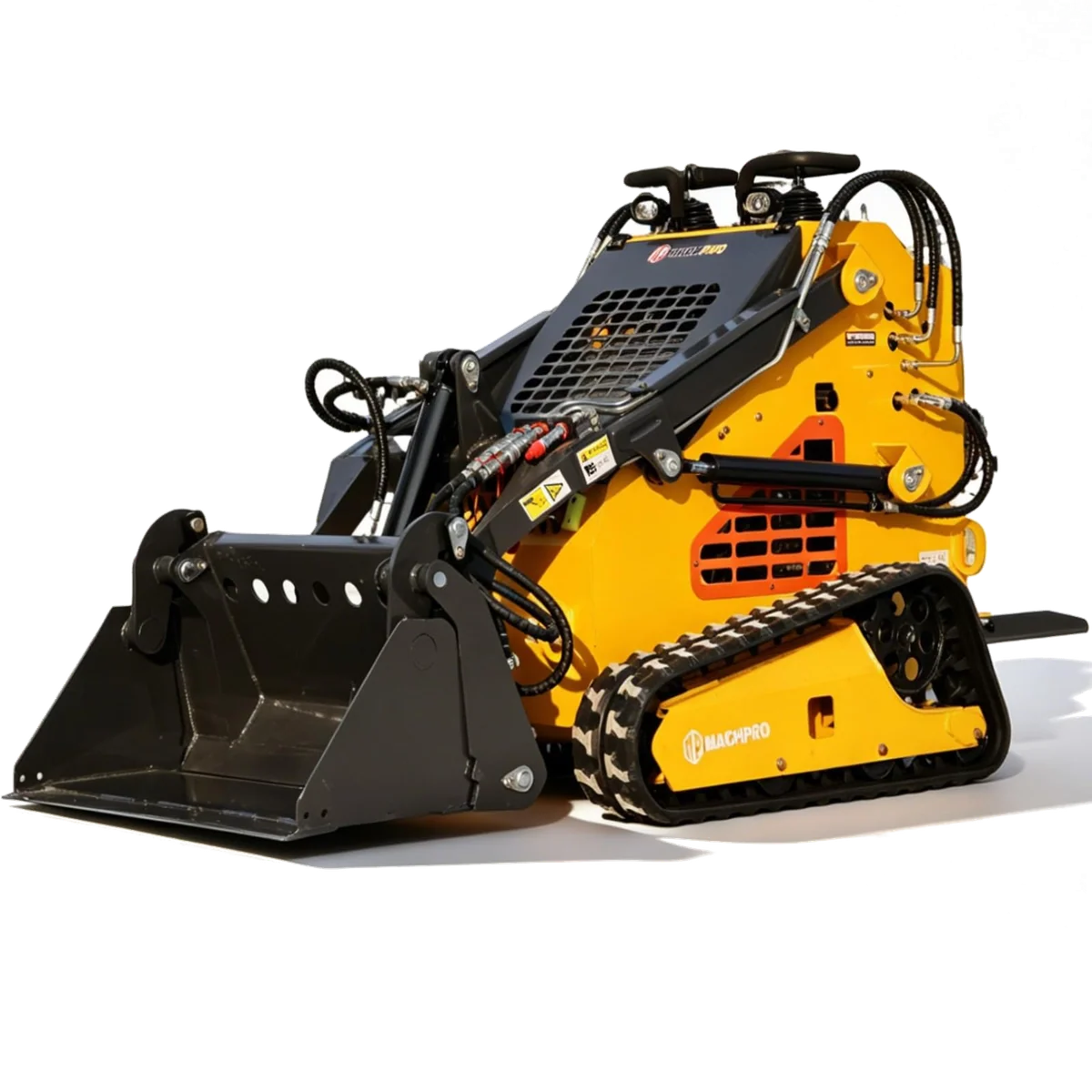
Skip the MACHPRO MP-380-YE for daily revenue work and carefree ownership; buy it only for intermittent property jobs if you can inspect, maintain, and park the machine while a part is found.
Based on 4 owner ratings, 1 owner discussion and 2 other sources. We have not tested this machine ourselves.
We earn a commission if you buy through our links, which does not affect what we say.
Read how this site works →
Get the missing answers before ordering
- Identity: Request current photographs of the machine plate, RATO engine tag, EPA label, pump stack, cooler, fan, couplers, dashboard, and undercarriage.
- Weight and lift: Obtain operating weight with fluids and the 4-in-1 bucket, then require a written explanation of the 881- and 827-pound figures.
- Hydraulics: Ask which pump feeds the auxiliary circuit, its continuous flow at working pressure, return limit, detent behavior, and case-drain arrangement.
- Attachments: Obtain a dimensioned interface drawing, latch-pin spacing, coupler specification, hose-routing limits, and maximum approved attachment mass.
- Safety: Require written identification of the operator-presence system, neutral-start protection, parking or hydraulic lock, auxiliary lockout, emergency stop, lift-arm support, and approved slope limits.
- Service: Request the exact fluid specification, filter numbers, maintenance schedule, wiring and hydraulic diagrams, replacement-track number, idler and seal numbers, and current manual.
- Support: Get the warranty duration, exclusions, labor coverage, freight responsibility, response channel, parts location, and return terms in writing.
- Delivery: Define appointment timing, truck-access requirements, liftgate service, pallet placement, uncrating responsibility, damage reporting, and failed-delivery charges.
The appeal is unusually concrete for a low-cost tracked mini loader. MACHPRO specifies a 24 hp RATO 739cc gasoline engine, three hydraulic pumps, electric start, a folding stand-on platform, and an included 4-in-1 bucket. That is a more useful opening package than a small engine, a plain bucket, and a catalogue full of attachments the machine may not run.
The bucket is not merely brochure decoration. An exact-product owner reports using it to dig, bulldoze, and grab material, while another put about 15 hours on the loader grading a backyard and moving heavy logs. The controls were described as smooth and responsive, and two reviews corroborate substantial crating.
That is also where the confidence ends. The exact Amazon record contains only four five-star reviews, the longest disclosed use is about 15 hours, one reviewer had not yet worked the machine, and another supplied no task or runtime detail. This evidence can tell us that early buyers received a plausible, functioning package; it cannot tell us what happens to the tracks, cooler, pins, pumps, wiring, or support process after a season.
The narrow yes
Property work with time to troubleshoot
Keep it on the list if you need a motorized shovel, wheelbarrow, light grapple, and rough-grading tool on your own property, can perform commissioning checks, and can tolerate days or weeks without the machine.
The wider no
Production work with a deadline
Walk away if one breakdown stops a crew, if the route includes rough cross slopes or an opening under 43.3 inches, or if a cutter, trencher, or other continuously powered tool is the main reason for buying.
Buyers new to this equipment class should first read what separates a useful inexpensive import from an expensive project, because the owner’s mechanical ability is part of the machine’s real specification.
Key Specifications
Start with the badge: this is not an MPS300 or MPS330
Search results routinely jumble the MP-380-YE with MACHPRO’s smaller MPS300 and MPS330 machines. Do not carry specifications or failures across those names. The exact Amazon item is model MP-380-YE and is advertised with a 739cc engine, three pumps, and a hydraulic 4-in-1 bucket; the documented MPS siblings commonly use a roughly 14 to 15 hp 420cc engine and have appeared with different pump, bucket, track, and cooler arrangements.
The model sticker is not enough to settle the hardware. One new MPS330 carried a 25-horsepower decal even though its owner identified the installed 420cc RATO as roughly 14 to 15 hp, and that owner described multiple cooler revisions across otherwise similar machines. This does not prove that the MP-380-YE is mislabeled; it proves that current-unit photographs of the data plate, engine tag, pump stack, cooler, couplers, and undercarriage matter more than family resemblance.
| Decision point | Exact listing statement | What survives scrutiny | What to verify |
|---|---|---|---|
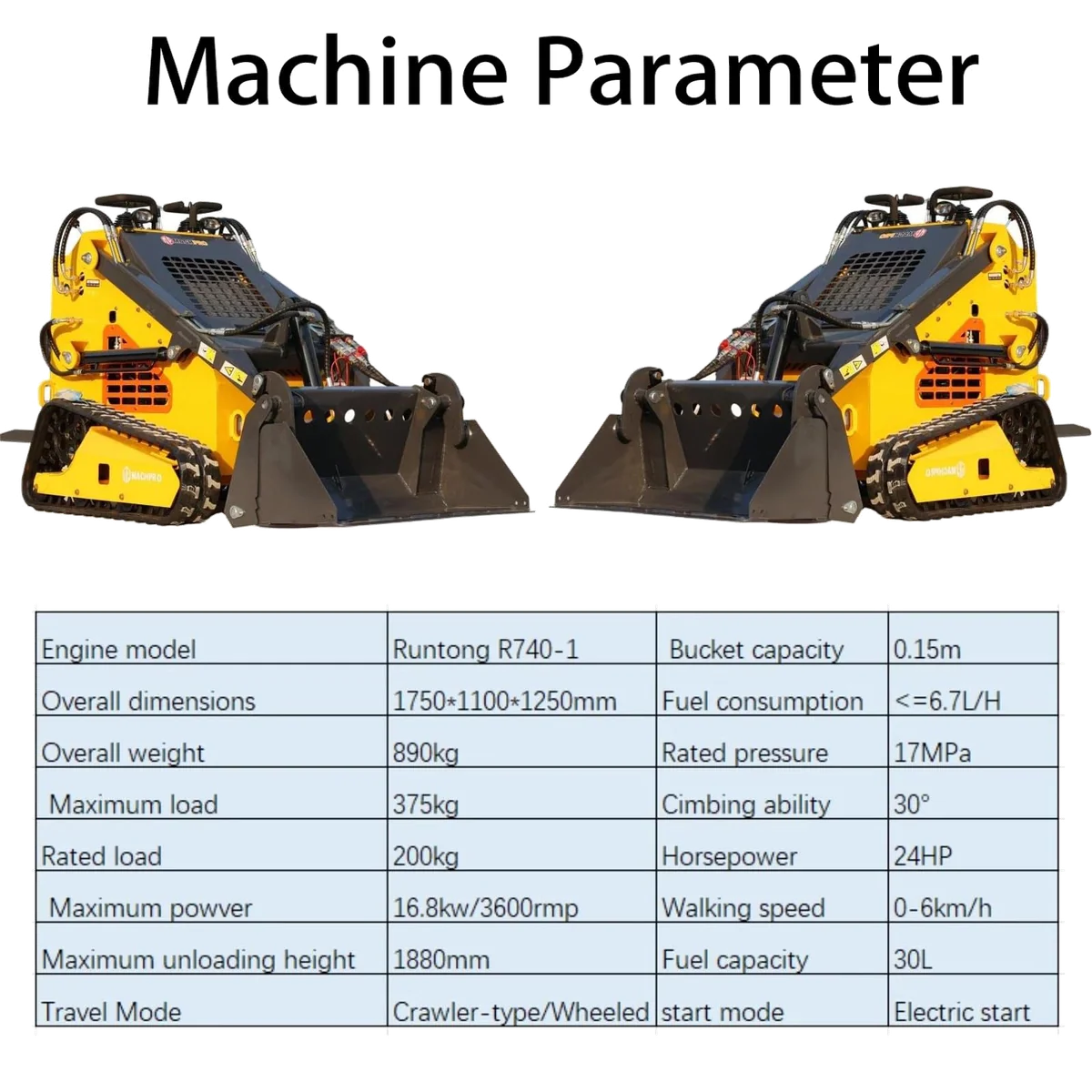
| Engine | The seller specifies a 24 hp RATO 739cc gasoline engine with electric start. | One exact owner says the manual matched the advertised horsepower, but no independent output test was reported. | Get the engine model, serial plate, EPA label, service intervals, and filter cross-references. |
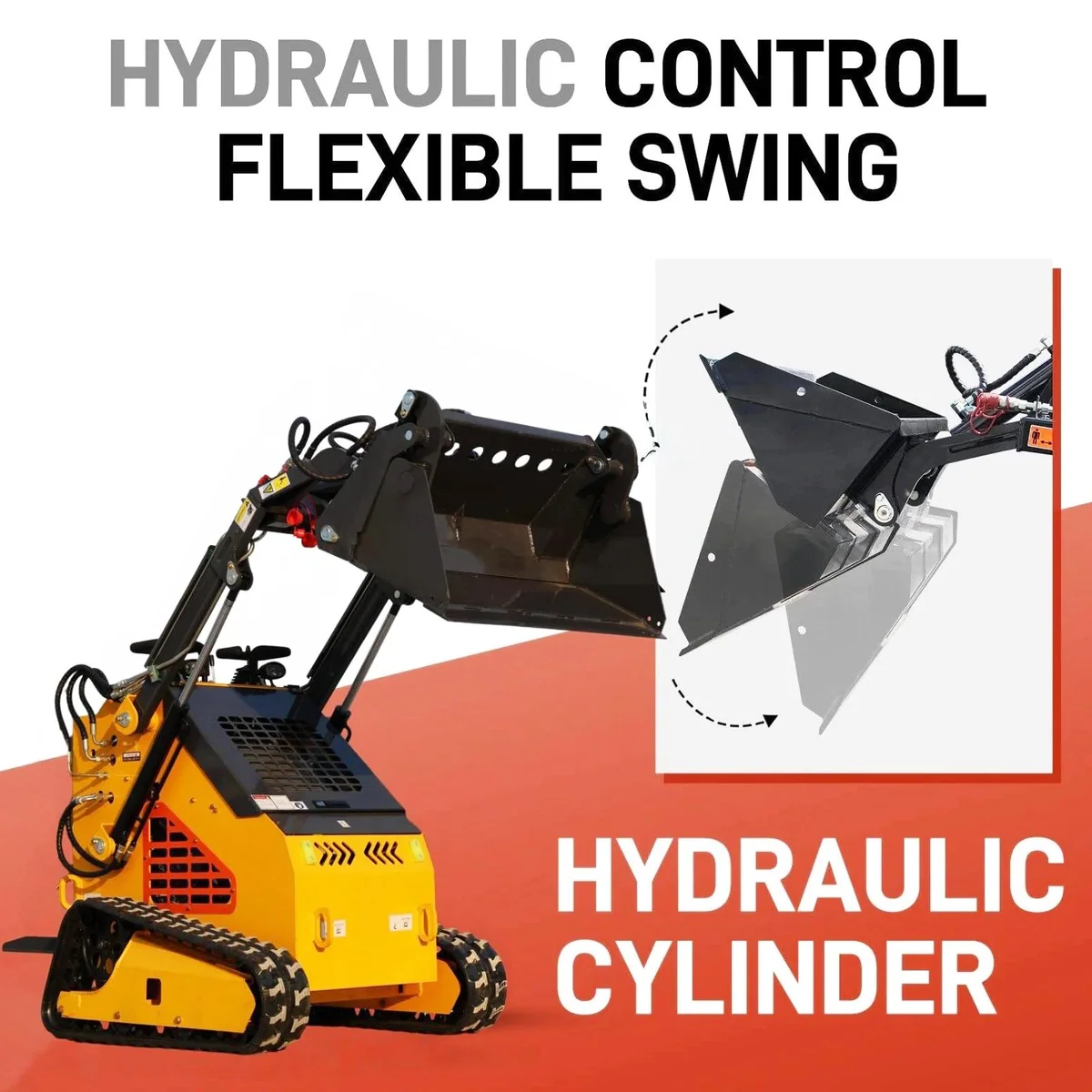
| Included bucket | The seller specifies a 5.3-cubic-foot hydraulic 4-in-1 bucket for scooping, grabbing, dozing, and dumping. | An exact owner confirms using the bucket to dig, bulldoze, and grab material. | Inspect the jaw, pins, grease points, cylinders, hoses, cutting edge, latches, and full-height rollback. |
| Hydraulics | The seller specifies three pumps delivering 72 L/min in a 36 + 18 + 18 L/min breakdown at 2,465 psi. | The three-pump claim is promising, but 72 L/min is aggregate system flow rather than established attachment flow. | Identify the auxiliary pump, continuous auxiliary flow, return restriction, couplers, and case-drain provision. |
| Lift | The seller lists an 881-pound rated operating load and an 827-pound maximum lifting force. | The lower maximum figure cannot be reconciled with the higher rated-load figure from the supplied definitions. | Request tipping load, rated operating capacity, load center, measurement point, counterweight condition, and a load chart. |
| Dimensions | The seller lists 68.9 × 43.3 × 49.2 inches. | The listed width already rules out 36-inch and nominal 42-inch openings. | Confirm chassis width, bucket width, platform-up length, platform-down length, and the turning envelope. |
| Dumping | The seller specifies 74 inches of maximum dumping clearance. | One height does not establish hinge-pin height, forward reach, dump angle, or clearance beneath a fully tipped bucket. | Match all four measurements to the intended truck, trailer, bin, or spreader. |
| Cooling | The seller specifies forced-air cooling and an oversized oil radiator for continuous heavy work. | No exact owner reports a long hot shift or documents hydraulic temperature under sustained auxiliary load. | Confirm the installed cooler, fan direction, trigger temperature, warning system, fluid specification, and cleaning access. |
| Delivery | The seller promises enclosed crating, LTL freight, unloading, a tool kit, and quick handle assembly. | Exact reviews corroborate heavy crating and one five-day driveway delivery, but not a universal delivery time or full setup service. | Define truck access, appointment terms, liftgate service, placement, uncrating, damage inspection, and redelivery responsibility. |
Strengths & Limitations
Strengths
- The included 4-in-1 bucket is corroborated by an exact owner who used it to dig, doze, and grab material.
- The seller-specified three-pump system is a better starting point for combined travel and auxiliary work than a basic two-pump layout.
- Exact early owners report easy controls, substantial crating, grading, and log handling without a reported failure through the longest disclosed interval.
- The folding operator platform can shorten the listed machine for transport without removing the stand-on work position.
Limitations
- Four perfect reviews with only about 15 disclosed operating hours do not establish reliability.
- The seller’s 881-pound rated-load claim cannot be reconciled with its lower 827-pound maximum-lifting-force claim.
- The listed 43.3-inch width excludes common 36-inch and nominal 42-inch openings before operating clearance is added.
- The advertised 19 GPM is aggregate system flow, while actual auxiliary flow and case-drain provision remain unidentified.
- The listing promises parts and support but supplies no clearly defined warranty or serial-specific parts list.

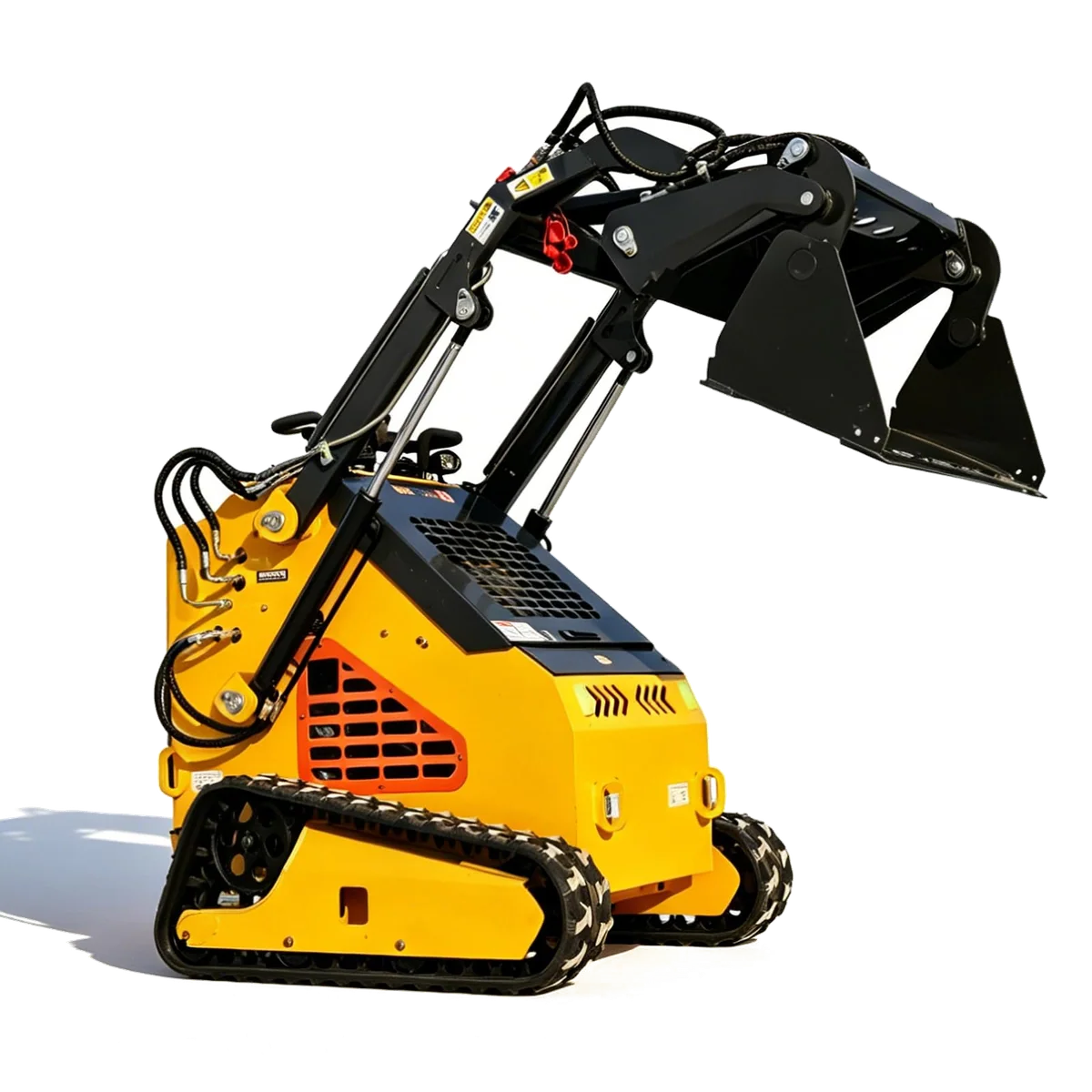
The 4-in-1 bucket is the argument; 19 GPM is not
The included bucket is the MP-380-YE’s strongest feature because it has exact-owner evidence behind it. Opening the jaw adds useful clamping and dozing control to ordinary scoop and dump work, so a property owner can attack loose soil, gravel, mulch, debris, brush, and awkward logs without buying a separate basic grapple immediately.
It is still a compromise tool. A 4-in-1 bucket carries hinges, cylinders, hoses, and jaw structure that a plain bucket does not, and the supplied record does not quantify its empty weight, clamping force, cutting-edge life, or effect on usable payload. It can cover several first jobs, but it does not become pallet forks, a land plane, an auger, a trencher, or a purpose-built brush grapple by changing the sales description.
The hydraulic headline needs even more discipline. The seller’s 19 GPM figure is the total of three circuits, broken into 36, 18, and 18 L/min. Those circuits are approximately 9.5, 4.8, and 4.8 GPM individually, but the listing never identifies which one serves the front couplers. An exact reviewer says the advertised flow matched the manual, which corroborates consistency between two documents rather than measuring flow at the attachment.
Three pumps can be a meaningful advantage. Testing on a different two-pump mini loader showed that a brush cutter could spin or the machine could travel normally, but the operator could not do both in a useful straight pass; a trencher became a stop, advance, and restart exercise. That result does not predict the MP-380-YE’s output, but it explains why a genuinely dedicated auxiliary pump could separate this machine from the cheapest two-pump designs.
A third pump still does not answer every attachment question. A seller demonstration on a different three-pump loader used pressure, return, and a separate case-drain line for motor-driven tools, while the MP-380-YE listing mentions only dual quick couplers. That does not prove a case drain is absent; it makes the presence, permitted back pressure, and approved plumbing essential questions before connecting a cutter, sweeper, trencher, or grinder.
Before ordering anything powered, obtain the mechanical interface drawing, latch-pin spacing, coupler series and size, auxiliary flow at working pressure, permitted continuous duty, case-drain status, hose routing, attachment mass limit, and manufacturer approval. Our attachment compatibility guide explains why matching paint, pins, or couplers is not enough, while the powered-attachment shortlist is the better place to start when hydraulic tools are the main job.
Thirty degrees is a climbing claim, not a work plan
The seller specifies a 30° climbing capability without defining travel direction, surface, load position, attachment, operator weight, or whether the figure is a test maximum rather than an approved working limit. It cannot responsibly become a 30° side-slope rating, a loaded slope limit, or a promise that the loader can turn safely on uneven ground.
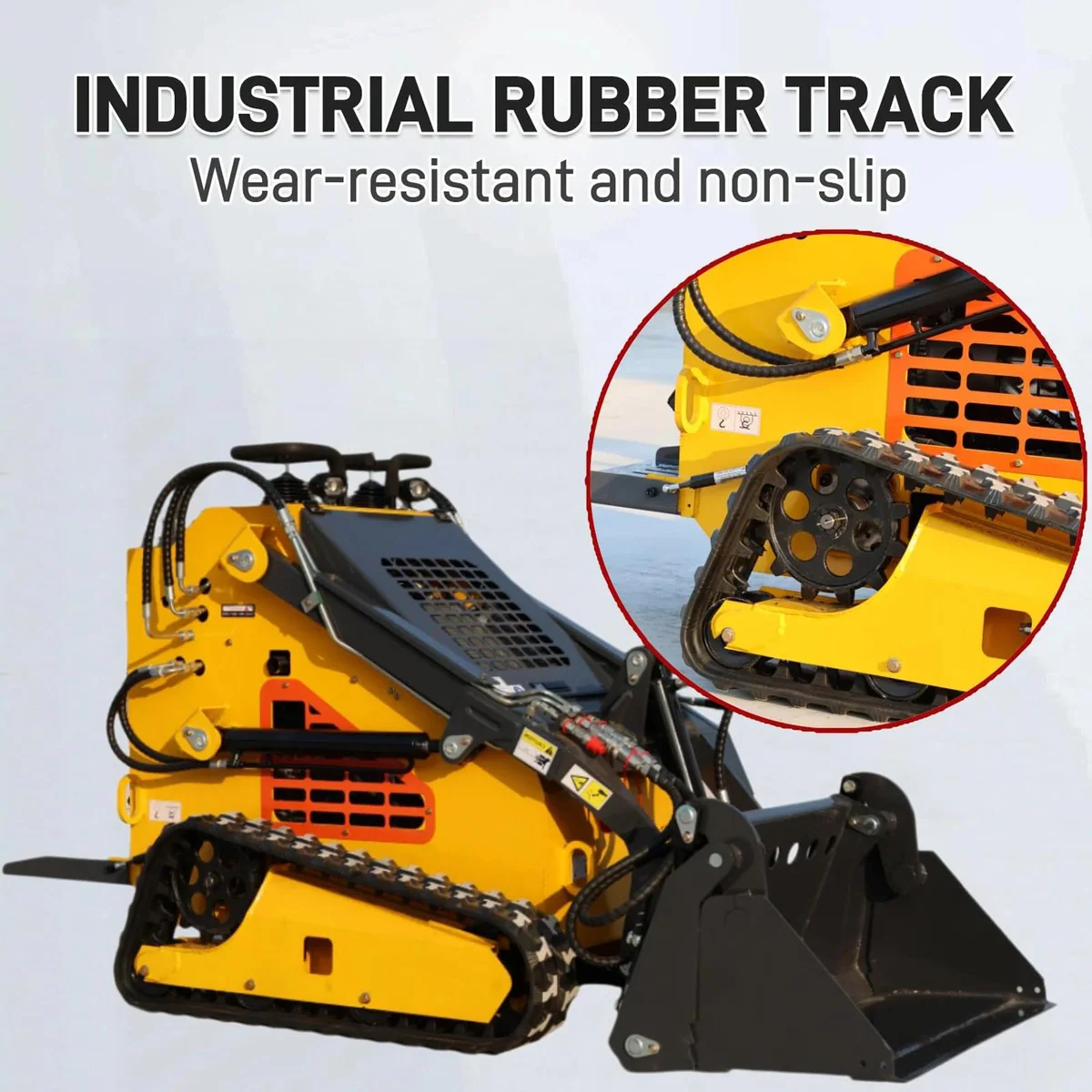
Category evidence is cautionary even on machines their owners like. One stand-on mini loader pitched sharply when its short tracks met small embedded rocks, and the operator found apparently modest step changes far more violent than a steady smooth incline. Tracks provide traction and flotation; they do not lengthen the wheelbase or repeal the effect of a raised load.
Carry loads low, avoid abrupt turns and side slopes, and follow the exact operator manual rather than a sales angle; our slope-safety guide explains why traction, climbing ability, and rollover stability are different questions.
The owner, not the badge, determines the value
The value case begins with what arrives in the crate. A hydraulic 4-in-1 bucket can postpone the purchase of a plain bucket and light grapple for the first round of property work, while the listing also includes the tool kit, electronic manual, freight, and unloading service. Exact reviewers support the presence and usefulness of the bucket, substantial crating, and driveway delivery, although the meaning of unloading still needs to be agreed before the truck arrives.
Value in the crate
A useful first attachment
The 4-in-1 bucket can scoop, clamp, and doze without forcing an immediate second front-tool purchase.
Cost in the workshop
Inspection and identification
Commissioning time, fluids, filters, a spare-parts plan, and exact cross-references belong in the ownership cost.
Cost on the calendar
Downtime tolerance
A delayed part may be an inconvenience to a property owner and a lost job to a one-machine contractor.
That difference is decisive. A mechanically capable owner can turn simple construction and commodity hydraulic parts into an advantage, particularly when the machine replaces occasional hand labor and can wait indoors for a fitting. A contractor paying wages, equipment rental, rescheduling costs, or customer penalties needs a stronger parts channel and a much longer exact-product record.
If the workload is not yet proven, rent established mini loaders for the real jobs first. Small-business owners in the supplied discussion repeatedly recommended renting several brands and control layouts before buying, because actual access, stability, attachment needs, and recurring demand reveal more than a specification sheet. Our rent-or-buy guide turns that trial into a decision rather than an endless rental habit.
If the MP-380-YE’s risk still fits, compare the entire landed and commissioned package in our value-focused mini-loader roundup. If 43.3 inches is the disqualifier, start instead with the narrow-access shortlist; a machine that cannot reach the job has no value at any purchase price.
Fifteen hours is a commissioning note, not a reliability record
The exact evidence reaches one owner at about 15 hours, with no reported fault during backyard grading and log movement. That is useful because it confirms actual work beyond delivery. It is not enough time to judge track wear, idler life, pin clearance, hose abrasion, cooler effectiveness, hydraulic contamination, electrical sealing, engine service access, or parts response.
Close MPS330 accounts show why early evidence can point in opposite directions without either owner being wrong. One owner reached 28 hours without leaks, electrical trouble, track adjustment, or repair, while another reached roughly 40 hours after substantial property work but had two complete track derailments, one partial event, water enter the keyed ignition, and material pack into the bucket linkage. These are not MP-380-YE failures; they are a realistic range of outcomes in an adjacent MACHPRO family whose exact machines and undercarriages differ.
Revision control may matter as much as the logo. A new MPS330 owner described machines shipped with no cooler, a cooler whose fan moved air the wrong way, and a later corrected arrangement, then found factory track tension, tank cleanliness, fasteners, controls, and fluid service worthy of inspection on his own unit. Again, that does not assign those faults to the MP-380-YE; it makes a pre-purchase video of the actual production batch and a deliberate delivery inspection rational rather than fussy.
Simple to repair is not the same as supported
MACHPRO’s listing promises professional technical help and replacement-parts service, but the supplied copy does not define a warranty duration, labor coverage, freight responsibility, exclusions, response standard, or a serial-specific parts catalogue. The buyer is being asked to trust a service promise without the terms that determine whether it has value after a heavy machine is sitting in the wrong place.
Some repairs should be approachable. An engineer examining a comparable Chinese mini loader found a mechanically simple assembly of engine, gear pumps, valves, cylinders, hoses, motors, and basic wiring, and explained that a hydraulic shop can often duplicate a marked hose or match standard pump geometry. The same analysis warned that machine-specific structures, unsupported pins, rubbing lines, and low-cost fabrication choices remain harder long-term questions.
Two parts stories expose the gap between generic and easy. A relevant MACHPRO-family buyer with a RATO 739cc engine ordered an oil filter that did not fit and had to cross-match the original, while an owner seeking a PGP hydraulic pump could not find the part by its number through ordinary retail searches and eventually sourced it directly from the Chinese manufacturer. Neither event is an exact MP-380-YE failure, but both show why a familiar-looking component can still require detective work and waiting.
Frequently Asked Questions
Is the MP-380-YE the same machine as the MACHPRO MPS300 or MPS330?
No, the exact MP-380-YE listing specifies a 739cc engine, three pumps, and a 4-in-1 bucket, while the documented MPS siblings commonly use different engines, hydraulics, buckets, tracks, and cooling arrangements.
How much can the MP-380-YE safely lift?
No defensible capacity can be given from the supplied record because the seller lists an 881-pound rated operating load beside an 827-pound maximum lifting force without definitions, load center, tipping load, or a load chart.
Will the MP-380-YE fit through a 42-inch gate?
No, the seller lists the machine at 43.3 inches wide, so it is already wider than a 42-inch clear opening before hinges, latches, turns, attachment width, and operating clearance are considered.
Can the MP-380-YE run a brush cutter or trencher?
Possibly, but the advertised 19 GPM is aggregate flow and the exact auxiliary circuit, continuous-duty limit, couplers, case drain, attachment mass, and physical interface must match the chosen tool first.
Are MACHPRO parts easy to obtain?
Some hoses, fittings, and hydraulic components may be locally matchable, but the supplied filter and pump examples show that exact identification and delivery can still require research and waiting.
Does the MP-380-YE arrive ready to work?
The seller says only the operating handle needs assembly before fluid checks, but the wider MACHPRO record makes a complete identity, fluid, track, grease, fastener, hose, cooler, battery, safety, and attachment inspection the prudent first job.
Is the MP-380-YE suitable for commercial use?
Not as a machine a business must depend on, because the exact owner evidence stops around 15 disclosed hours and does not establish long-term parts response, track life, cooling, structural durability, or uptime.
Sources (4)
- Amazon listings and customer reviews — Machpro Mp 380 Ye
- Owner reports across r/sweatystartup threads
- Owner and reviewer video, 9 channels
- Facebook — Article — www.facebook.com