The LandHonor 42-inch articulating brush cutter is clever, capable and not ready for hard commercial work
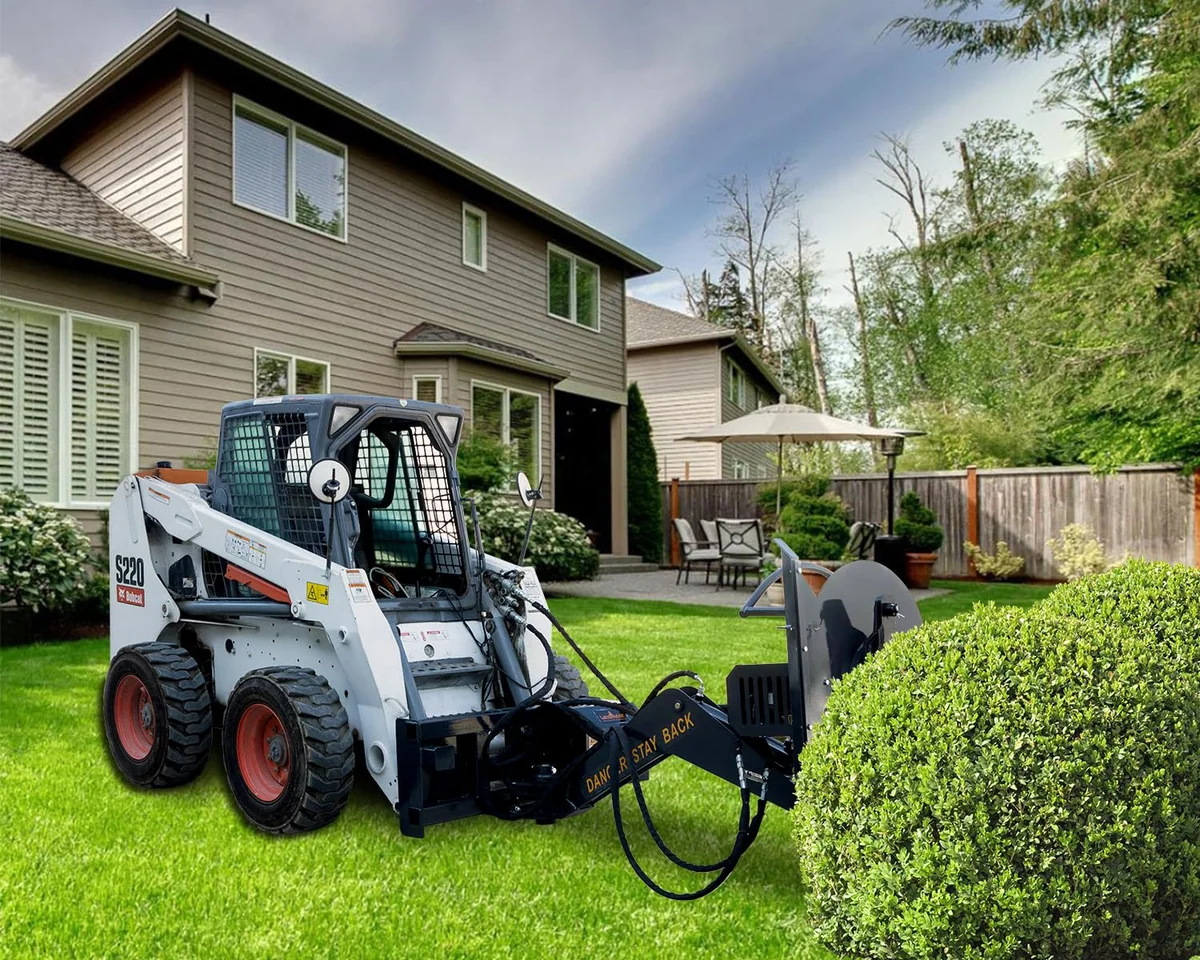
Do not buy it as a universal mower or an unproven commercial workhorse; consider it only for occasional specialty trimming on a qualifying full-size carrier, and only after the seller confirms the current unit’s weight, third-hose plumbing, gearbox fill, warranty and parts support in writing.
Based on 2 owner ratings and 4 other sources. We have not tested this machine ourselves.
We earn a commission if you buy through our links, which does not affect what we say.
Read how this site works →
The purchase has six gates
- Revision: LandHonor supplies the serial-specific manual, parts diagram and complete articulation geometry.
- Weight: the seller confirms actual operating and freight weights rather than asking you to choose among 860, 890 and 1,100 pounds.
- Carrier: the host clears the manual’s mass, lift, flow, pressure, cooling, continuous-auxiliary and protective-cab requirements with margin.
- Plumbing and controls: all three hoses are identified, back-pressure limits are stated, and the 12-volt control is integrated with the Operator Presence System.
- Commissioning: gearbox oil, grease points, solenoid assignments, flow direction, fasteners, welds and locking pins are checked before full-speed cutting.
- Support: warranty terms, overload exclusions, covered components, labor, freight and current replacement-part numbers are supplied in writing.
If all six gates close cleanly and the recurring job is right-side fence, bank, trail-wall or overhead trimming, this LandHonor is a rational specialty-tool gamble for an owner prepared to inspect and maintain it. If the seller stays vague, the carrier is marginal, the work is mostly acreage, or downtime has commercial consequences, walk away.
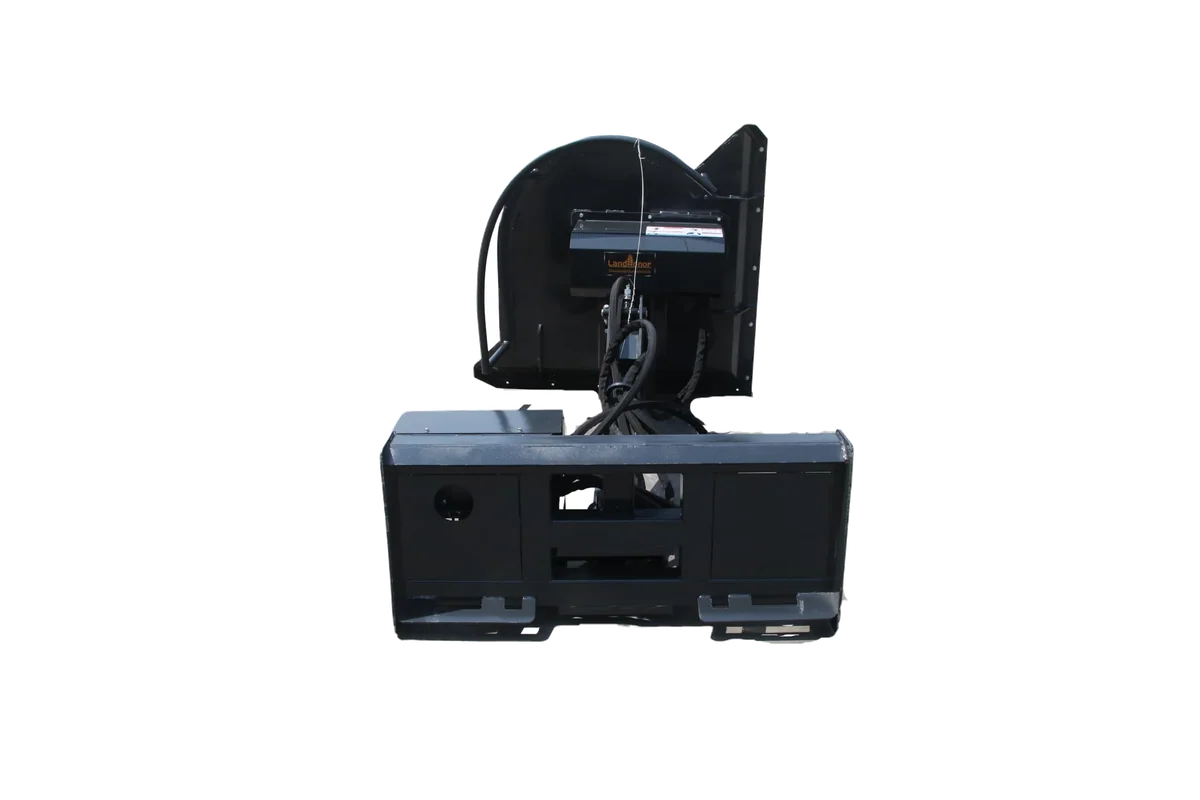
The LandHonor solves a real access problem. Its 42-inch cutting head can work straight ahead or swing as far as 90 degrees to the carrier’s right, putting a rough-cutting head beside a fence, over a bank, against a trail wall or beneath an overhanging limb without first driving the machine across the material.
That geometry is the reason to look at it, but it is also the reason to be cautious. The head, boom and hydraulic hardware weigh somewhere between 860 and 1,100 pounds according to LandHonor’s own conflicting documents, and every foot of outward or upward reach consumes stability margin. The word “universal” describes the quick-attach plate far better than it describes suitable host machines.
Nor is this a finish mower that happens to tilt. The defensible category is a right-swinging rough-cut side mower and tree-pruning attachment: narrow, deliberate and useful for access work, but slower and less tidy than a conventional wide deck when the job is simply mowing open ground.
Evidence note: Skid Steer Mulch did not operate this attachment. This review uses the exact listing and manual, both retained exact-product Amazon reviews, and two independent short-term demonstrations of the same operating design; neither video shows an ASIN, serial number or model plate that proves its machine is the identical production revision.
Key Specifications
The carrier test comes before the cutter test
A standard skid-steer quick-attach plate is only the first gate. The exact manual calls for a machine weighing at least 6,500 pounds with its bucket removed, at least 1,800 pounds of rated lift capacity, continuous auxiliary flow within a narrow range, and a thermoplastic polycarbonate front door plus side protection. Those requirements rule out many mini skid steers even when an adapter plate and a 12-volt socket can be made to fit.
If you are sorting out plate patterns, hydraulic demand and carrier limits, the site’s attachment compatibility guide explains why physical hookup and actual operating suitability are separate questions.
| Item | Defensible reading | What the buyer must verify |
|---|---|---|
| Product identity | Amazon calls it ABC125A, while the manual calls the apparent product family ABC-13-125A. | Obtain the manual and parts diagram tied to the serial number being shipped. |
| Cutting head | 42-inch cutting width with two blades. | Amazon calls the blades AR400, but the manual does not verify that grade. |
| Auxiliary flow | 14–20 GPM, with the manual expressly prohibiting more than 20 GPM. | Confirm continuous flow at the intended throttle setting rather than relying on engine horsepower. |
| Working pressure | 2,000–2,500 psi in the manual. | Do not confuse that range with the control valve’s higher component rating. |
| Movement | Up to 90 degrees of boom swing to the right and up to 35 degrees of head tilt. | The advertised 125-degree “curl” is not clearly explained in the manual, so ask for a geometry diagram. |
| Electrical control | 12-volt, four-direction control for up, down, left and right commands. | Confirm a fused installation that loses control power through the carrier’s Operator Presence System. |
| Carrier minimums | At least 6,500 pounds of machine weight and 1,800 pounds of rated lift, with protective front and side panels. | Verify those figures for the actual machine configuration and attachment position. |
| Attachment weight | The manual says 860 pounds, the listing says 1,100 pounds, and the manufacturer shop table says 890 pounds for shipping. | Get current operating and freight weights in writing before planning lift, transport or unloading. |
| Horizontal reach | Roughly eight feet is supported by the listing and owner evidence. | Published length and reach figures vary with position and possibly revision. |
| Vertical reach | Carrier lift height and head position determine the result. | Do not treat the advertised 254-inch maximum as a universally stable working height. |
| Material diameter | Three inches is the conservative routine figure, one short-term owner reports four inches, and five inches is the claimed ceiling. | Ask what species, condition and feed method support the five-inch claim. |
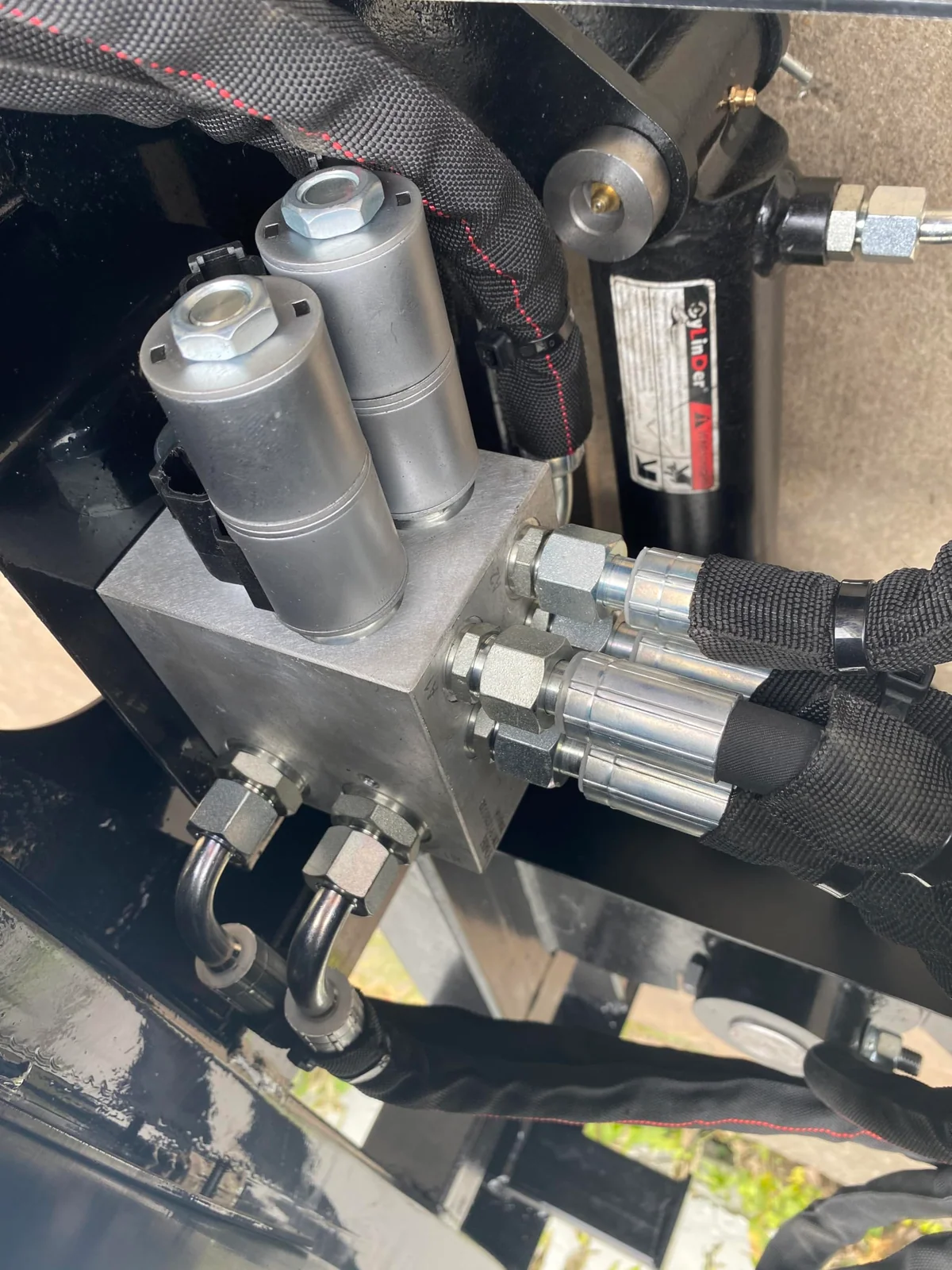
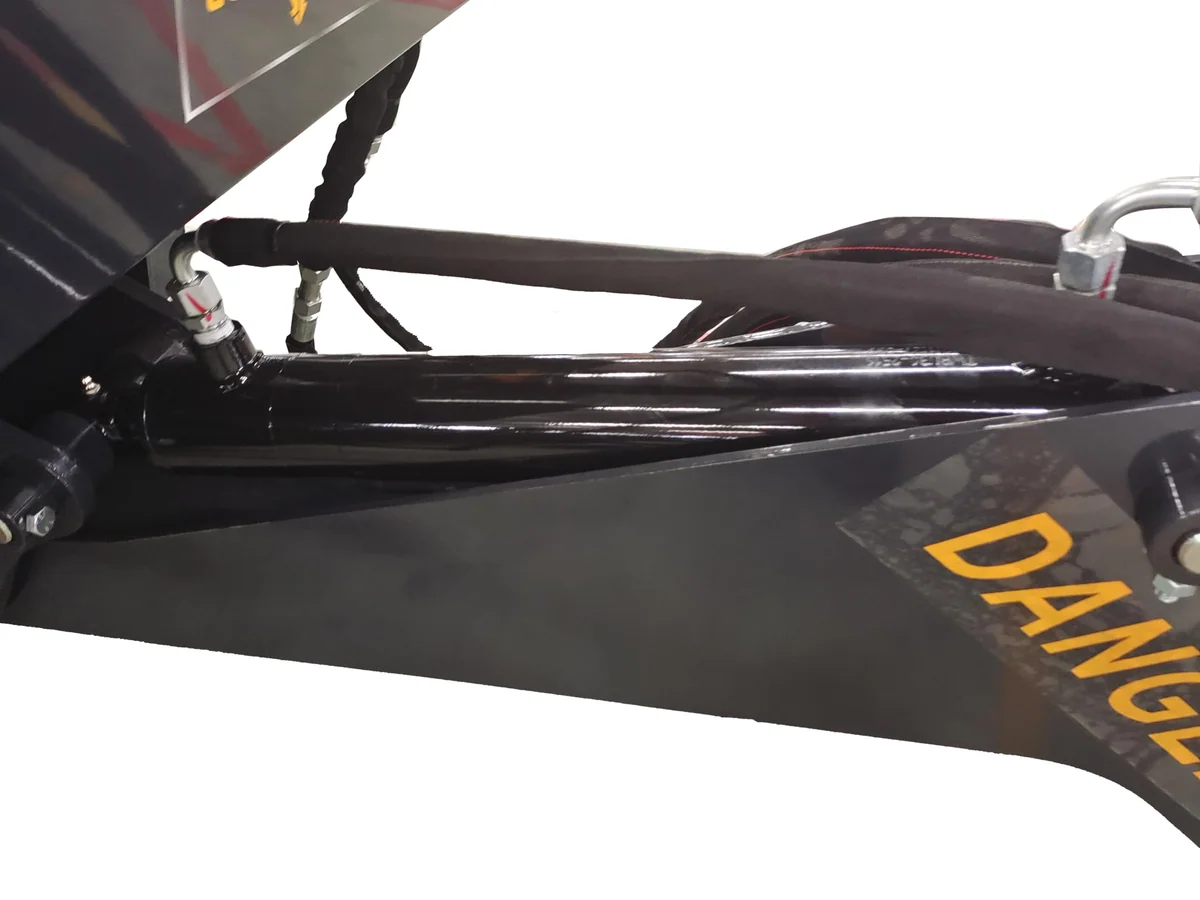
| Hydraulic connections | The listing says three hoses, but the supplied manual text does not clearly identify the third line’s function. | Require port identification, permitted back pressure and explicit instructions for the current motor revision. |
The documentation conflict is not confined to harmless formatting. Another LandHonor page carrying the ABC-13-125A name lists a 68-inch cutting width and 72-inch overall width, figures that cannot describe this 42-inch head and appear to belong to a conventional wide cutter. That is sufficient reason to distrust any dimension that has not been matched to the current serial revision.
The controls carry an unusual compromise
The attachment’s positioning valves share the cutter’s hydraulic supply. Auxiliary flow has to be active before the boom or head will move, which means the blades are spinning while the operator swings, tilts, folds or unfolds the attachment. The manual also says cutter speed falls slightly while an articulation function consumes flow, then recovers when repositioning stops.
That arrangement was acceptable to both owners during normal cutting, but it is a material drawback during familiarization, storage positioning and initial wiring checks. There is no harmless dry cycle for learning which identical-looking solenoid plug moves which function. Initial verification therefore needs an enclosed operator station, a completely cleared area, low engine speed and the head raised clear of the ground.
The listing’s three-hose answer needs the same restraint. It says a machine with two auxiliary connectors can leave a third “return” line disconnected, but the record does not establish whether that line is a case drain, tank return or something revision-specific. Do not convert that ambiguous sales answer into operating advice; have LandHonor and the carrier dealer identify every port and state the allowable back pressure for the exact motor.
Strengths & Limitations
Strengths
- The right-swinging 42-inch head reaches fence lines, banks, trail walls and overhanging growth that a straight-ahead deck cannot approach in the same way.
- Roughly eight feet of horizontal reach is supported by both the listing and an owner demonstration.
- The independent four-way control box can operate without a proprietary 13-pin implement connector when it is safely installed.
- The 14–20 GPM range suits standard-flow hydraulics on many qualifying full-size carriers.
- Owner footage supports useful cutting of multiflora rose, small saplings and overhead limbs.
Limitations
- The blades must spin before the boom or head can be repositioned.
- Published attachment weights disagree by 240 pounds, which is too much uncertainty for a long offset load.
- Both retained exact-product reviews mention steel, weld quality or weld cracking despite their five-star scores.
- The 42-inch swath and rough finish make it a poor choice for open acreage or lawnlike mowing.
- The boom swings to the right rather than serving both sides of the carrier.
- The documented blade procedure requires a hoist, cutting torch, new hardware and at least 600 pound-feet of torque.
- Long-term commercial durability, exact warranty coverage and replacement-part lead times remain unproven.
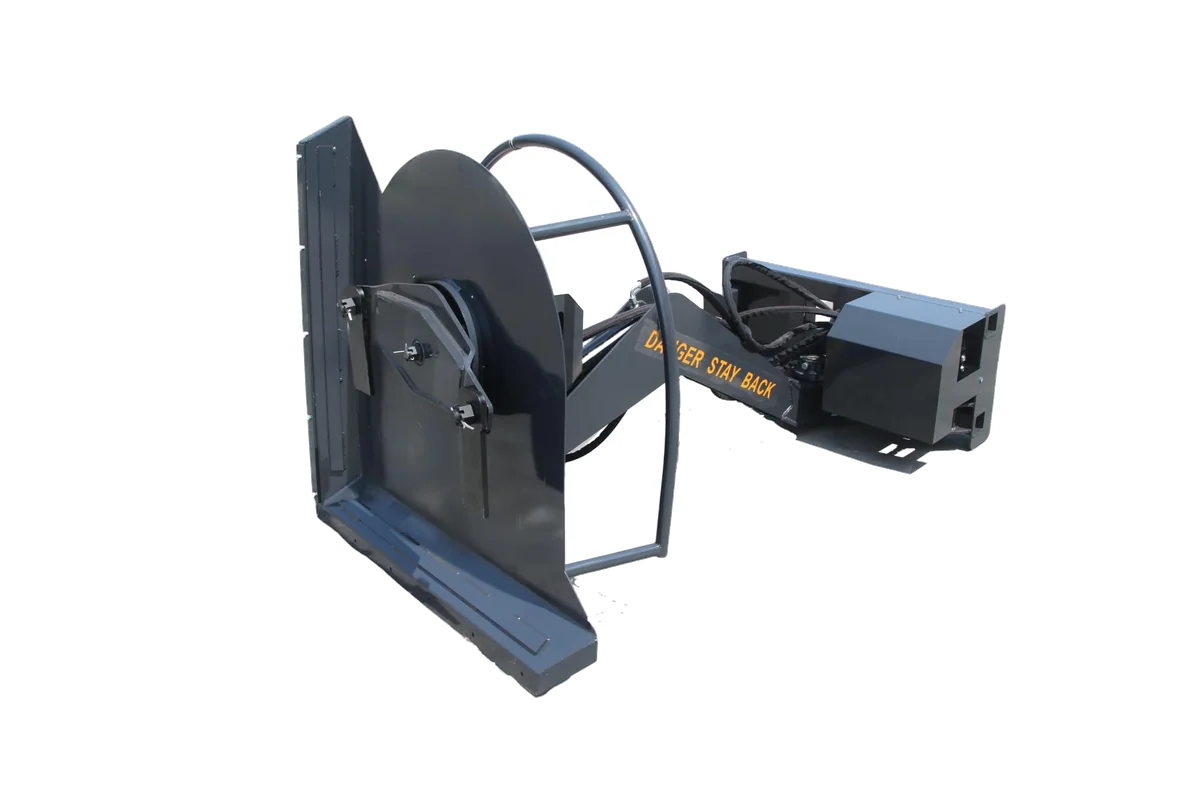
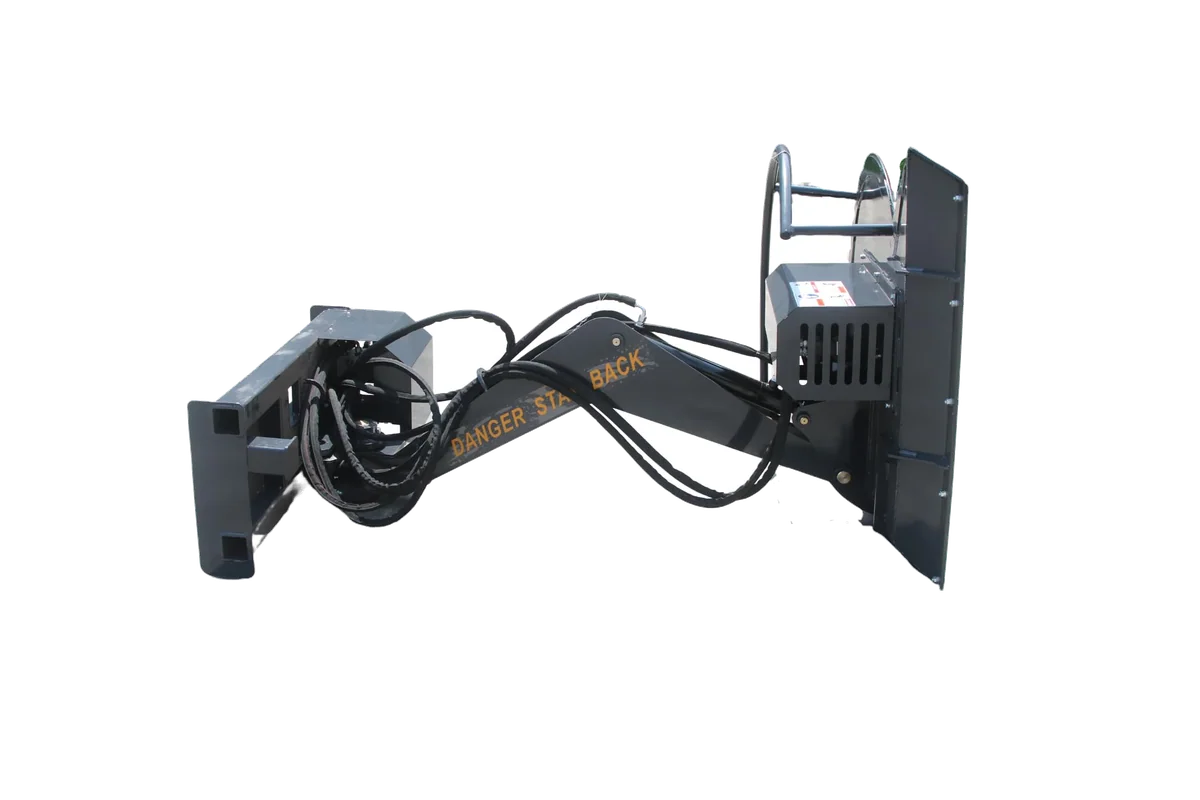
Reach is the feature, and reach is the load
The strongest independent demonstration is fence-line work in multiflora rose woven through wire. The operator stayed farther from the fence, accepted two or three passes rather than chasing a close finish, and used the head in layers on taller vertical growth. He also opened overhead clearance along a farm lane and extended toward a river bank while keeping the tractor’s tires back from the visible edge.
That footage shows why this tool exists. It can meet vegetation before the carrier drives over it, reach beyond the tire or track line, and take short, deliberate bites at growth that would otherwise require hand tools or a different approach. It also shows the limits: wire remains a snag hazard, branches can flex away from the blades, dense growth can require another pass, and the finished edge is not comparable to a lawn mower or string trimmer.
Plan around three-inch growth, not a five-inch promise
| Diameter | Evidence | Decision use |
|---|---|---|
| Up to 3 inches | The manufacturer shop page uses this figure, and the manual’s specific V-notch instructions apply it to small trees. | Use this as the routine planning limit. |
| 4 inches | One owner says a four-inch tree cut without trouble during an initial test. | Treat it as a useful anecdote, not a production rate. |
| Up to 5 inches | The Amazon listing and the manual’s parameter table state this maximum. | Treat it as an occasional claimed ceiling until sustained work proves otherwise. |
Diameter alone never describes work rate. Species, green or dead wood, blade sharpness, head angle, hydraulic flow, travel speed and whether the head receives one stem or a bundle all change the load. The manual’s practical instruction is to let the cutter reach full speed, listen for falling blade speed, slow the carrier and stop to inspect if vibration persists after feed rate is reduced.
Height is loader-dependent, and stability is position-dependent
Roughly eight feet of forward reach is credible. One owner estimated that a loader tractor, boom position and head angle put the cutter near 20 feet at its highest point, but he repeatedly described the final inches of lift and the offset position as sketchy even with roughly 600 pounds of rear counterweight. That demonstration establishes possible geometry, not an approved or comfortable operating envelope.
Reach is not free capacity: every movement outward, upward or to the right increases leverage on the host, changes the center of gravity and reduces the margin available for uneven ground, abrupt travel or a falling limb.
The safety radius changes the job plan
The exact manual requires every bystander to remain at least 300 feet away and specifies polycarbonate front and side protection, a seat belt, verified quick-attach locking pins and low attachment position on slopes or unstable ground. A vertical or elevated head can send debris in a direction that a normal horizontal mowing habit does not anticipate.
That 300-foot exclusion zone makes the listing’s roadside and right-of-way pitch more complicated than simply swinging the head toward the shoulder. Traffic, neighboring property, workers and hidden wire all have to remain outside the possible debris field, and a reach advantage over a pond or undercut bank does not prove that the ground beneath the carrier is stable.
The owner who demonstrated the cutter from an open loader tractor proved that the hydraulics could be made to function, not that the arrangement complied with LandHonor’s protective-cab requirement. Removing a ladder from some branch work does not remove falling-limb, projectile, rollover or overhead-deadwood hazards. For the carrier side of that calculation, see the site’s guide to slopes and uneven ground, then apply the exact attachment manual’s stricter instructions.
Buy access, not acreage
A captured price ages too quickly to decide value, but the job geometry does not. This attachment earns its complexity only when the recurring work sits ahead of the carrier, to its right, down a bank or above normal deck height. If most hours will be spent crossing flat fields, the buyer is carrying an articulated boom, additional valves, cylinders and service points while cutting only 42 inches at a pass.
LandHonor’s own fixed cutter illustrates the opportunity cost without serving as a product recommendation. That model is listed with a 66-inch finished swath, 776-pound weight, the same nominal 14–20 GPM flow range and a three-inch material rating. The articulating cutter gives away coverage and simplicity to buy placement.
| Primary workload | Call | Reason |
|---|---|---|
| Right-side fence lines and trail walls | Consider it | The demonstrated geometry can keep the carrier away from wire and reach growth a straight deck approaches poorly. |
| Pond, ditch and bank edges | Consider cautiously | Reach can keep the carrier farther back, but it cannot certify an undercut edge or restore side-load stability. |
| Overhead lane clearance | Consider cautiously | The head can reach high growth, but falling limbs, protective-cab requirements and the carrier’s changing center of gravity remain decisive. |
| Flat acreage and general brush mowing | Pass | A wider fixed deck offers more swath with less articulation hardware and fewer offset-load complications. |
| Lawnlike finish | Pass | Owner evidence explicitly describes a rough result that may need layered or repeated passes. |
| Daily commercial roadside production | Pass on the present evidence | The record lacks exact-product multi-season durability, fleet history, verified parts lead times and clear warranty coverage. |
| Left-side offset work | Pass | The published operating range is straight ahead through 90 degrees right, not a bidirectional swing. |
For the narrow group whose regular work matches the first three rows, the LandHonor offers unusual access without putting an operator on a ladder or walking beside a handheld cutter. For everyone else, the reach mechanism is expensive complexity in the operational sense even before any purchase price is considered.
The evidence gets thin exactly where durability begins
The retained exact-product review pool contains only two Amazon reviews, both with five-star scores and both with construction warnings. The first is titled Poorly built, inferior steel and weld points.
It still awards five stars and its entire body is Great customer service.
The second praises delivery, ease of use and operation, but warns that it cannot operate under overload, otherwise the welded joints are prone to cracks.
“Overload” is not defined, so the warning cannot be converted into a precise operating threshold.
The contradiction does not prove that every unit has weak welds, but the stars cannot be used to erase the words. There are no exact-review hours, acres, commercial schedules, repair histories or multi-season reports in the record. One independent owner had used the same-design cutter “quite a bit” without reporting breakage, while the other filmed after essentially one day and explicitly could not say how long it would last.
Broader LandHonor owner reports are mixed rather than cleanly reassuring. Reports about other hydraulic attachments describe poor hose crimping, a very early motor failure and difficulty sourcing a part, while some simpler forks, buckets and rakes receive positive comments. Those sibling reports do not predict a failure in this cutter, but they matter because this attachment combines hoses, a motor, a valve block, solenoids, cylinders, a gearbox and a chain.
Commission it as unfinished machinery, not a ready-to-spin parcel
The most consequential setup report sits outside the sales bullets: one owner says his gearbox arrived dry and needed oil before use. The supplied manual text does not make a new-unit gearbox fill procedure or oil-change interval prominent enough to neutralize that warning.
- Lock the identity. Match the model plate and serial number to a current manual, hydraulic diagram and parts list.
- Resolve the mass. Confirm operating weight, freight weight, pallet dimensions and the equipment required to unload it.
- Identify every hydraulic line. Get the pressure, return and any case-drain or tank-return function marked before connecting the attachment.
- Verify gearbox oil. Obtain the oil specification, fill quantity, level-check method and service interval rather than assuming the gearbox arrived filled.
- Inspect the structure. Check welds, blade carrier, matched blades, guards, chain or skirt, pins, keepers, fasteners, gearbox mount, cylinders, hoses and fittings.
- Protect the wiring. Route it inside the loader arm with enough slack for the full lift cycle and integrate control power with the Operator Presence System.
- Test deliberately. Verify labelled solenoid functions at low engine speed in a cleared area because visually identical connectors may be assigned incorrectly.
- Purge and recheck. Cycle swing and tilt as the manual directs, then shut down, lower the attachment, inspect for leaks and recheck carrier hydraulic-oil level.
Maintenance is more involved than the marketing suggests
The manual calls for fastener, decal, hydraulic, blade, holder, gearbox-mount, shield and weld inspection before use. It also calls for grease before use until old grease purges, then washing and another grease application after use. Sharp, matched blades matter because imbalance and excessive feed can produce vibration, and persistent vibration requires shutdown and inspection.
Blade replacement is especially revealing. The manual’s procedure calls for placing the deck vertically, supporting the holder with a hoist, removing the holder, cutting a blade-bolt head off with a torch, installing new hardware with red threadlocker, servicing both blades as a matched set and tightening six holder bolts to at least 600 pound-feet. That is not a quick swap with ordinary hand tools.
LandHonor’s separate parts article presents blades and other modules as fast field replacements and names blades, the hydraulic motor, the controller and the solenoid valve as available parts. The exact listing likewise promises replacement parts, but the captured material supplies no verified stock, prices, part numbers or delivery times. Ask for the gearbox, chain, shear bolt, blade hardware, cylinders, hoses, seals, valve, solenoids, controller and motor by current part number before treating the promise as support.
Frequently Asked Questions
Do joystick or hand-and-foot controls decide compatibility?
No; either base control system can work because the attachment has its own four-way box, while continuous auxiliary flow, controlled low travel speed, cab protection and safe Operator Presence System integration are the decisive requirements.
What warranty covers the exact Amazon cutter?
The supplied exact-product listing and manual do not establish a warranty term, so obtain duration, commercial-use exclusions, covered components, labor, freight and the definition of overload in writing before ordering.
Is this LandHonor cutter made in China?
Owners describe LandHonor equipment as Chinese, but the exact manufacturer and listing material here does not identify this unit’s factory, and shipping from a U.S. warehouse is not country-of-origin proof.
Can it be used on a loader tractor instead of a skid steer?
One owner made a same-design cutter function on a 50-horsepower loader tractor with long hoses and substantial counterweight, but the exact manual specifies a protected skid steer, so that demonstration is neither manufacturer approval nor a safe-fit finding.
Does the boom cut on both sides of the carrier?
No published exact-model evidence supports left swing, because the manual and manufacturer shop page describe a range from straight ahead to 90 degrees right.